Easter is a time of renewal, family gatherings, and of course, an abundance of delicious chocolate eggs. Growing up, I always looked forward to finding those delightful chocolate shells hidden around the garden. This year, I wanted to elevate that nostalgic treat into something truly special and surprisingly simple. That’s why I created this recipe for easy no-bake cheesecake in chocolate eggs, a delightful dessert that perfectly marries creamy cheesecake with the joy of an Easter egg.
These Cheesecake Chocolate Eggs are a delightful no-bake dessert, perfect for both kids and adults who appreciate a rich, creamy treat. You will learn how to create a delicious cheesecake-filled chocolate egg with a special chocolate shell twist. This recipe is straightforward and perfect for beginner bakers looking to impress without the fuss.
Why You’ll Love This Recipe
My kitchen thrives on innovative twists, and this recipe for cheesecake in chocolate eggs has a fantastic one. The secret to its success is a thin layer of melted chocolate applied to the inside of each Easter egg half before adding any filling.
Prevent soggy eggs: This crucial step seals the porous chocolate egg, acting as a barrier that prevents moisture from the creamy cheesecake filling from making your chocolate shell soggy. No one wants a wet Easter egg!
Enhanced flavor: This extra chocolate layer deepens the overall chocolate flavor, making each bite even more decadent. If you love rich chocolate, you might also enjoy our irresistible dark chocolate covered dates.
Improved texture: It also provides a firmer, more satisfying texture, giving you a beautiful snap when you bite into it.
Easy to make: You will love how easy these cheesecake in chocolate eggs are to assemble. There is absolutely no baking required, making it a stress-free option for your holiday celebrations, much like our dreamy no-bake eggnog pie.
Perfect for leftovers: This recipe is an ideal way to use up any leftover Easter eggs you might have after the holiday hunt.
Fun family activity: It is a fun activity to do with kids. They will love helping to fill and decorate their own special Easter treats.
Impressive dessert: Despite minimal effort, these Cheesecake Chocolate Eggs look incredibly impressive, making them a showstopper for your Easter dessert table.
Ingredients Needed
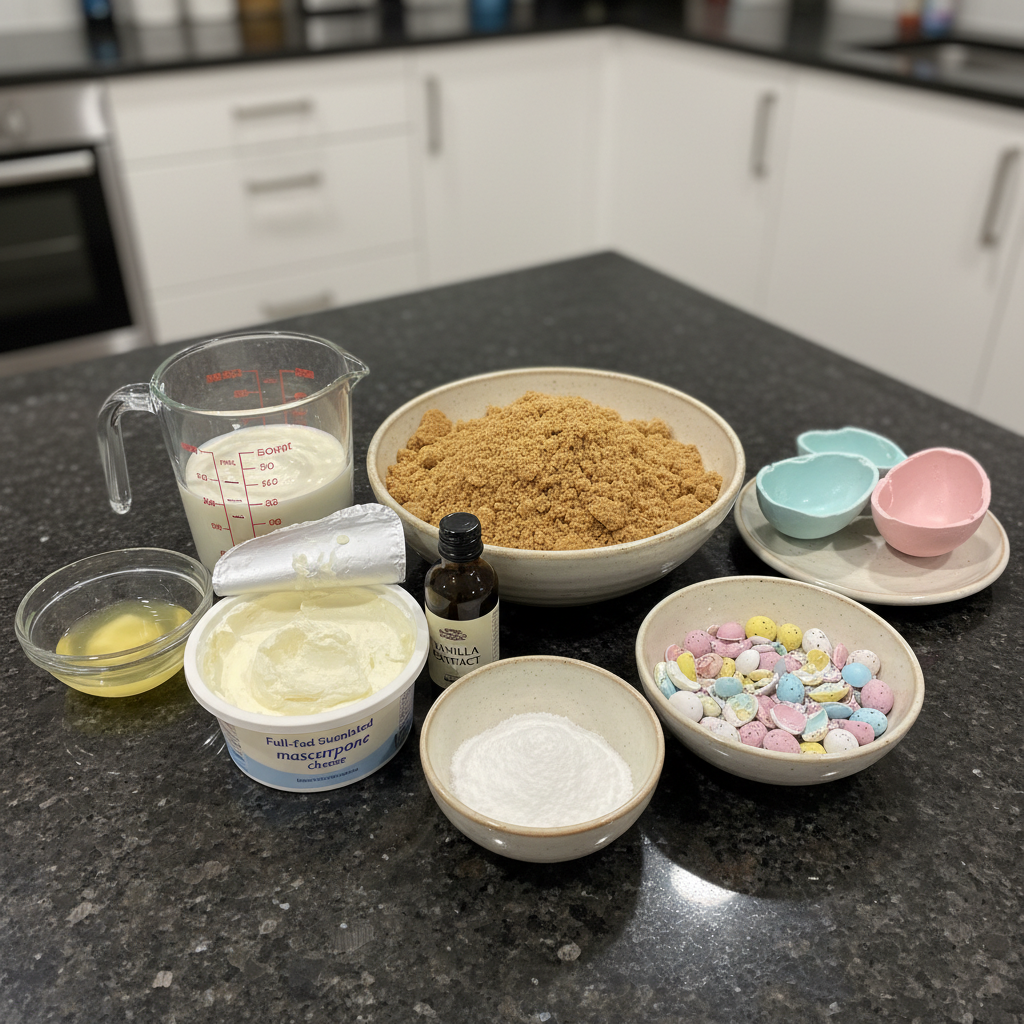
Here is everything you will need to create these irresistible Cheesecake Chocolate Eggs.
60 g Digestive biscuits (crushed)
45 g Unsalted butter (melted)
250 g Full fat mascarpone cheese (a lighter version or standard cream cheese may result in your eggs not setting properly)
120 g Double cream
80 g Icing sugar (sift)
1 tsp Vanilla extract
2 72g Easter eggs (halved)
100 g Mini eggs (crushed)
Ingredient Notes & Substitutions
Digestive biscuits: In the US, graham crackers are a readily available and excellent alternative to Digestive biscuits for the crumb base. You can also easily use gluten-free biscuits if preferred.
Mascarpone cheese: I cannot stress enough the importance of using full-fat mascarpone cheese for this cheesecake. It provides the necessary richness and consistency for the filling to set properly. For another sophisticated dessert that showcases this ingredient, try our elegant mascarpone raspberry tart. While you can use cream cheese as a substitute, it may result in a softer set, so be sure to drain any excess liquid from the cream cheese before using.
Double cream: For my friends in the US, double cream is equivalent to heavy cream. Look for heavy cream or heavy whipping cream for the best results.
Easter eggs: Choose good quality chocolate Easter eggs for the best flavor. For this recipe, I used 72g Easter eggs, which are a great size to hold a generous amount of filling without being overwhelming. If you use larger eggs, you might need to increase your filling quantities slightly.
Mini eggs: These delightful chocolate candies add a perfect crunch and pop of color. However, feel free to get creative with your toppings. Other chopped chocolate, sprinkles, or even finely crushed Oreos make great alternatives.
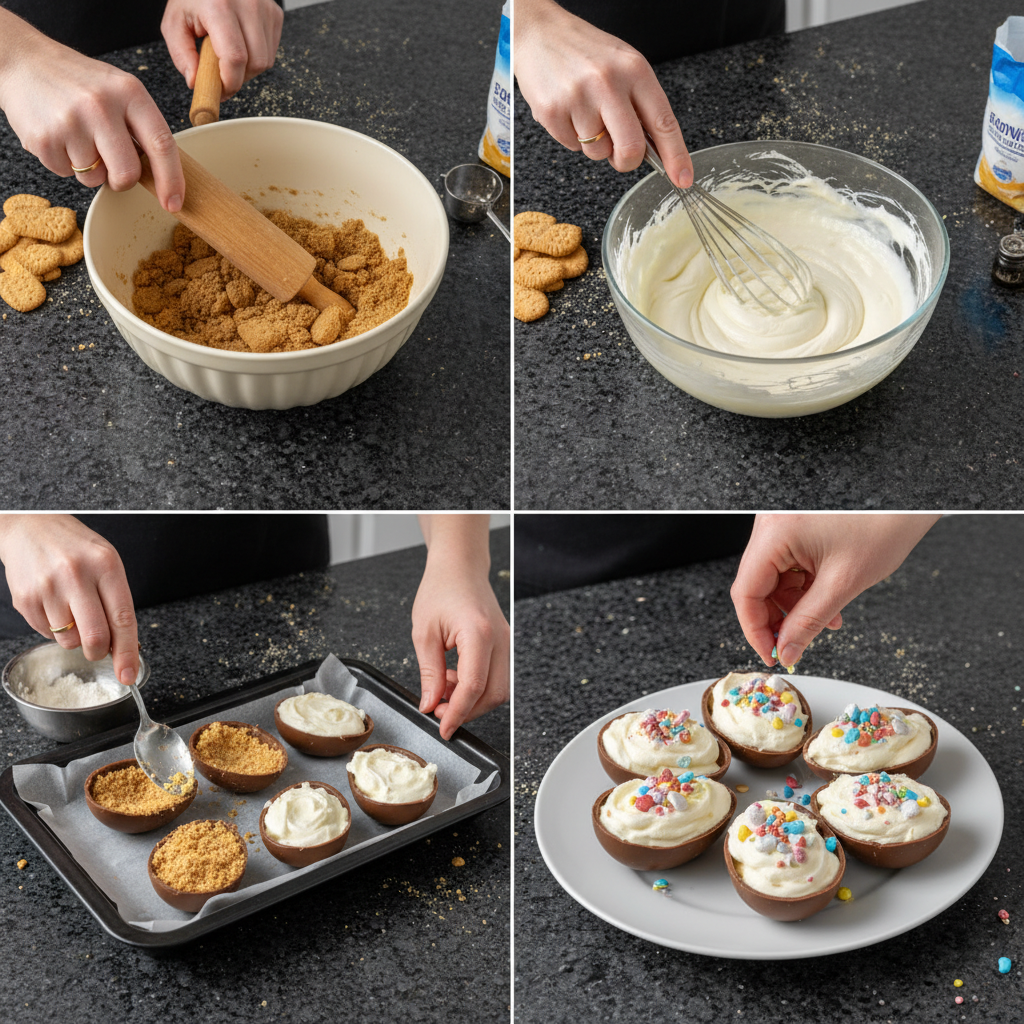
How to Make Cheesecake Chocolate Eggs
Creating these delightful cheesecake in chocolate eggs is a fun and straightforward process. Follow these steps for perfect results every time.
Step 1: Prepare the Biscuit Base
First, in a medium bowl, mix together the crushed Digestive biscuit crumbs and the melted unsalted butter. The mixture should come together easily, resembling wet sand, and it will smell wonderfully buttery. Tip this mixture onto a lined baking tray and chill for 15 minutes. This chilling time is important; it helps the biscuit base solidify and makes it easier to handle later.
Step 2: Prepare the Cheesecake Filling
Meanwhile, in a separate bowl, beat together the full-fat mascarpone cheese, vanilla extract, and sifted icing sugar until the mixture is smooth and well combined. The mascarpone mixture should be quite thick at this stage. Next, pour in the double cream and continue to mix until it is fully combined and set to one side. The mascarpone, vanilla, and icing sugar mixture should be quite thick. If it is runny you will need to whip the cream to soft peaks before mixing into the mascarpone mixture. The cheesecake filling should be the consistency of double cream that has been whipped to soft peaks or firmer to set properly.
Step 3: Create the Chocolate Shell (Unique Twist)
This is where our unique twist comes in! Gently melt your chocolate chips or a good quality chocolate bar. You can do this in the microwave in 30-second intervals, stirring each time, or over a double boiler. Once melted and smooth, use a small, clean pastry brush to paint a thin, even layer of melted chocolate inside each halved chocolate Easter egg. This crucial step is key to preventing soggy eggs. Place the chocolate-lined egg halves into the fridge for about 5 minutes to allow this inner chocolate shell to set firm.
Step 4: Assembly
Once your biscuit base has chilled, remove it from the fridge. Crush it into small crumbs. Add a heaped tablespoon of these buttery biscuit crumbs into each of the chocolate-lined Easter egg halves. Gently press the biscuit base down to form a compact layer at the bottom of the chocolate shell.
Step 5: Filling and Decoration
Now it is time for the creamy cheesecake filling. You can use a spoon to carefully scoop the cheesecake mixture into each egg, or for a neater finish, transfer the filling to a piping bag and pipe it in. Fill each egg generously. Sprinkle half of the filled eggs with the crushed Mini eggs. Feel free to use other alternative toppings like chocolate shavings or fresh berries for variety.
Step 6: Chilling
Allow the Cheesecake filled Easter Eggs to set in the fridge for an hour, or overnight if making ahead. This extended chilling allows the cheesecake to set properly. These will keep for 3 days in the fridge but are best served straight away.
Melting and Tempering Chocolate for the Perfect Shell
Creating that perfect inner chocolate shell for your cheesecake in chocolate eggs involves a bit of chocolate finesse. The goal is a smooth, even, and stable layer. You have a few options for melting chocolate.
Microwave method: Chop your chocolate into small, even pieces. Place it in a microwave-safe bowl. Heat in 30-second intervals on medium power, stirring thoroughly after each interval. It is crucial to stir even if the chocolate does not look fully melted, as residual heat will continue to melt it. Stop when there are still a few small lumps, and stir until smooth. This prevents burning.
Double boiler method: Place your chopped chocolate in a heatproof bowl set over a saucepan of simmering water. Ensure the bottom of the bowl does not touch the water. The steam will gently melt the chocolate. Stir continuously until smooth. This method offers more control and less risk of burning.
Why temper? Tempering chocolate involves heating and cooling it to specific temperatures to stabilize the cocoa butter crystals. This results in a shiny, snap-able finish that resists blooming, the gray streaks that can appear on untempered chocolate. For this recipe, if you are not tempering, using melting wafers or compound chocolate can offer a similar stable finish without the fuss of tempering. If using regular chocolate without tempering, simply ensure your Easter eggs are kept chilled to maintain the chocolate’s structure and prevent softening.
Troubleshooting: If your chocolate seizes, becoming thick and grainy, it is likely due to a tiny bit of water getting into it. Unfortunately, it is hard to reverse. To avoid burning, always melt slowly and stir frequently, especially with the microwave method. Different types of chocolate, such as dark, milk, or white chocolate, have different melting points, so adjust your heat and time accordingly. Dark chocolate melts at a higher temperature than milk or white chocolate.
Troubleshooting Runny Cheesecake Filling
A runny cheesecake filling can be disappointing, especially after all your hard work. Let us discuss why this might happen and how to fix it for your cheesecake in chocolate eggs.
Common causes: The most frequent culprits are using low-fat mascarpone cheese or over-mixing the filling. Low-fat dairy products simply do not have the fat content needed to create a firm set. Over-mixing can incorporate too much air, which collapses during chilling, or it can break down the structure of the mascarpone, making it thin.
Solutions: Always use full-fat mascarpone cheese. Its richness and density are essential for the proper texture and set. If you find your mascarpone mixture is thinner than desired before adding the double cream, or if you suspect it might be an issue, whip the double cream to soft peaks separately before gently folding it into the mascarpone mixture. This adds stability and body. To learn more about how no-bake cheesecakes set, you can find helpful information on the science behind it.
How to fix a runny filling: If you are already at the stage where your filling seems too runny, do not despair. You can try to salvage it. One method is to gently warm a small amount of gelatin with a tablespoon or two of water until dissolved, then slowly whisk it into your runny filling. Alternatively, a small amount of cornstarch mixed with a little liquid can be added, though this might require a very brief, gentle heat to activate. The simplest solution, however, is often more chilling. Ensure your cheesecake in chocolate eggs are refrigerated for a longer period, ideally overnight. The cold will help the fats in the mascarpone and cream solidify, firming up the dessert.
Pro Tips & Troubleshooting
Pro Tips
Use full-fat mascarpone for the best texture and set for your cheesecake filling. It makes all the difference.
Do not over-mix the cheesecake filling to prevent it from becoming runny. Mix until just combined.
Chill the biscuit base before adding it to the chocolate egg for easier handling and to ensure it sets firmly.
Melt the chocolate slowly and gently to avoid burning it, whether in the microwave or over a double boiler.
Use a warm knife to carefully separate the Easter egg halves. This helps create clean edges.
Decorate your cheesecake in chocolate eggs with your favorite toppings, such as crushed cookies, chocolate shavings, or fresh fruit.
For a richer flavor profile, consider adding a tablespoon of liqueur, like Baileys or Grand Marnier, to the cheesecake filling.
Common Mistakes to Avoid
Using low-fat mascarpone, which almost always results in a runny cheesecake filling that does not set properly.
Over-mixing the cheesecake filling, which can make it too thin and compromise its structure.
Burning the chocolate when melting it. Go slow and stir often.
Not chilling the biscuit base long enough. Give it ample time to firm up.
Using Easter eggs that are too warm, which can cause the chocolate to melt or soften when handled.
Serving & Storage
Serving Ideas
Serve these delightful cheesecake in chocolate eggs chilled for the best texture and flavor. The cold enhances the creamy filling and the crisp chocolate shell. Garnish each egg with extra Mini eggs, delicate chocolate shavings, or fresh berries like raspberries or strawberries for a touch of freshness and color. They pair wonderfully with a simple glass of cold milk, a warm cup of coffee, or even a rich dessert wine for an adult treat. For a truly festive spread, consider arranging them on a dessert board alongside other favorite Easter treats.
Storage and Make-Ahead
The cheesecake-filled Easter eggs can be stored in an airtight container in the fridge for up to 3 days. However, for the very best results, I recommend consuming them within 24 hours to enjoy their optimal freshness and texture. These are perfect for making ahead of time; you can prepare them the day before and store them in the fridge overnight. Freezing is not recommended for this particular dessert, as it can significantly affect the creamy texture of the cheesecake filling, potentially making it grainy or watery upon thawing.
Conclusion
There you have it, a truly delightful and surprisingly simple recipe for cheesecake in chocolate eggs. These are not just any Easter treats; they are a creamy, crunchy, and chocolatey celebration perfect for any holiday gathering. The unique twist of the inner chocolate shell ensures a perfect experience every time, preventing sogginess and adding an extra layer of flavor that I know you will adore.
Whether you are an experienced baker or a beginner looking for a foolproof dessert, this recipe is designed for success. I encourage you to try making these Cheesecake Chocolate Eggs and experiment with different toppings and flavors. They are sure to bring smiles to everyone’s faces. Share this easy and delicious recipe with your friends and family this Easter!
FAQ
Why is full-fat mascarpone important?
Full-fat mascarpone provides the necessary richness and stability for the cheesecake filling to set properly. Low-fat versions may result in a runny filling that does not hold its shape.
How do I prevent the chocolate egg from getting soggy?
The key is the melted chocolate shell layer. Brushing a thin layer of melted chocolate inside each Easter egg half and allowing it to set creates a barrier that prevents moisture from the filling from seeping into the outer chocolate egg.
What can I do if my cheesecake filling is too runny?
If the filling is runny, try whipping the double cream to stiff peaks separately before gently incorporating it into the mascarpone mixture. You can also add a small amount of gelatin or cornstarch, dissolved in a little hot water, to help it set.
How far in advance can I make these?
These Cheesecake Chocolate Eggs can be made up to 24 hours in advance and stored in the fridge. For the best texture and freshness, however, it is recommended to serve them as soon as possible after they have had sufficient time to chill and set.
What are some topping variations?
Get creative! You can try crushed Oreos, chopped nuts, a drizzle of salted caramel, fresh fruit like raspberries or blueberries, or even shavings of your favorite chocolate bar.
How long will these last in the fridge?
These will last for up to 3 days in the fridge when stored in an airtight container. However, they are best enjoyed within 24 hours for optimal flavor and texture.
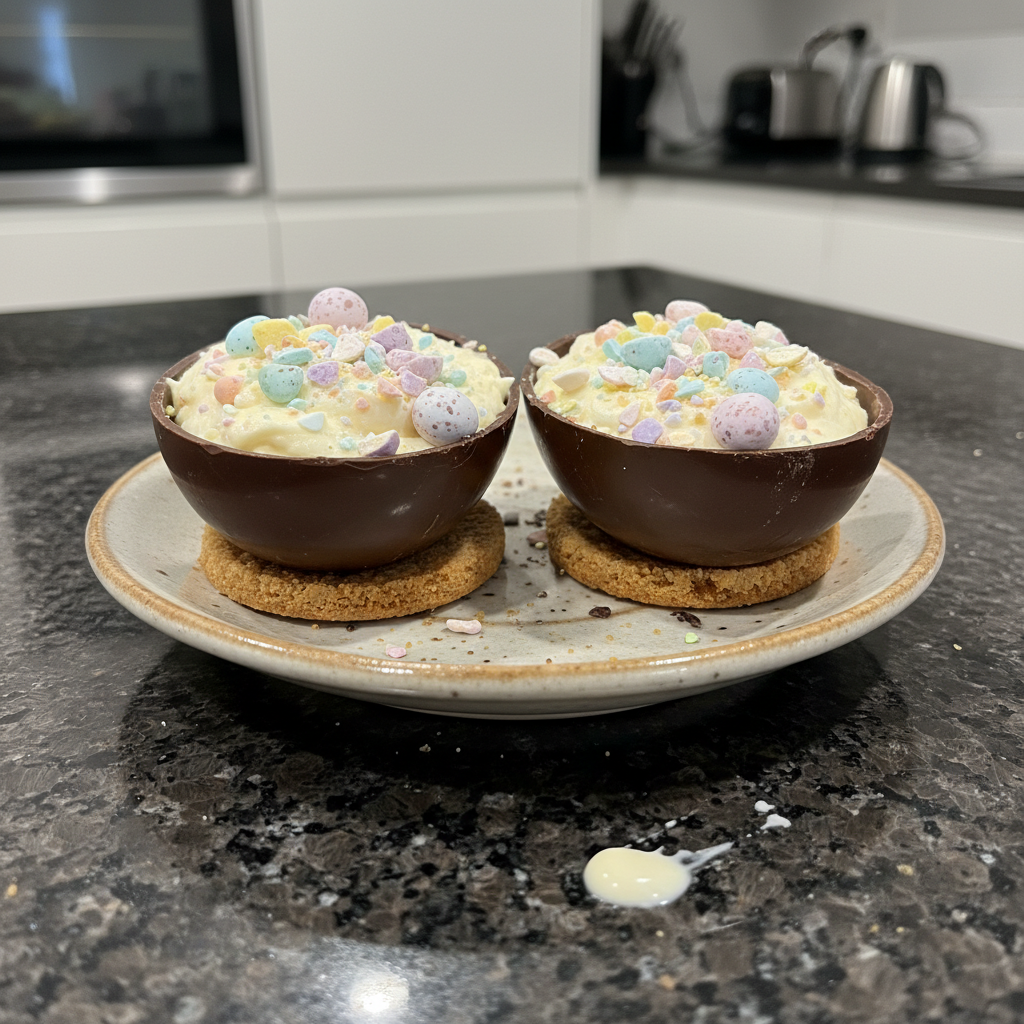
Cheesecake Chocolate Eggs: Easy Easter Treat
Ingredients
Equipment
Method
- In a medium bowl, mix together the crushed Digestive biscuit crumbs and the melted unsalted butter. The mixture should come together easily, resembling wet sand, and it will smell wonderfully buttery. Tip this mixture onto a lined baking tray and chill for 15 minutes. This chilling time is important; it helps the biscuit base solidify and makes it easier to handle later.
- Meanwhile, in a separate bowl, beat together the full-fat mascarpone cheese, vanilla extract, and sifted icing sugar until the mixture is smooth and well combined. The mascarpone mixture should be quite thick at this stage. Next, pour in the double cream and continue to mix until it is fully combined and set to one side. The mascarpone, vanilla, and icing sugar mixture should be quite thick. If it is runny you will need to whip the cream to soft peaks before mixing into the mascarpone mixture. The cheesecake filling should be the consistency of double cream that has been whipped to soft peaks or firmer to set properly.
- Gently melt your chocolate chips or a good quality chocolate bar. You can do this in the microwave in 30-second intervals, stirring each time, or over a double boiler. Once melted and smooth, use a small, clean pastry brush to paint a thin, even layer of melted chocolate inside each halved chocolate Easter egg. This crucial step is key to preventing soggy eggs. Place the chocolate-lined egg halves into the fridge for about 5 minutes to allow this inner chocolate shell to set firm.
- Once your biscuit base has chilled, remove it from the fridge. Crush it into small crumbs. Add a heaped tablespoon of these buttery biscuit crumbs into each of the chocolate-lined Easter egg halves. Gently press the biscuit base down to form a compact layer at the bottom of the chocolate shell.
- Now it is time for the creamy cheesecake filling. You can use a spoon to carefully scoop the cheesecake mixture into each egg, or for a neater finish, transfer the filling to a piping bag and pipe it in. Fill each egg generously. Sprinkle half of the filled eggs with the crushed Mini eggs. Feel free to use other alternative toppings like chocolate shavings or fresh berries for variety.
- Allow the Cheesecake filled Easter Eggs to set in the fridge for an hour, or overnight if making ahead. This extended chilling allows the cheesecake to set properly. These will keep for 3 days in the fridge but are best served straight away.
Notes

Sophie Reynolds is a baking specialist and dessert contributor at YumEasyMeals. She develops approachable, family-friendly dessert recipes focused on flavor, simplicity, and reliable results for everyday home cooks.