There is nothing quite like a comforting bowl of Niku Udon to soothe the soul and satisfy your hunger. This classic Japanese noodle dish, known for its tender beef and rich broth, is a favorite in my kitchen and across Japan. Today, I am thrilled to share my best Niku Udon recipe with you. It is a simple yet incredibly satisfying meal, perfect for a quick weeknight dinner or a special weekend treat. Get ready to create an authentic and delicious Japanese experience right at home.
Why You’ll Love This Niku Udon Recipe
My Niku Udon recipe truly stands out. It emphasizes creating a truly tender beef and a deeply flavorful dashi broth, which are the heart and soul of this dish. This careful focus ensures every bite is rich and satisfying.
Tender beef is achieved by gently simmering thinly sliced beef, preventing it from becoming tough. The savory broth is built on a robust dashi foundation, perfectly balanced with sweet and salty notes.
This recipe is also incredibly quick to make once you have your dashi ready. It is a family-friendly meal that offers immense comfort and warmth, making it a perfect addition to your regular meal rotation.
Ingredients Needed
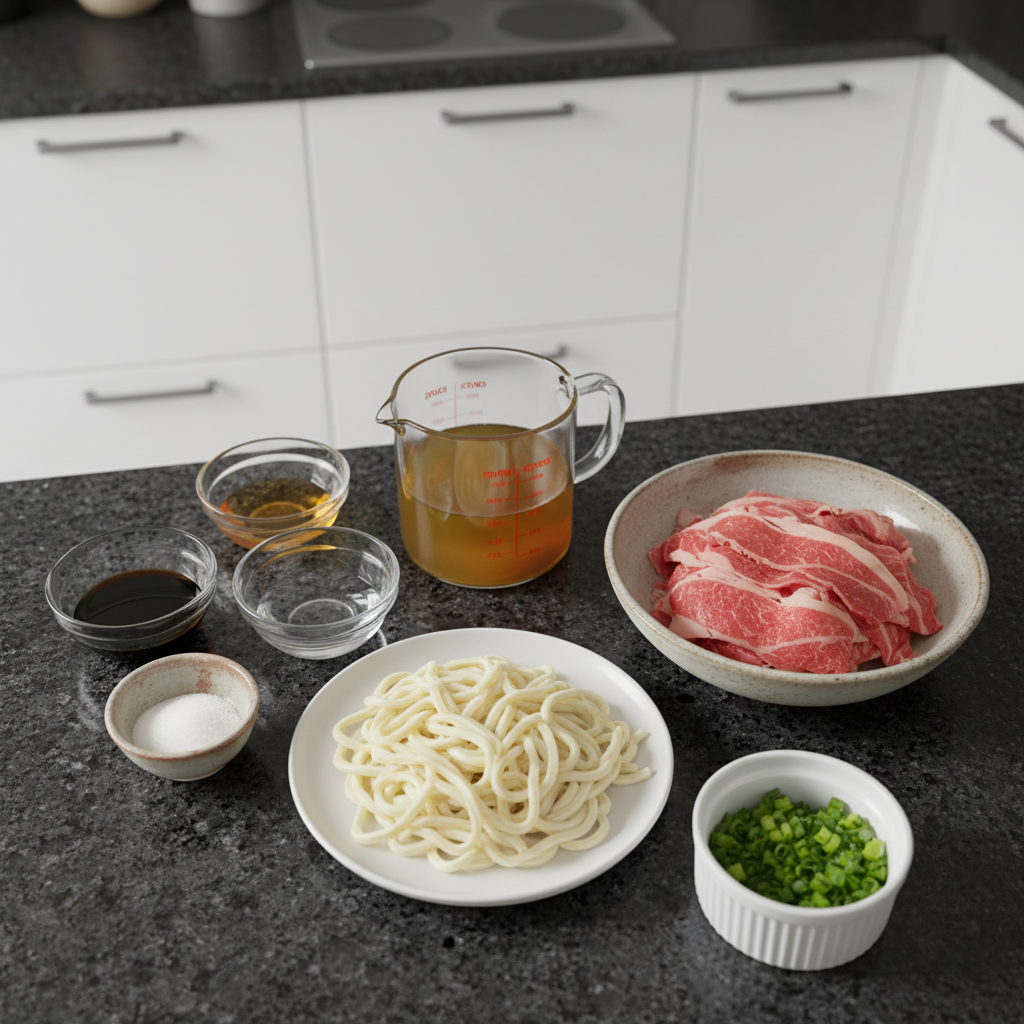
- 2 cups dashi broth (or water + dashi powder)
- 2 tablespoons mirin
- 2 tablespoons soy sauce
- 1 tablespoon sugar
- 1/2 pound thinly sliced beef (e.g., ribeye, sirloin, or shaved beef)
- 2 servings fresh or frozen udon noodles
- 2 green onions, thinly sliced, for garnish
- Shichimi togarashi (Japanese seven-spice blend), for garnish (optional)
Ingredient Notes & Substitutions
For those with dietary considerations, this recipe is quite adaptable. If you are looking for a gluten-free option, make sure to use gluten-free udon noodles and a tamari or gluten-free soy sauce. These substitutions will keep the dish delicious and accessible.
To make this a vegetarian or vegan Niku Udon, simply swap out the beef for pan-fried tofu or a medley of sautéed mushrooms. You will also need to use a vegetarian dashi broth, perhaps made from kombu and shiitake mushrooms. When choosing udon noodles, I recommend brands like Maruchan or Myojo for their quality and availability in US markets. For the beef, thinly sliced ribeye or sirloin gives the best tenderness, but even pre-packaged shaved beef works beautifully.
How to Make Niku Udon
Prepare the Broth
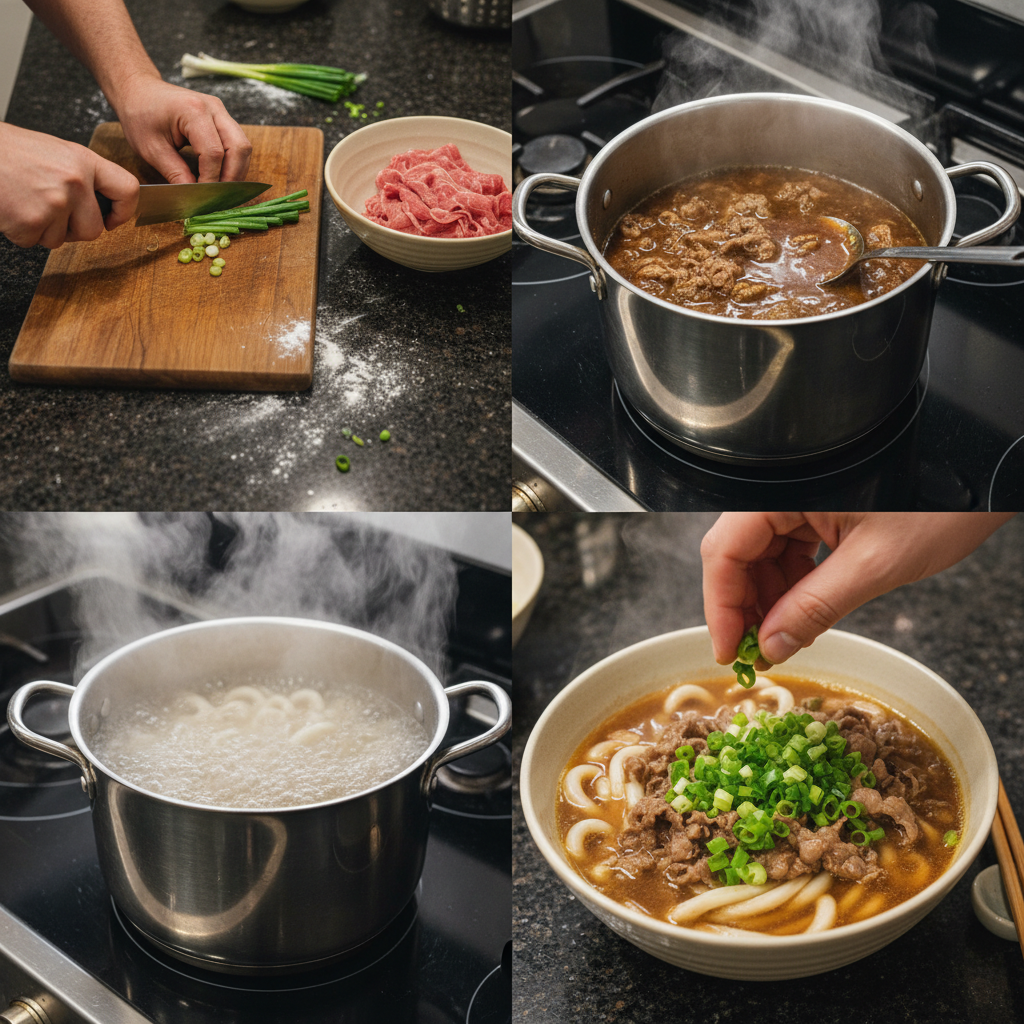
First, I combine my dashi broth, mirin, soy sauce, and sugar in a medium saucepan. I bring this mixture to a gentle simmer over medium heat, allowing the flavors to meld beautifully. You will notice a fragrant steam rising, indicating the broth is coming together. Taste the broth and adjust the sweetness or saltiness to your liking; it should have a perfect balance of savory umami with a touch of sweetness.
Cook the Beef
Next, I add the thinly sliced beef to the simmering broth. It is crucial here not to overcook the beef. I gently simmer it for just 1-2 minutes until it is no longer pink. The meat should remain incredibly tender and absorb the wonderful flavors of the broth. Overcooking can lead to tough meat, which we want to avoid for the best texture.
Prepare the Udon Noodles
While the beef simmers, I cook the udon noodles according to their package directions. For fresh udon, this usually means a quick boil for a couple of minutes until they are perfectly al dente. For frozen udon noodles, follow the package instructions carefully. Once cooked, I drain the noodles thoroughly and, importantly, rinse them under hot water. This step helps to remove any excess starch, preventing your broth from becoming cloudy or starchy.
Assemble and Serve
To assemble, I divide the hot, rinsed udon noodles evenly among serving bowls. Then, I carefully ladle the tender beef and the aromatic broth over the noodles. The warmth from the broth and noodles will rise, creating an inviting aroma. Finally, I garnish each bowl generously with thinly sliced green onions and, if I am feeling a little adventurous, a sprinkle of shichimi togarashi for a subtle kick. Serve immediately and enjoy the comforting warmth of your homemade Niku Udon.
Mastering the Dashi Broth
The dashi broth is truly the foundation of any great Niku Udon. It is where the deep umami flavor comes from, and mastering it elevates your dish from good to extraordinary. Traditional dashi is often made from kombu, a type of dried kelp, and katsuobushi, dried bonito flakes. The delicate extraction of these ingredients creates a savory base.
For a vegetarian or vegan dashi, you can easily use kombu combined with dried shiitake mushrooms. Soaking the kombu and shiitake in water for several hours or overnight, then gently heating it, yields a wonderfully rich and earthy broth. This method enhances the umami profile significantly.
You can also customize your dashi broth to your preference. If you like a stronger mushroom flavor, increase the shiitake. If you prefer a lighter touch, stick to pure kombu dashi. For busy home cooks in the US, good quality dashi packets or dashi powder are readily available at Asian grocery stores and even some larger supermarkets. These convenient alternatives offer a quick shortcut without compromising too much on the essential Japanese cuisine flavor.
Pro Tips & Troubleshooting
Pro Tips
Always use high-quality dashi for the best flavor. This forms the backbone of your Niku Udon.
Do not overcook the udon noodles. They should be pleasantly chewy, not mushy.
Simmer the beef gently and briefly to keep it tender and juicy.
Adjust the sweetness of the broth to your liking; a little sugar balances the savory soy sauce and mirin beautifully.
For an extra rich and decadent touch, consider adding a soft-boiled egg to your bowl.
Common Mistakes to Avoid
A common mistake is using too much soy sauce, which can make the broth overly salty and overpower the delicate dashi flavor.
Be careful not to overcook the beef; this is a frequent culprit for tough, unappetizing meat.
Always rinse your udon noodles after cooking. Skipping this step can lead to a starchy, cloudy broth.
Never skip the dashi. It is absolutely essential for the authentic umami depth of this Japanese cuisine dish.
Serving & Storage
Serving Ideas
Niku Udon is a complete meal on its own, but it pairs wonderfully with a few simple side dishes. Consider serving it alongside crispy tempura, steamed edamame, or a small bowl of Japanese pickles for a delightful contrast. For drinks, green tea is a classic accompaniment, or perhaps a small glass of sake for the adults. To make your Niku Udon visually appealing, garnish with plenty of thinly sliced green onions, a sprinkle of sesame seeds, and a dash of chili flakes for color and a touch of heat.
Storage and Make-Ahead
If you have any delicious Niku Udon leftovers, store them in an airtight container in the refrigerator for up to 2 days. When you are ready to enjoy it again, reheat gently on the stovetop over low heat or in the microwave until it is heated through. For convenience, you can prepare the dashi broth and cook the beef ahead of time. Store them separately in the refrigerator and combine with freshly cooked udon noodles just before serving for the best quality.
Conclusion
I hope you feel inspired to bring the comforting flavors of this Niku Udon recipe into your own kitchen. It truly is an easy and delicious dish to prepare, perfect for beginners and seasoned cooks alike. The simple steps ensure a perfect bowl every time, with tender beef and a deeply satisfying dashi broth.
Do not hesitate to experiment with different toppings and variations to make it uniquely yours. Perhaps try adding some spinach or mushrooms next time. If you enjoyed this Niku Udon, I encourage you to share this recipe with friends and family, and explore other wonderful Japanese noodle recipes. Happy cooking!
FAQ
Can I use frozen udon noodles? Yes, frozen udon noodles work well and are a convenient option. Be sure to cook them according to package directions.
What kind of beef should I use? Thinly sliced ribeye or sirloin is recommended for tenderness. Shaved beef also works well.
Can I make this vegetarian? Yes, substitute the beef with fried tofu or mushrooms and use a vegetarian dashi broth.
How do I store leftovers? Store leftover Niku Udon in an airtight container in the refrigerator for up to 2 days. Reheat gently on the stovetop or in the microwave.
Can I add vegetables? Yes, sliced mushrooms, spinach, or bok choy can be added to the broth.

Ultimate Niku Udon Recipe: Beef Udon Perfection
Ingredients
Equipment
Method
- Combine the dashi broth, mirin, soy sauce, and sugar in a medium saucepan. Bring this mixture to a gentle simmer over medium heat, allowing the flavors to meld. Taste the broth and adjust the sweetness or saltiness to your liking for a perfect balance.
- Add the thinly sliced beef to the simmering broth. Gently simmer for just 1-2 minutes until it is no longer pink. Ensure the meat remains incredibly tender and absorbs the wonderful flavors, avoiding overcooking.
- While the beef simmers, cook the udon noodles according to their package directions. For fresh udon, boil for a couple of minutes until al dente. Drain the noodles thoroughly and rinse them under hot water to remove any excess starch, preventing a cloudy broth.
- Divide the hot, rinsed udon noodles evenly among serving bowls.
- Carefully ladle the tender beef and the aromatic broth over the noodles.
- Garnish each bowl generously with thinly sliced green onions and, if desired, a sprinkle of shichimi togarashi for a subtle kick. Serve immediately and enjoy.
Notes

Taya Bennett is the founder of YumEasyMeals, a platform dedicated to easy, delicious, and quick-to-prepare recipes for busy families. Passionate about everyday cooking, she simplifies meals with practical, accessible, and always delicious ideas.
Discover her creations at: yumeasymeals.com