Welcome to my kitchen, where fresh flavors and simple techniques come together to create truly memorable dishes. Today, I am excited to share a recipe for a vibrant homemade Cilantro Pesto that will awaken your taste buds. Forget your preconceived notions of pesto; this version introduces a delightful twist with toasted pepitas, offering a unique nutty profile and a satisfying texture. It is a fantastic way to elevate your cooking, whether you are a seasoned chef or just starting your culinary journey. This recipe is designed to be straightforward, ensuring you can bring this fresh and flavorful sauce to your table with ease.
Why You’ll Love This Cilantro Pesto Recipe
This Cilantro Pesto recipe stands out from the crowd, primarily due to its unique addition of 1/4 cup toasted pepitas, also known as pumpkin seeds. These little gems offer a subtle nutty flavor that beautifully complements the bright, fresh cilantro. Beyond their delicious taste and texture, pepitas also offer several nutritional benefits. They also provide a pleasant textural contrast to the otherwise smooth pesto. Toasting the pepitas beforehand is a crucial step; it enhances their natural flavor, leading to a more complex and enjoyable pesto experience. This twist elevates the sauce beyond traditional basil pesto, creating something truly special.
Beyond its unique flavor profile, this pesto is incredibly versatile. It is perfect for a variety of dishes, serving as much more than just a pasta sauce. You can use it as a vibrant dip, a flavorful spread for sandwiches, or even a quick marinade for proteins. Making fresh pesto at home is surprisingly quick and easy. You will be amazed at how fast you can whip up this bright, homemade cilantro pesto, making it a healthier and more satisfying alternative to store-bought options. Plus, it is naturally dairy-free, vegan, and gluten-free, making it suitable for many dietary preferences.
Ingredients Needed for Our Zesty Cilantro Pesto
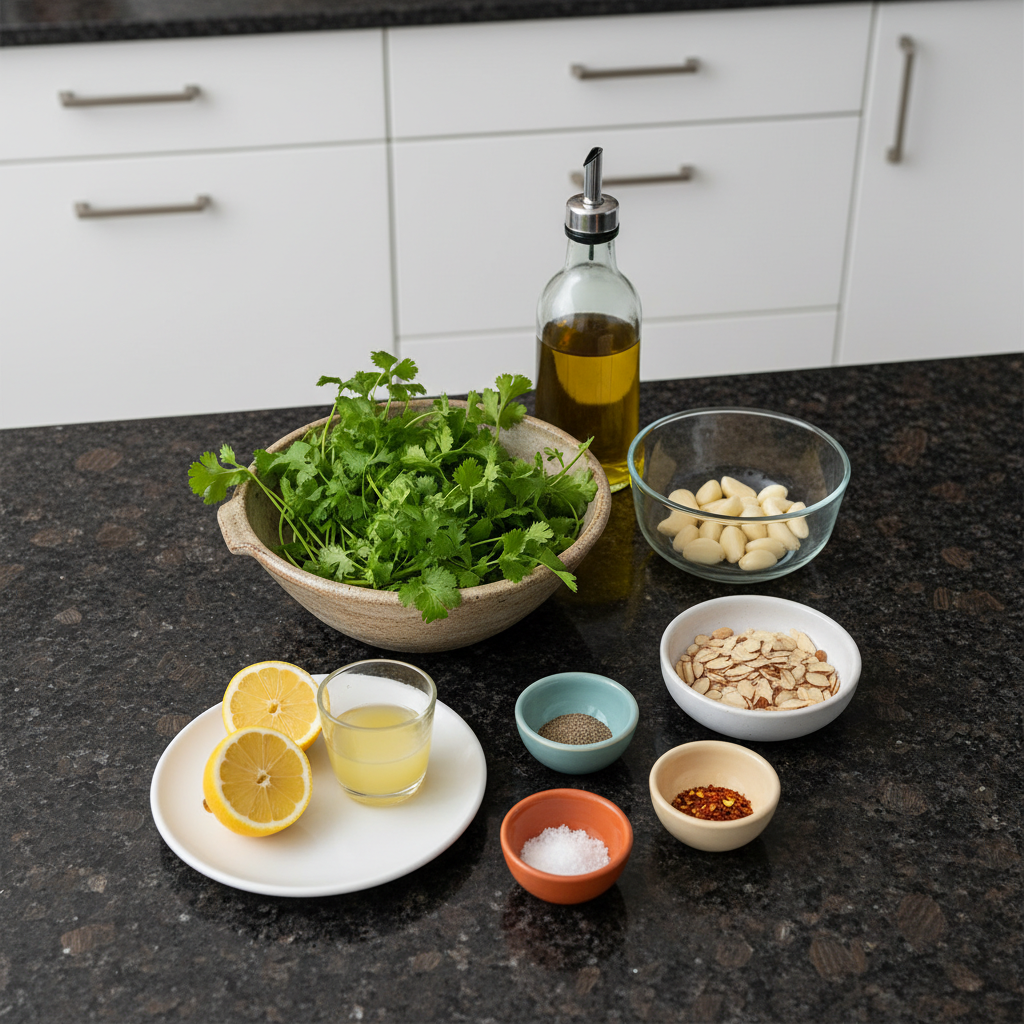
Here are the fresh ingredients you will need to create this delicious cilantro pesto in your own kitchen.
* 1/2 cup slivered almonds (or 2/3 cup whole almonds)
* 2 cups fresh cilantro (large stems removed)
* 2 garlic cloves
* 1/2 cup olive oil
* 1 1/2 tablespoons lemon juice
* 1/2 teaspoon salt
* 1/4 teaspoon pepper
* 1/4 teaspoon crushed red pepper (optional)
* 1/4 cup toasted pepitas
Ingredient Notes & Substitutions
When selecting cilantro, always look for vibrant green leaves without any wilting. While you should remove any large, thick stems, feel free to keep the smaller, more tender stems as they contain a lot of flavor and contribute to the pesto’s texture.
The almonds provide a lovely creaminess, and the toasted pepitas are our unique twist. They introduce a distinct nutty flavor that is different from traditional pine nuts or even walnuts, offering a more earthy and slightly sweeter note. If you prefer other nut alternatives, you can certainly try pine nuts or walnuts, but the pepitas truly make this cilantro pesto special.
For the olive oil, I recommend using a good quality, lighter-flavored variety. A robust, peppery olive oil can sometimes make the pesto taste bitter and overpower the delicate cilantro flavor. Some chefs also enjoy using walnut oil for an added layer of nutty depth, or avocado oil for a milder taste.
Freshly squeezed lemon juice is essential for brightness and acidity. It cuts through the richness of the oil and nuts. Always taste and adjust the amount to your preference; you might find you want a little more zing.
Fresh garlic cloves are key for that classic pesto punch. For a low FODMAP version, you can gently sauté the garlic cloves whole in the olive oil for a few minutes, then remove the cloves and allow the infused oil to cool before using it in the pesto. This way, you get the garlic flavor without the FODMAP compounds.
The crushed red pepper is optional but highly recommended if you enjoy a subtle kick. For more pronounced heat, you could experiment with a tiny bit of fresh jalapeno or a pinch of cayenne powder.
It is wonderful that this recipe is naturally vegan, dairy-free, and gluten-free. For those with nut allergies, you can make this pesto truly nut-free by omitting the almonds and increasing the pepitas slightly, or by using other seeds like sunflower seeds.
How to Make Our Easy Cilantro Pesto
Making this cilantro pesto is a quick and rewarding process. I love seeing how simple ingredients transform into such a flavorful sauce.
Preparing Your Vibrant Cilantro Pesto
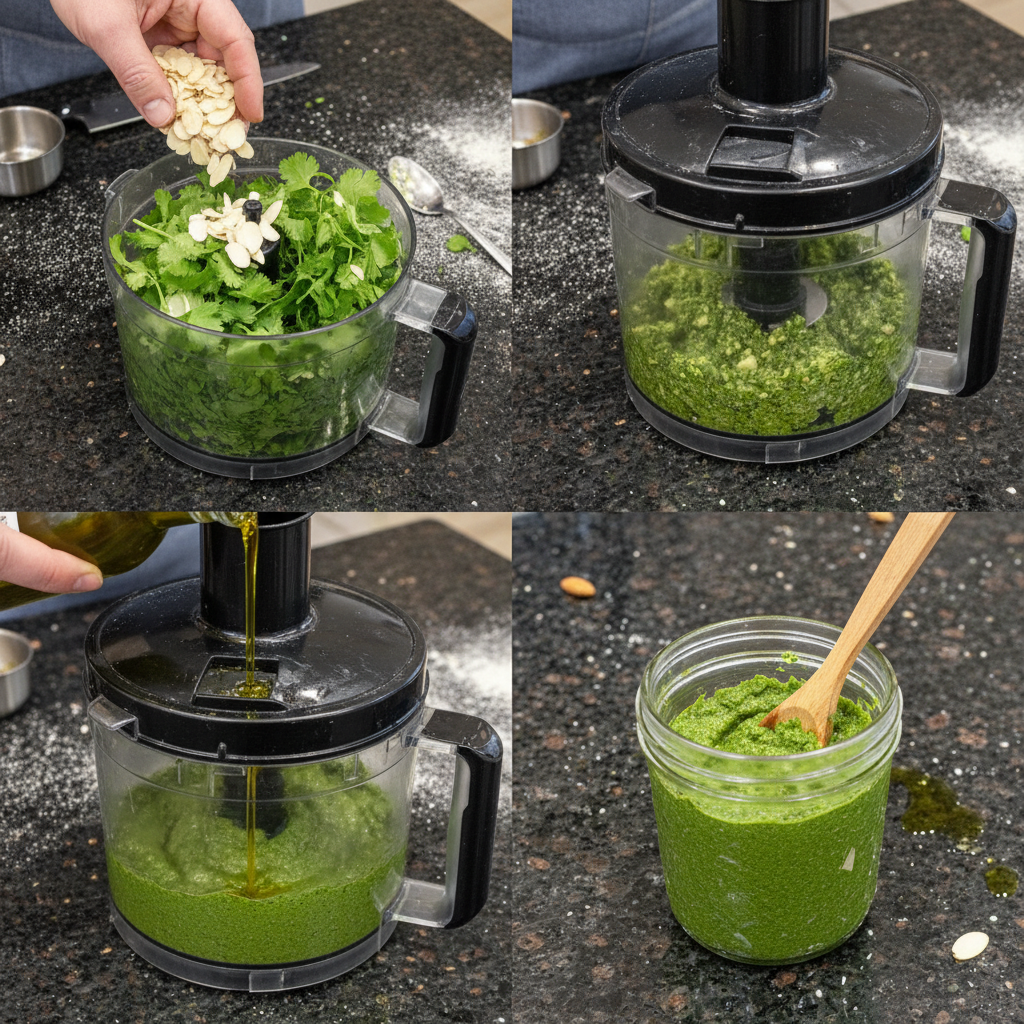
To begin making the pesto, gather all your ingredients. In the bowl of a food processor, combine the slivered almonds, fresh cilantro, garlic cloves, olive oil, lemon juice, salt, pepper, crushed red pepper (if using), and of course, the toasted pepitas. Secure the lid and blend the mixture until it becomes smooth. You will want to scrape down the sides of the food processor bowl as needed to ensure all the ingredients are fully incorporated. Continue blending until the pesto achieves a consistent, bright green color and a creamy texture. Once blended, taste the pesto and adjust the seasoning with additional salt and pepper, to your liking.
Tossing with Pasta for a Quick Meal
When you are ready to use this delicious cilantro pesto as a pasta sauce, simply cook 1 pound of your favorite pasta according to the package directions. Make sure to cook it in a large pot of well-salted water. Before draining the pasta, remember to reserve about 1/2 cup of the starchy pasta water. This reserved water is a secret weapon for achieving the perfect sauce consistency. Drain the pasta and then return it to the pot. Add about 1 cup of the fresh pesto sauce to the warm pasta. Toss everything together, adding 1 to 2 tablespoons of the reserved pasta water at a time until the sauce beautifully coats the pasta and reaches your desired consistency. The steam will release the vibrant aroma of the cilantro and garlic.
Mastering Your Pesto: Consistency & Alternative Methods
Achieving the perfect consistency for your pesto is key to how it will perform in your dishes. Sometimes, a little adjustment is all it takes to make it just right.
Achieving Perfect Pesto Consistency
If your pesto turns out too thick after blending, do not worry. You can easily thin it out by adding a little more olive oil, a tablespoon at a time, until it reaches a spoonable but not runny consistency. Alternatively, if you are using it for pasta, a splash of the reserved pasta water can also work wonders. If, however, your pesto is too thin, you can thicken it by adding a few more nuts or seeds, like additional toasted pepitas or almonds, or even a bit more fresh cilantro. The ideal pesto should be rich and vibrant, with a texture that is easy to spread or toss with other ingredients.
No Food Processor? No Problem!
While a food processor makes quick work of pesto, you can absolutely make this cilantro pesto without one. The traditional method uses a mortar and pestle. This requires a bit more patience but yields a uniquely textured pesto that is slightly coarser and has a rustic charm. Begin by finely chopping the cilantro and garlic by hand. Then, in a sturdy mortar, add the garlic, salt, and half of the nuts (almonds and pepitas) and grind them into a paste. Gradually add the cilantro, working it into the paste. Finally, slowly drizzle in the lemon juice and olive oil while continuing to grind until you reach your desired consistency. It is a wonderful way to connect with the culinary past.
Pro Tips & Troubleshooting for Perfect Pesto Every Time
Years of making pesto have taught me a few tricks that can make all the difference. Follow these tips to ensure your cilantro pesto is always a success.
Pro Tips
Always use a lighter-flavored olive oil to prevent any bitterness from developing in your pesto. This ensures the bright flavors of the cilantro truly shine through.
When preparing your cilantro, remove only the thickest, toughest stems. The smaller, more tender stems are full of flavor and contribute to the pesto’s overall texture. Do not discard them!
For a different nutty depth, consider experimenting with walnut oil in place of some or all of the olive oil. It complements the pepitas wonderfully.
If you are preparing this for someone following a low FODMAP diet, you can still enjoy the flavor of garlic. Gently sauté whole garlic cloves in the olive oil until fragrant, then remove the cloves before cooling the oil and using it in the pesto.
Never skip toasting the pepitas. This step is essential for enhancing their flavor and texture, which is a signature part of this unique pesto.
The fresher your ingredients, the better your pesto will taste. Always opt for vibrant, crisp cilantro and freshly squeezed lemon juice for the best results.
Remember to taste your pesto and adjust the salt and pepper as needed at the very end. This ensures the seasoning is perfect for your palate.
Common Mistakes to Avoid
Be careful not to over-blend your pesto. Over-processing can generate heat, which can dull the vibrant green color of the cilantro and diminish its fresh flavor. Aim for a smooth consistency, but avoid excessive aeration.
Using a strong, bitter olive oil can easily overpower the delicate cilantro and create an unpleasant taste. Stick to lighter, milder options.
When using a food processor, always remember to scrape down the sides of the bowl. Failing to do so can lead to uneven blending, leaving you with chunks of unmixed ingredients.
Pay attention to the consistency of your pesto. Ignoring it can result in a sauce that is too thick to spread or too thin to coat pasta properly. Make adjustments as needed.
Skipping the toasting step for the pepitas is a missed opportunity. Without toasting, they will not contribute the same depth of flavor or satisfying texture that makes this pesto so special.
Creative Serving Ideas & Smart Storage Solutions
This cilantro pesto is incredibly versatile, extending its use far beyond a simple pasta dish. I love discovering new ways to incorporate its vibrant flavor into my meals.
Serving Ideas
Think beyond pasta. This pesto makes a fantastic marinade or finishing sauce for grilled salmon, chicken, or shrimp. The bright notes really complement these proteins beautifully.
It is also excellent as a vegetable enhancer. Drizzle it over roasted beets, potatoes, or corn on the cob for an added layer of flavor.
You can transform it into a flavorful sandwich spread by mixing it with a bit of mayonnaise, or use it as a vibrant dip for fresh vegetables, crackers, or pita bread.
Whisk a spoonful into a simple vinaigrette to create a fresh and herbaceous salad dressing that elevates any green salad.
Get creative! Swirl a dollop into a bowl of soup or stew just before serving, spread it on flatbread as a quick appetizer, or even top scrambled eggs with it for a zesty breakfast.
When serving with pasta, shapes like rotini, fusilli, or penne work wonderfully as their grooves and twists hold the rich sauce perfectly. This pesto is also delicious with gluten-free pasta options.
Storage and Make-Ahead
To store your freshly made pesto, transfer it to an airtight container. It will keep beautifully in the refrigerator for up to 5 days. To prevent oxidation and keep that vibrant green color, press a layer of plastic wrap directly onto the surface of the pesto, or pour a thin layer of olive oil over the top before sealing the container.
This cilantro pesto freezes exceptionally well, making it perfect for meal prep. You can freeze it for up to 6 months. My favorite trick is to spoon the pesto into ice cube trays. Once frozen solid, transfer the pesto cubes to a freezer-safe bag. This allows you to thaw just the right amount whenever you need a burst of fresh flavor. To thaw, simply take out the desired number of cubes and let them come to room temperature or gently warm them.
Regarding canning, I generally do not recommend home canning pesto. Pesto has a low acidity and high pH level, combined with its density, which makes it unsafe for typical water bath canning methods. Without specific, tested, and often acidic recipes, it is best to stick to refrigeration or freezing for storage safety.
This pesto is an ideal make-ahead component for your weekly meal prep, ensuring you have fresh flavor at your fingertips anytime.
Enjoy Your Homemade Cilantro Pesto!
I hope you are as excited as I am about this Cilantro Pesto recipe. Its vibrant flavor, coupled with the ease of preparation and the special touch of the toasted pepitas, makes it a truly versatile and delicious sauce. Whether you are a seasoned cook or just starting in the kitchen, you can achieve fantastic results with this recipe.
I encourage you to try this unique pesto, experiment with the suggested serving ideas, and perhaps even discover your own favorite variations. Share your creations with me or print this recipe to keep it handy in your recipe collection. Happy cooking!
Frequently Asked Questions About Cilantro Pesto
Here are some common questions I hear about making and using cilantro pesto.
How much does this cilantro pesto recipe make?
This recipe typically yields about 1 to 1.5 cups of pesto, depending on how tightly packed your cilantro is. It is enough for one pound of pasta with some leftover for other uses.
Can you freeze cilantro pesto?
Yes, you can absolutely freeze cilantro pesto. It freezes beautifully for up to 6 months. I recommend freezing it in ice cube trays for convenient, single-serving portions. Once frozen, transfer the cubes to a freezer-safe bag.
How long will cilantro pesto store in the refrigerator?
When stored in an airtight container in the refrigerator, cilantro pesto will last for up to 5 days. To maintain its fresh green color and prevent oxidation, press a layer of plastic wrap directly onto the surface of the pesto or pour a thin layer of olive oil on top before sealing.
What are some creative ways to use cilantro pesto?
Beyond pasta, cilantro pesto is fantastic as a marinade for grilled salmon or chicken, a spread for sandwiches, a flavorful dip for vegetables, or even stirred into soups and stews.
Is this cilantro pesto recipe vegan?
Yes, this cilantro pesto recipe is naturally vegan and dairy-free as written, making it suitable for a plant-based diet.
How can I adjust the consistency of the pesto if it’s too thick or too thin?
If your pesto is too thick, simply add more olive oil, or a splash of water (or pasta water if using for pasta), one tablespoon at a time, until you reach your desired consistency. If it is too thin, you can add more nuts, seeds, or fresh cilantro to thicken it.
What other nuts or seeds can be used in cilantro pesto?
While this recipe features almonds and pepitas, you can certainly experiment with other nuts or seeds. Walnuts or traditional pine nuts work well. For a truly nut-free option, you could use sunflower seeds or additional pepitas.
How can I make this cilantro pesto recipe low FODMAP?
To make this pesto low FODMAP, you can infuse the olive oil with garlic flavor without including the garlic cloves. Gently sauté whole garlic cloves in the olive oil for a few minutes, then remove the cloves and allow the oil to cool completely before using it in the pesto.
What kind of pasta goes well with cilantro pesto?
Cilantro pesto pairs well with many pasta shapes. Short, sturdy shapes like rotini, fusilli, penne, or orecchiette are excellent choices as their nooks and crannies hold the sauce beautifully. It also works wonderfully with long pasta like spaghetti or linguine, and with gluten-free pasta options.
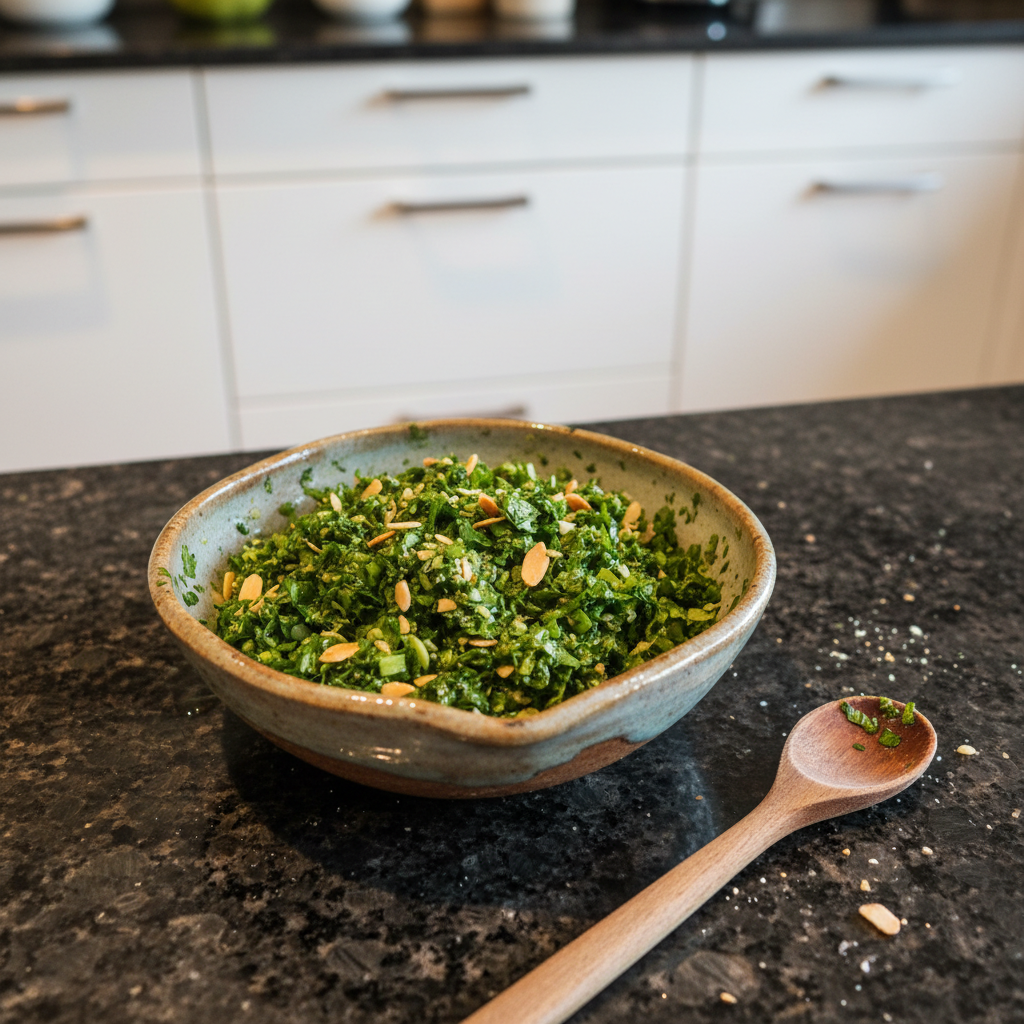
Cilantro Pesto with Toasted Pepitas: A Zesty & Nutty Twist
Ingredients
Equipment
Method
- Gather all your ingredients. In the bowl of a food processor, combine the slivered almonds, fresh cilantro, garlic cloves, olive oil, lemon juice, salt, pepper, crushed red pepper (if using), and the toasted pepitas.
- Secure the lid and blend the mixture until it becomes smooth. Scrape down the sides of the food processor bowl as needed to ensure all ingredients are fully incorporated.
- Continue blending until the pesto achieves a consistent, bright green color and a creamy texture. Taste the pesto and adjust the seasoning with additional salt and pepper, to your liking.
- When ready to use this delicious cilantro pesto as a pasta sauce, simply cook 1 pound of your favorite pasta according to the package directions in a large pot of well-salted water.
- Before draining the pasta, remember to reserve about 1/2 cup of the starchy pasta water. Drain the pasta and then return it to the pot.
- Add about 1 cup of the fresh pesto sauce to the warm pasta. Toss everything together, adding 1 to 2 tablespoons of the reserved pasta water at a time until the sauce beautifully coats the pasta and reaches your desired consistency.
Notes

Emily Thompson is a home cook and food enthusiast who believes that great meals bring families together. She loves exploring creative twists on classic American comfort food, always testing new ideas in her kitchen. Emily is passionate about sharing simple, practical recipes and time-saving tips to help busy people enjoy cooking at home. Her approachable style makes every dish accessible, delicious, and perfect for those seeking inspiration for everyday meals and special occasions. Find Emily’s latest creations and kitchen wisdom on yumeasymeals.com.