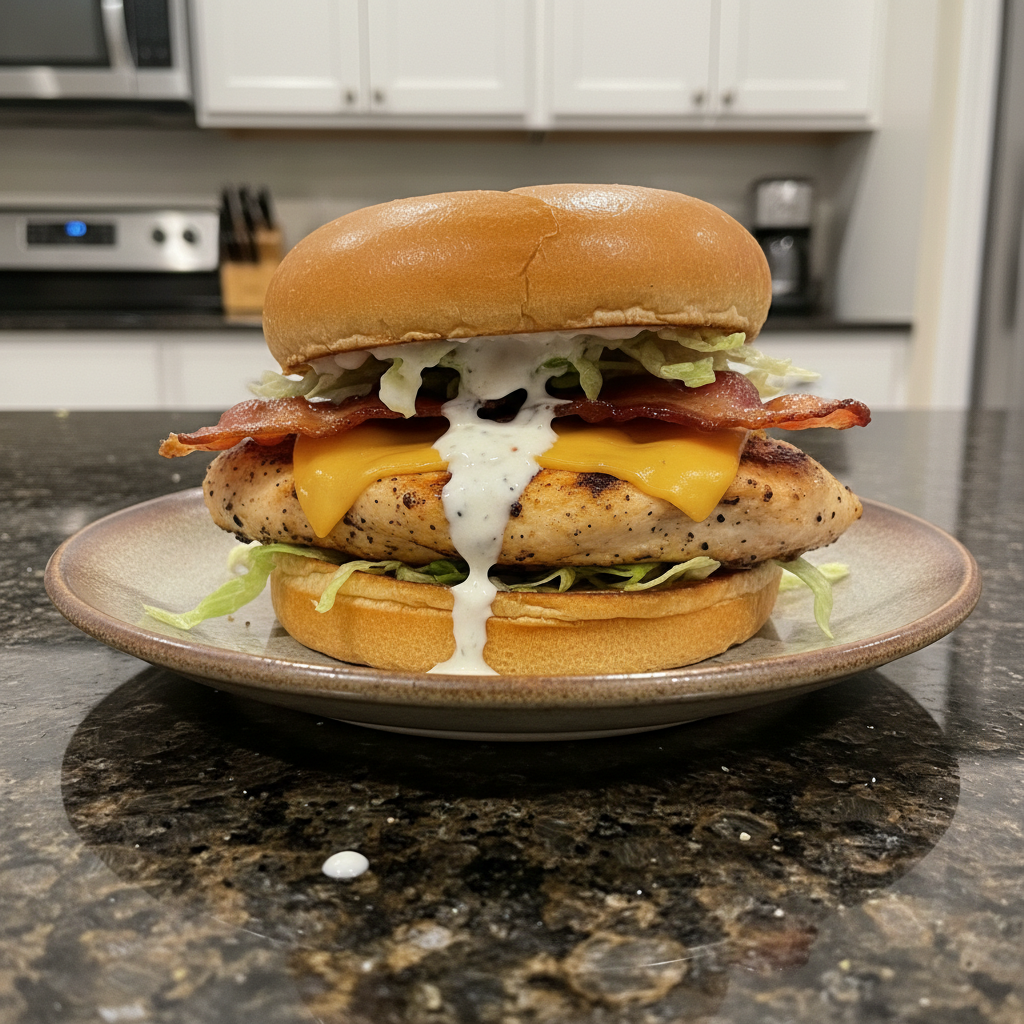
Step into my kitchen and prepare to be delighted by this incredibly fresh, vibrant, and satisfying Mediterranean Falafel Bowl. It’s a dish that perfectly marries convenience with authentic flavor, making it an ideal choice for anyone seeking a healthy meal that doesn’t compromise on taste. Whether you’re a seasoned home cook or just starting your culinary journey, you’ll find this recipe a joy to assemble, offering endless possibilities for customization and a genuinely delicious experience for healthy eating and busy lifestyles.
Why You’ll Love This Mediterranean Falafel Bowl
I know you’re going to fall in love with this Mediterranean Falafel Bowl, and it’s all thanks to a simple, yet brilliant, twist! My secret for elevating this dish lies in how we treat the red onion. Instead of just slicing it raw, we give it a quick marinade in fresh lemon juice and a pinch of aromatic sumac.
Mellows and Brightens: This small step makes a huge difference. The acidity of the lemon juice gently tames the raw onion’s inherent sharpness, transforming it into a beautifully softened, bright, and tangy component. The sumac adds an earthy, subtly tart note that sings against the other flavors.
A Cohesive Flavor Element: This infused red onion doesn’t just add flavor; it acts as a bridge, weaving together the distinct tastes of the crispy falafel, creamy hummus, and fresh vegetables. It creates a harmonious and balanced bite in every spoonful.
Quick and Easy Meal Prep: This recipe is a dream for busy weeknights or meal prepping. Many components can be prepared in advance, allowing for swift assembly when hunger strikes.
Fresh and Satisfying: Packed with crisp vegetables, protein-rich falafel, and wholesome grains like tabouli, this bowl leaves you feeling nourished and energized, not heavy.
Diet-Friendly and Adaptable: Naturally aligning with the principles of the Mediterranean diet, this bowl is inherently healthy. It’s also incredibly versatile, easily adapted for vegan, gluten-free, or low-carb preferences, making it a crowd-pleaser for any table.
Ingredients Needed
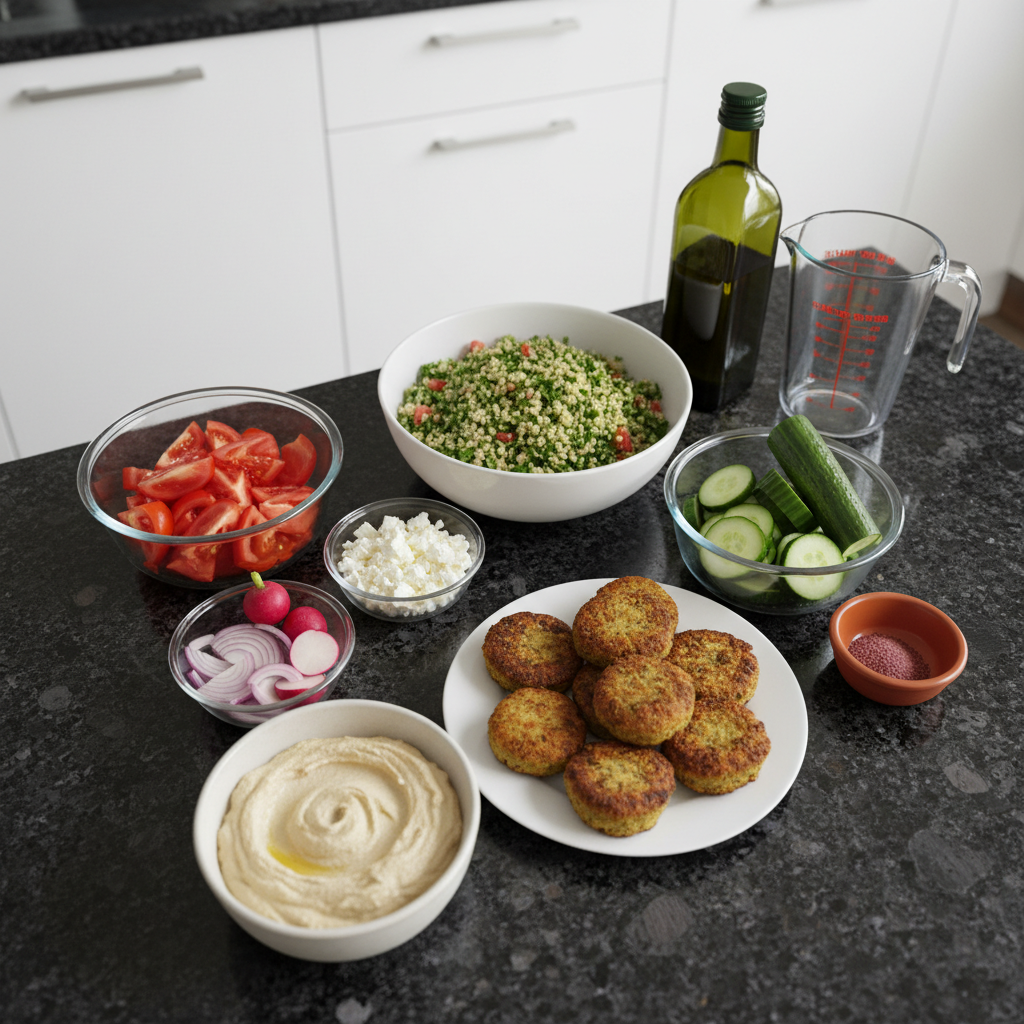
Here’s everything you’ll need to assemble your vibrant Mediterranean Falafel Bowl:
- Hummus, (homemade or store bought (other dip options in the notes) )
- Tabouli salad
- 16 Falafels,
- 2 Medium Vine-Ripe Tomatoes, (halved and sliced )
- 1 English Cucumber, (halved and sliced)
- 6 Radishes, (halved and sliced)
- 1/2 Medium Red Onion, (thinly sliced)
- 4 ounces Feta Cheese, (sliced )
- Extra virgin olive oil,
- Sumac, (optional for seasoning)
Ingredient Notes & Substitutions
To ensure your Mediterranean Falafel Bowl is perfect every time, here are some of my go-to tips and suggestions:
Falafel: While homemade falafel made from chickpeas and sometimes fava beans offers an unmatched freshness, quality store-bought falafel is perfectly acceptable for convenience. For best results, crisp them up in an oven or air fryer before serving.
Hummus/Dips: My recipe calls for creamy hummus, but feel free to experiment! Tzatziki sauce, creamy baba ganoush, or even a simple garlic yogurt dip make fantastic alternatives, adding different layers of flavor and texture.
Feta Cheese: The briny, salty notes of feta cheese are wonderful here. For a dairy-free option, plant-based feta alternatives are available. Grilled halloumi also makes a delicious, protein-rich swap if you’re looking for something different.
Vegetables: This recipe is a canvas for fresh produce! Don’t hesitate to incorporate other crisp vegetables you have on hand, like bell peppers, shredded carrots, or even some leafy greens. The more color, the better!
Olive Oil: A good quality extra virgin olive oil is crucial. It adds a fruity, peppery richness that ties all the fresh flavors together and is a cornerstone of the Mediterranean diet.
Sumac: This vibrant, reddish-purple spice is a secret weapon in Middle Eastern cuisine. It provides a unique tangy, lemony flavor without the wetness of actual lemon juice, making it a perfect seasoning and a key spice in the Mediterranean diet.
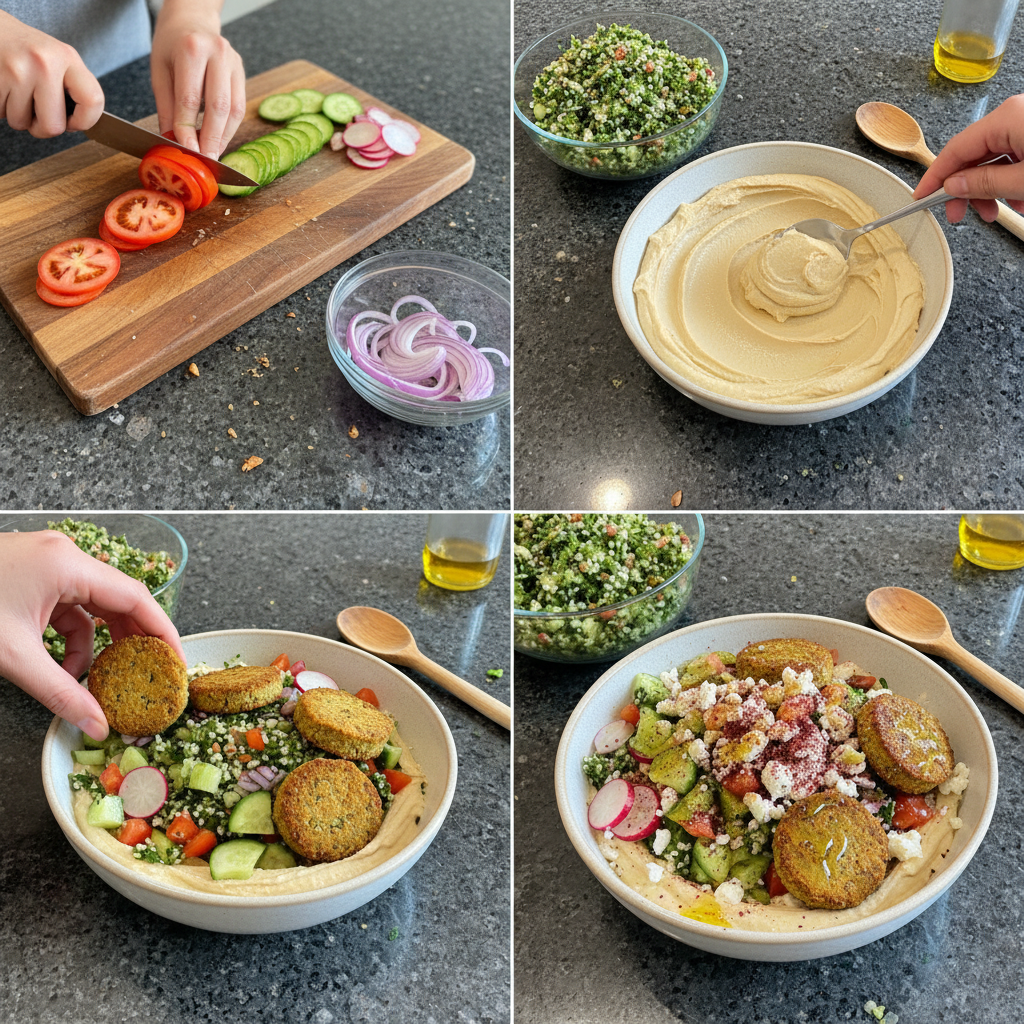
How to Make Your Mediterranean Falafel Bowl
Crafting your beautiful Mediterranean Falafel Bowl is a simple and rewarding process. Just follow these steps, and you’ll have a delightful meal ready in no time!
Step 1: Prepare the Unique Red Onion Twist
Begin by thinly slicing the red onion. Place these delicate slices in a small bowl. Drizzle generously with fresh lemon juice and sprinkle with a pinch of aromatic sumac. Gently toss to combine. Set aside to marinate while you prepare the other ingredients. This simple step will mellow the onion’s sharpness and infuse it with a bright, tangy flavor.
Step 2: Prepare Falafel
Warm or crisp your falafels according to the package directions. Whether you’re using an oven, air fryer, or gently pan-frying, ensure they are heated through and beautifully golden and crispy on the outside. This gives them that satisfying crunch!
Step 3: Assemble the Base
Grab your shallow dinner bowls. Start by spreading about 3 to 4 tablespoons of creamy hummus on one side of each bowl, creating a flavorful base. Next, spoon in a generous portion of fresh tabouli salad beside the hummus.
Step 4: Add Falafel
Carefully arrange 3 to 4 crispy falafel patties next to the tabouli salad, ensuring they’re ready to be enjoyed with all the fresh components.
Step 5: Fill with Fresh Components
Now, fill the remaining empty spots in your bowls with the prepared fresh vegetables. Artfully arrange the halved and sliced tomatoes, crisp cucumber, and vibrant radishes. Don’t forget to add the now-marinated red onion, draining any excess liquid before placing it in the bowl. Finish this layer with slices of savory feta cheese.
Step 6: Finish & Serve
For a final flourish, drizzle each bowl generously with a good quality extra virgin olive oil. If desired, add another dash of bright sumac to season. Your vibrant, aromatic Mediterranean Falafel Bowl is now ready to be served and savored!
Health & Nutrition Spotlight: Building a Balanced Falafel Bowl
One of the many reasons I adore this Mediterranean Falafel Bowl is its incredible nutritional profile. It’s a truly balanced and wholesome meal, perfectly aligned with healthy eating principles.
Nutritional Breakdown
Let’s look at what makes each component so good for you:
- Falafel/Chickpeas: The star of the show! Falafel, primarily made from chickpeas, are an excellent source of plant-based protein and dietary fiber. For another delicious way to enjoy this versatile legume, try our Crispy Garlic Baked Chickpeas. This combination helps keep you feeling full and satisfied, while also contributing complex carbohydrates for sustained energy.
- Fresh Vegetables: Bursting with color and nutrients, the tomatoes, cucumber, radishes, and our unique red onion twist, along with the fresh herbs in tabouli, provide a wealth of vitamins, minerals, and antioxidants. These are vital for overall health and supporting your immune system.
- Olive Oil: A generous drizzle of extra virgin olive oil not only enhances flavor but also delivers healthy monounsaturated fats. These fats are known for their heart-protective benefits and play a crucial role in nutrient absorption.
- Feta Cheese: Used in moderation, feta cheese adds a delicious tang and provides calcium and additional protein. It’s a flavorful touch that complements the fresh vegetables beautifully.
Mediterranean Diet Connection
This Mediterranean Falafel Bowl is a textbook example of how delicious and satisfying the Mediterranean diet can be. It prioritizes whole foods, lean plant-based protein, healthy fats, and an abundance of fresh, seasonal produce. By focusing on ingredients like chickpeas, vegetables, and olive oil, this meal naturally supports heart health, blood sugar regulation, and overall well-being.
Guidance on Portion Control
To ensure your bowl aligns with your individual dietary needs or calorie goals, consider the size of your bowl and the quantities of each component. Using a standard dinner bowl helps. Feel free to adjust the amount of falafel, hummus, or even feta cheese to suit your preferences. Pile high on the non-starchy vegetables, as they are nutrient-dense and low in calories, making them perfect for filling up without overdoing it.
Falafel Your Way: Cooking Methods & Dietary Adaptations
One of the beauties of a Mediterranean Falafel Bowl is its versatility. You can tailor it not only to your taste preferences but also to various cooking methods and dietary needs.
Choosing Your Falafel
The way you cook your falafel can impact both its texture and nutritional profile:
- Air-Fried Falafel: If you own an air fryer, this is my top recommendation! It produces incredibly crispy falafel with significantly less oil than traditional frying. The texture is wonderfully crunchy on the outside and tender within, making it a lighter yet equally satisfying option.
- Baked Falafel: Oven baking is another fantastic way to achieve a healthier falafel. While perhaps not as intensely crispy as air-fried or deep-fried versions, baking still yields a golden exterior and a delightful chew, making it a less greasy alternative that’s still full of flavor.
- Pan-Fried Falafel: For that truly traditional, deeply crispy exterior, a shallow pan-fry is the way to go. Use a good quality oil and don’t overcrowd the pan to ensure an even, golden brown crust. This method provides an authentic texture that many love.
Dietary Customizations
This recipe is incredibly adaptable, making it suitable for a range of dietary preferences:
- Vegan Adaptations: This bowl is largely vegetarian, and easily made vegan! Simply omit the feta cheese or swap it for a plant-based vegan feta alternative. For another satisfying plant-based meal, explore our Hearty, Flavorful Vegan Cauliflower Pea Curry. Ensure your chosen falafel and hummus brands are also certified vegan (free from egg or dairy products).
- Gluten-Free Adaptations: Most traditional falafel is naturally gluten-free as it’s made from chickpeas. However, always check packaging for cross-contamination. For the tabouli salad, use a gluten-free version made with quinoa or a similar grain instead of bulgur wheat.
- Low-Carb Adaptations: To reduce the carbohydrate count, you can increase the proportion of non-starchy vegetables like leafy greens or extra cucumber and radishes. You might also reduce the amount of tabouli or consider serving the bowl over a base of cauliflower rice instead of bulgur for a lower-carb option.
Pro Tips & Troubleshooting
To help you create the absolute best Mediterranean Falafel Bowl every single time, here are my expert tips and how to sidestep common pitfalls:
Pro Tips for the Perfect Bowl
- Prep Ahead for Ease: This bowl is a meal prepper’s dream! Chop all your vegetables, make or buy your dip, and marinate your red onion ahead of time. Store each component separately in airtight containers in the fridge, then simply assemble when you’re ready to eat.
- Crispy Falafel is Key: Whether homemade or store-bought, always take the time to heat your falafel thoroughly until it’s beautifully golden and crispy. An air fryer or oven baking works wonders for this. That textural contrast is essential!
- Optimize Your Onion Marinade: Don’t rush the unique red onion twist! I recommend marinating the sliced red onion in lemon juice and sumac for at least 15-20 minutes. This allows the flavors to truly integrate and the sharpness of the onion to mellow perfectly.
- Fresh Ingredients Matter: The magic of this Mediterranean Falafel Bowl truly shines with fresh, high-quality produce. Seek out ripe tomatoes, crisp cucumber, and vibrant radishes for the best flavor and texture.
- Seasoning: Remind readers to taste and adjust sumac and olive oil to preference.
Common Mistakes to Avoid
- Soggy Falafel: To prevent your delicious falafel from getting soggy, avoid adding it to your bowl too far in advance, especially if you’re meal prepping. Crisp them up just before serving for that satisfying crunch.
- Under-Marinated Onions: Don’t skip or shorten the marinating step for the red onion! Serving raw, sharp onion can overpower the delicate flavors of the bowl. The lemon-sumac marinade is crucial for mellowing and enhancing its taste.
- Over-Dressing: While olive oil is fantastic, adding too much initially can make the bowl greasy and heavy. Start with a moderate drizzle and add more to taste. If using tahini sauce, add it sparingly at first as well.
- Mixing Too Soon: For meal prep or if you’re not eating immediately, keep all the fresh components separate. Mixing them too far in advance can lead to wilting vegetables and soggy textures. Assemble just before digging in!
- Falafel Falling Apart (if making from scratch): For homemade falafel, ensure the mixture is well-chilled before shaping and frying. Use proper binder ingredients (like a little flour if needed), and don’t overcrowd the pan if frying.
Serving & Storage
Making a delicious Mediterranean Falafel Bowl is only half the fun; knowing how to serve and store it properly ensures maximum enjoyment and minimizes waste!
Serving Suggestions
This Mediterranean Falafel Bowl is fantastic as is, but here are some ideas to truly make it sing:
- Classic Pairings: Always offer extra tahini sauce on the side for drizzling – its nutty, creamy flavor is the quintessential pairing for falafel. A dollop of additional hummus is always welcome too!
- In Pitas: Transform your bowl into a handheld delight by scooping the components into warm pita pockets. Add a fresh squeeze of lemon and maybe a sprinkle of fresh parsley for a portable, satisfying meal.
- Add Grains: For an even heartier meal, consider serving your falafel bowl over a bed of fluffy bulgur, tender barley, or perfectly cooked rice. This adds another layer of texture and makes it a more substantial dish.
- Roasted Veggies: Elevate your bowl by adding some warm, earthy flavors. Consider making our Sheet Pan Vegan BBQ with Roasted Vegetables or adding leftover roasted vegetables like tender roasted sweet potatoes, charred cauliflower florets, or lemony roasted broccoli.
- Garnishes: Suggest a sprinkle of fresh herbs (parsley, mint), a dollop of baba ganoush, preserved lemons, or pickled turnips for extra flavor and visual appeal.
Storage and Make-Ahead Tips
This recipe is ideal for meal prep! Proper storage is key to maintaining freshness:
- Refrigeration: The best way to store the components of your Mediterranean Falafel Bowl is separately. Place cooked falafel, chopped vegetables (tomatoes, cucumber, radishes), hummus, tabouli, and the marinated red onion in individual airtight containers in the refrigerator. They will stay fresh for 3-4 days. This prevents sogginess and keeps textures crisp.
- Make-Ahead: Almost all components can be prepped in advance. Chop your vegetables, make or buy your hummus and tabouli, and marinate your red onion up to 2-3 days ahead. Cooked falafel can also be made ahead.
- Freezing Falafel: Yes, falafel freezes beautifully! You can freeze cooked falafel in an airtight container for up to 3 months. Lay them in a single layer on a baking sheet to freeze individually before transferring to a bag. Uncooked falafel patties can also be frozen in the same way.
- Reheating: For the best texture, reheat cooked falafel in an oven or air fryer from chilled (or frozen, adding more time) until hot and crispy. The other components (vegetables, hummus, tabouli, etc.) are best served chilled, making assembly quick and easy!
FAQ
What is falafel made of?
Traditional falafel is made from ground chickpeas (or a mix of chickpeas and fava beans), herbs, and spices. It’s often fried but can be baked or air-fried for a healthier option.
Is a Mediterranean Falafel Bowl healthy?
Yes, absolutely! This bowl is healthy, aligning perfectly with the Mediterranean diet. It’s rich in plant-based protein (from falafel and chickpeas), fiber, healthy fats (from olive oil), and an abundance of vitamins from fresh vegetables. Refer to our nutritional discussion in Section 5 for more details.
What kind of sauce goes with falafel?
The classic choice is tahini sauce. You can also serve it with hummus (as in this recipe), Tzatziki sauce, or baba ganoush for variety and added flavor.
Can I make a Mediterranean Falafel Bowl ahead of time?
Yes, it’s ideal for meal prep! Prepare and store each component (falafel, veggies, hummus, tabouli, marinated onions) separately in airtight containers in the fridge. Assemble just before serving for best results.
How do you store falafel?
Cooked falafel can be stored in an airtight container in the refrigerator for 3-4 days. For longer storage, cooked or uncooked falafel can be frozen. Reheat in an oven or air fryer for crispness.
How can I make this recipe vegan?
The recipe is largely vegetarian and easily made vegan by simply omitting the feta cheese or using a plant-based vegan feta alternative. Ensure the falafel and hummus chosen are also vegan.
What are the nutritional benefits of a Mediterranean Falafel Bowl?
The key benefits include being high in fiber, plant-based protein (from chickpeas), healthy fats (from olive oil), and rich in vitamins and minerals from the fresh vegetables. This promotes heart health, digestion, and overall well-being, making it an excellent part of a balanced Mediterranean diet.
Can I freeze falafel?
Yes, falafel freezes well. Cooked falafel can be frozen in an airtight container for up to 3 months. Reheat from frozen in the oven or air fryer until hot and crispy. Uncooked falafel can also be frozen and then fried/baked/air-fried from frozen.
How do I prevent my falafel from falling apart?
(Acknowledging our recipe uses pre-made falafel, we offer general advice for homemade falafel.) For homemade falafel, ensure the mixture is well-chilled before shaping and frying, use proper binder ingredients (like a little flour if needed), and don’t overcrowd the pan if frying.
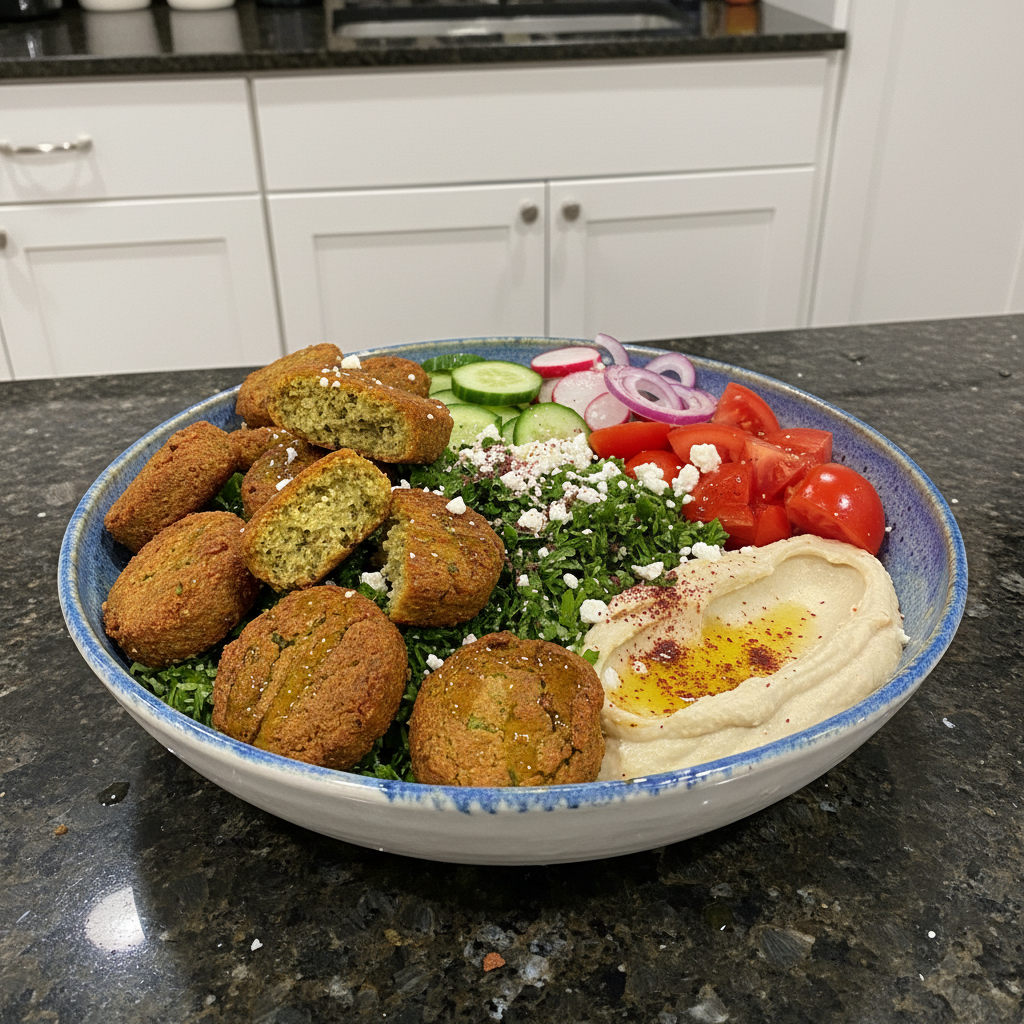
Vibrant Mediterranean Falafel Bowl Recipe: Fresh & Easy
Ingredients
Equipment
Method
- Begin by thinly slicing the red onion. Place these delicate slices in a small bowl. Drizzle generously with fresh lemon juice and sprinkle with a pinch of aromatic sumac. Gently toss to combine. Set aside to marinate while you prepare the other ingredients. This simple step will mellow the onion's sharpness and infuse it with a bright, tangy flavor.
- Warm or crisp your falafels according to the package directions. Whether you're using an oven, air fryer, or gently pan-frying, ensure they are heated through and beautifully golden and crispy on the outside. This gives them that satisfying crunch!
- Grab your shallow dinner bowls. Start by spreading about 3 to 4 tablespoons of creamy hummus on one side of each bowl, creating a flavorful base. Next, spoon in a generous portion of fresh tabouli salad beside the hummus.
- Carefully arrange 3 to 4 crispy falafel patties next to the tabouli salad, ensuring they're ready to be enjoyed with all the fresh components.
- Now, fill the remaining empty spots in your bowls with the prepared fresh vegetables. Artfully arrange the halved and sliced tomatoes, crisp cucumber, and vibrant radishes. Don't forget to add the now-marinated red onion, draining any excess liquid before placing it in the bowl. Finish this layer with slices of savory feta cheese.
- For a final flourish, drizzle each bowl generously with a good quality extra virgin olive oil. If desired, add another dash of bright sumac to season. Your vibrant, aromatic Mediterranean Falafel Bowl is now ready to be served and savored!
Notes

Emily Thompson is a home cook and food enthusiast who believes that great meals bring families together. She loves exploring creative twists on classic American comfort food, always testing new ideas in her kitchen. Emily is passionate about sharing simple, practical recipes and time-saving tips to help busy people enjoy cooking at home. Her approachable style makes every dish accessible, delicious, and perfect for those seeking inspiration for everyday meals and special occasions. Find Emily’s latest creations and kitchen wisdom on yumeasymeals.com.