There’s something so appealing about homemade candied citrus peel. The bright flavor and chewy texture make it a delightful treat. But let’s be honest, balancing the bitterness can be tricky! That’s where this recipe for candied grapefruit peel comes in. I’ll show you how to make perfectly candied grapefruit peel with a simple, step-by-step method and a special trick to reduce bitterness. The result? A sweet, tangy, and irresistible confection. Enjoy it as a snack, use it in baking, or add a special touch to your favorite cocktails!
Why You’ll Love This Candied Grapefruit Peel Recipe
This recipe delivers beautifully candied grapefruit peel that’s far less bitter than you might expect. Here’s why you’ll love it:
The Salt Secret: The unique twist is adding a touch of salt to the blanching water. This significantly reduces the bitterness of the grapefruit peel, making for a more enjoyable treat.
Science in Action: The salt helps to draw out those bitter compounds through osmosis. The result is a balanced flavor profile—still tangy and bright, but without the overwhelming bitterness. For more information, you can read about the science of osmosis.
Gourmet Made Easy: There’s immense satisfaction in crafting gourmet treats in your own kitchen. This recipe makes it easy.
Versatile Delight: Enjoy your homemade candied peel as a snack, incorporate it into baked goods, or use it to garnish cocktails. The possibilities are endless!
Budget-Friendly Luxury: Making candied grapefruit peel at home is much more cost-effective than buying it from a specialty store.
Ingredients Needed
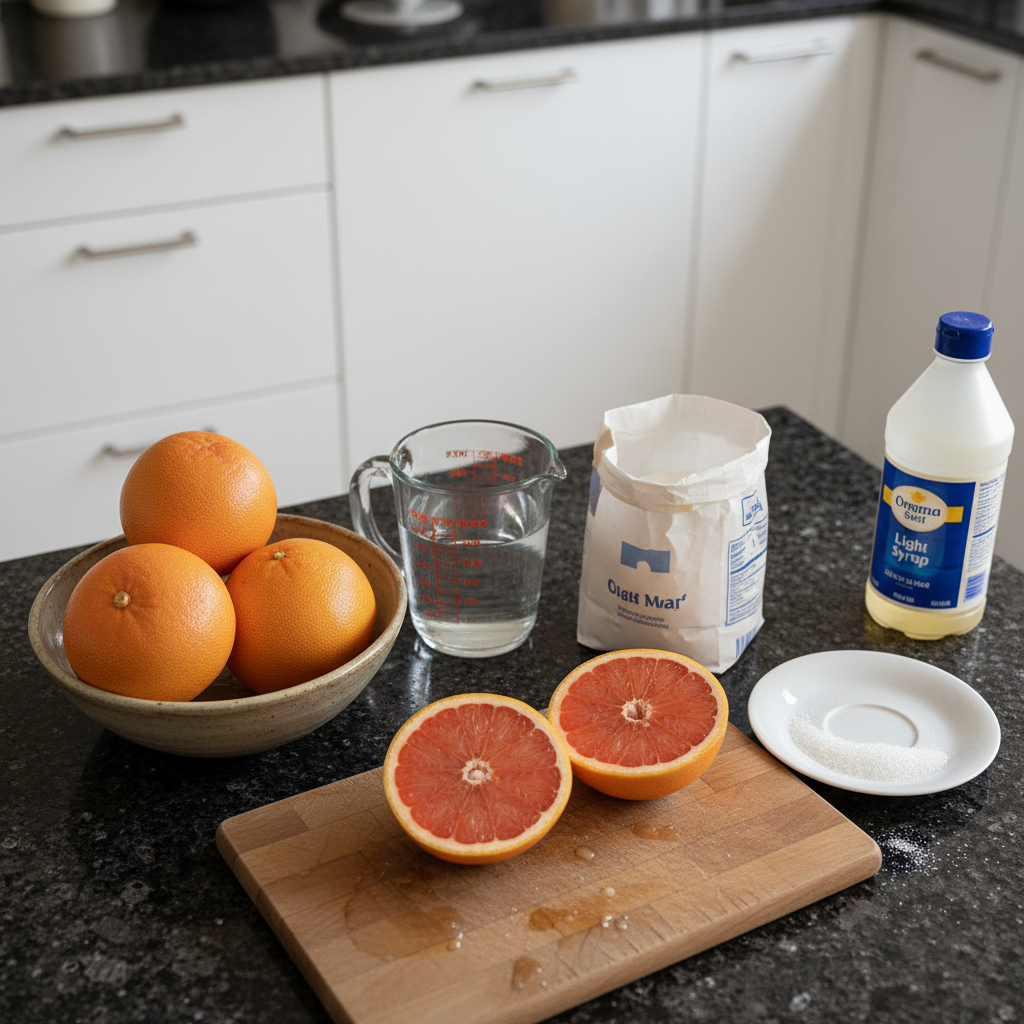
- 3 grapefruits (organic or unsprayed)
- 2 1/2 cups (500g) sugar (plus additional sugar for tossing the finished candied peel)
- 2 1/2 cups (625ml) water
- 2 tablespoons light corn syrup
Ingredient Notes & Substitutions
Here’s a little more information about the ingredients you’ll need:
Grapefruit Selection: Ruby Red grapefruits tend to be sweeter, while Marsh grapefruits offer a more classic grapefruit flavor. For the best results, always use organic or unsprayed grapefruits to avoid any unwanted pesticides. The peels are going to be the star so it’s important to use organic.
Sugar Types: While granulated sugar works perfectly, you can also use caster sugar or cane sugar. The choice is yours!
Corn Syrup: Corn syrup helps prevent crystallization in the candied peel. If you prefer, you can substitute it with honey or golden syrup, but be aware that this may slightly alter the flavor. To understand more about the role of corn syrup in preventing crystallization, you might find information from the USDA useful.
How to Make Candied Grapefruit Peel
Follow these simple steps to create your own delicious candied grapefruit peel:
Prepare the Grapefruit Peels
Cut each grapefruit and half and juice them. (Reserve the juice for another purpose.) I usually enjoy the fresh juice for breakfast. Use a soup spoon to scrape out the pulp and membranes.
Blanch the Peels
Use a chef’s knife to cut the grapefruit peels into strips just shy of 1/2-inch (1,25cm) wide. Uniform strips will cook evenly. Place the peels in a large pot and cover with water. Bring to a boil and simmer 5 minutes.
Drain the peels and repeat the simmering and draining process with the grapefruit peels one more time.
Unique Twist: Reduce Bitterness with Salt
Add 1 teaspoon of salt to the water in this blanching stage. This will help to remove additional bitter compounds.
Cook the Peels in Syrup
After you’ve blanched the peels three times, place them back in the pot fitted with a candy thermometer, if using. Add the sugar, water, and corn syrup and bring the mixture to a boil.
Reduce the heat to a low boil and cook the peels until they’re translucent and glossy. The temperature should read about 218ºF (103ºC) and should take about 45 minutes. If you’re not using a thermometer, it should look like the 7th photo in the post.
Dry and Sugar the Peels
Drain the peels in a colander then spread them on a wire cooling and let sit 12 hours at room temperature to dry out a bit. Overnight drying is important.
Sprinkle some sugar on a baking sheet (about 1/3 cup, 65g) and use your hands to toss the candied peel in the sugar, adding more sugar as needed, and shaking off any excess, until the peels are well-coated and no longer feel sticky.
Why Dry Overnight?
Drying the grapefruit peel overnight is essential for several reasons. First, it allows the surface of the peel to dehydrate, creating a slightly tacky surface that helps the sugar adhere better. Second, this drying process contributes to the overall texture of the candied peel, preventing it from becoming overly sticky or wet. Keep in mind that humidity can affect drying time; on humid days, it may take longer for the peels to dry. Store your candied citrus peel in an airtight container to maintain its texture and prevent it from absorbing moisture from the air.
Pro Tips & Troubleshooting
Pro Tips
- Use a sharp knife for clean cuts to prevent bruising the peel.
- Blanch the peels multiple times with salt to reduce bitterness effectively.
- Maintain a consistent low boil during the candying process to ensure even cooking.
- Use a candy thermometer for precise temperature control (218°F/103°C).
- Don’t overcrowd the pot while cooking the peels to ensure they cook evenly.
- Dry the peels thoroughly before sugaring to prevent a sticky mess.
- Store candied peel in an airtight container to maintain its texture and prevent it from becoming sticky.
- Use leftover syrup in cocktails, baking, or to sweeten beverages.
Common Mistakes to Avoid
- Not blanching the peels enough, resulting in overly bitter candied peel.
- Cooking the peels at too high a temperature, causing them to burn or harden.
- Using too much sugar in the syrup, leading to crystallization.
- Not drying the peels properly before sugaring, resulting in a sticky final product.
- Storing the candied peel in a humid environment, causing it to become sticky.
Serving & Storage
Serving Ideas
- Enjoy as a standalone sweet treat or snack.
- Chop and add to cakes, muffins, and breads.
- Use to decorate cakes, cupcakes, and other desserts.
- Dip in tempered dark chocolate or white chocolate for an extra-special treat.
- Garnish cocktails or mocktails with a strip of candied grapefruit peel.
- Add to homemade muffins or trail mix.
- Include in cheese boards or charcuterie platters for a touch of sweetness and bitterness.
Storage and Make-Ahead
- Store candied grapefruit peel in an airtight container at room temperature for up to 2 weeks.
- For longer storage, freeze in a single layer on a baking sheet, then transfer to a freezer bag. Thaw at room temperature before serving.
- Candied grapefruit peel can be made several days in advance. Store in an airtight container until ready to use.
Conclusion
Making your own candied grapefruit peel is easier than you think, and this recipe, with its simple salt trick, makes it less bitter and more enjoyable! The result is a versatile treat that you can enjoy in so many ways. Don’t be afraid to experiment with different grapefruit varieties or even dip your finished peels in chocolate. If you enjoyed this recipe, please share it with your friends and family! Looking for more interesting recipes? Try this classic apple salad.
FAQ
Here are some frequently asked questions about making candied grapefruit peel:
What kind of grapefruits are best for candying?
Ruby Red grapefruits are sweeter, while Marsh grapefruits offer a classic flavor. Organic or unsprayed are preferred.
Why do I need to blanch the grapefruit peel, and how many times?
Blanching removes bitter compounds. Blanching two to three times reduces bitterness.
How can I reduce the bitterness of the grapefruit peel?
Blanching several times and adding a bit of salt is a simple technique to make candied grapefruit peel less bitter.
Is corn syrup necessary, and what can I substitute it with?
Corn syrup helps prevent crystallization. Honey or golden syrup can be used but may alter the flavor slightly.
How do I store candied grapefruit peel to keep it from getting sticky or hard?
Store in an airtight container at room temperature. For longer storage, freeze it.
What can I do with the leftover syrup?
Use it to sweeten tea, cocktails, smoothies, or fruit compotes. It can also be drizzled over pancakes or waffles.
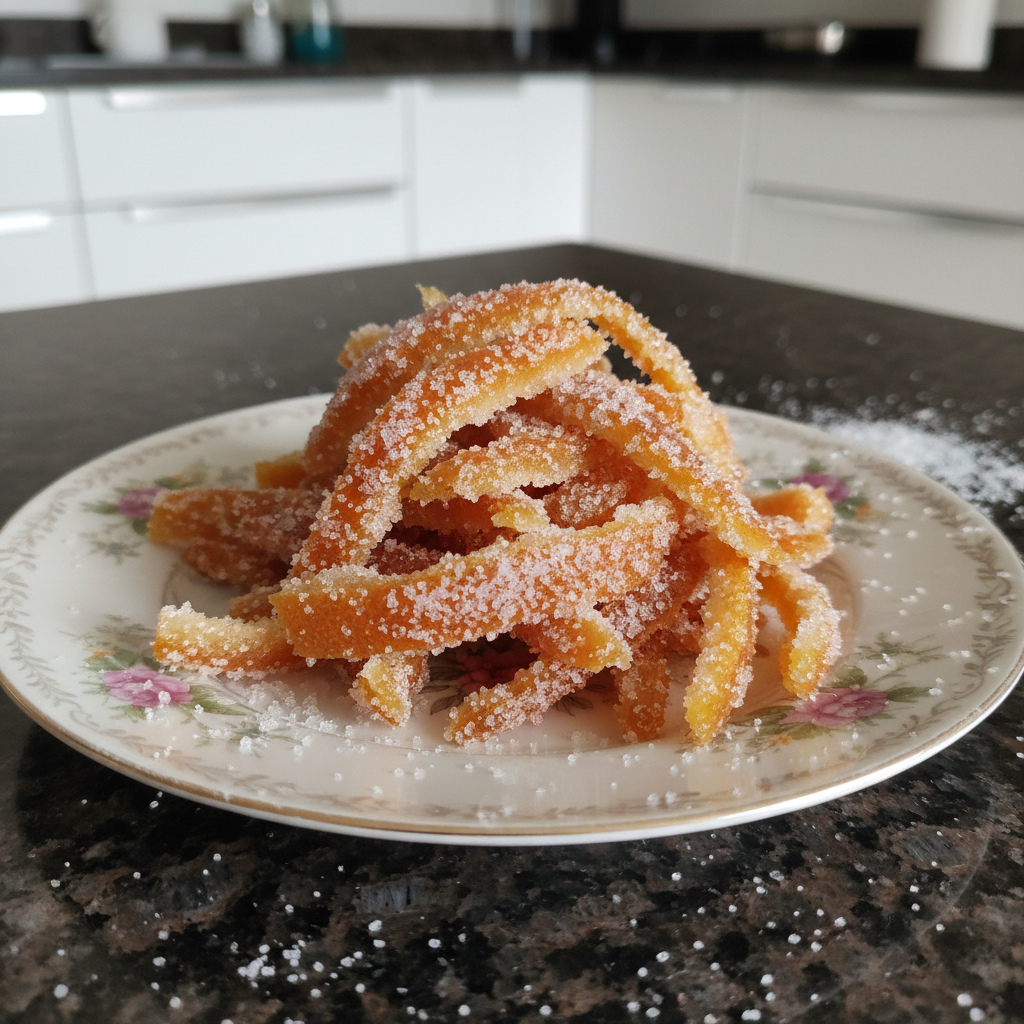
Best Candied Grapefruit Peel Recipe (Less Bitter!)
Ingredients
Method
- Cut each grapefruit and half and juice them. (Reserve the juice for another purpose.) I usually enjoy the fresh juice for breakfast. Use a soup spoon to scrape out the pulp and membranes.
- Use a chef's knife to cut the grapefruit peels into strips just shy of 1/2-inch (1,25cm) wide. Uniform strips will cook evenly. Place the peels in a large pot and cover with water. Bring to a boil and simmer 5 minutes.
- Drain the peels and repeat the simmering and draining process with the grapefruit peels one more time.
- Add 1 teaspoon of salt to the water in this blanching stage. This will help to remove additional bitter compounds.
- After you've blanched the peels three times, place them back in the pot fitted with a candy thermometer, if using. Add the sugar, water, and corn syrup and bring the mixture to a boil.
- Reduce the heat to a low boil and cook the peels until they're translucent and glossy. The temperature should read about 218ºF (103ºC) and should take about 45 minutes. If you're not using a thermometer, it should look like the 7th photo in the post.
- Drain the peels in a colander then spread them on a wire cooling and let sit 12 hours at room temperature to dry out a bit. Overnight drying is important.
- Sprinkle some sugar on a baking sheet (about 1/3 cup, 65g) and use your hands to toss the candied peel in the sugar, adding more sugar as needed, and shaking off any excess, until the peels are well-coated and no longer feel sticky.
Notes

Taya Bennett is the founder of YumEasyMeals, a platform dedicated to easy, delicious, and quick-to-prepare recipes for busy families. Passionate about everyday cooking, she simplifies meals with practical, accessible, and always delicious ideas.
Discover her creations at: yumeasymeals.com