Welcome to the ultimate guide for making exquisite candied orange peel at home! This timeless treat, with its perfect balance of sweet and citrusy, is a versatile ingredient for bakers and a delightful garnish for drinks and desserts. Forget tough, overly bitter peels; our method, featuring a special overnight soak, ensures a remarkably tender and delightfully less bitter result. Get ready to transform simple orange rinds into a gourmet confection that will impress everyone!
Why You’ll Love This Recipe
- The Unique Twist: Overnight Salted Soak for Superior Texture & Flavor: My secret lies in soaking the blanched and sliced peels overnight in cold water with a pinch of salt. This innovative step, leveraging the science of osmosis, actively draws out more of the bitter compounds (like limonin) from the pith. The salt also gently breaks down cell walls, making the peel incredibly tender and delicate, achieving a texture far superior to traditional methods.
- Remarkably Less Bitter: Thanks to our unique soaking technique and thorough blanching, you’ll achieve candied orange peels with a clean, vibrant citrus flavor and significantly reduced bitterness, making them enjoyable even for those who usually find them too strong.
- Delicately Tender & Chewy: No more leathery or tough candied peels! The enhanced tenderizing from the soak results in a soft, pliable texture that melts in your mouth.
- Gourmet Quality at Home: Impress your friends and family with homemade candied peels that rival professional confectioners, perfect for gifting, holiday baking, or simply elevating your everyday treats.
- Versatile Kitchen Staple: Once mastered, these candied peels become an invaluable addition to my baking arsenal, enhancing everything from cakes and cookies to savory dishes and cocktails.
Ingredients Needed
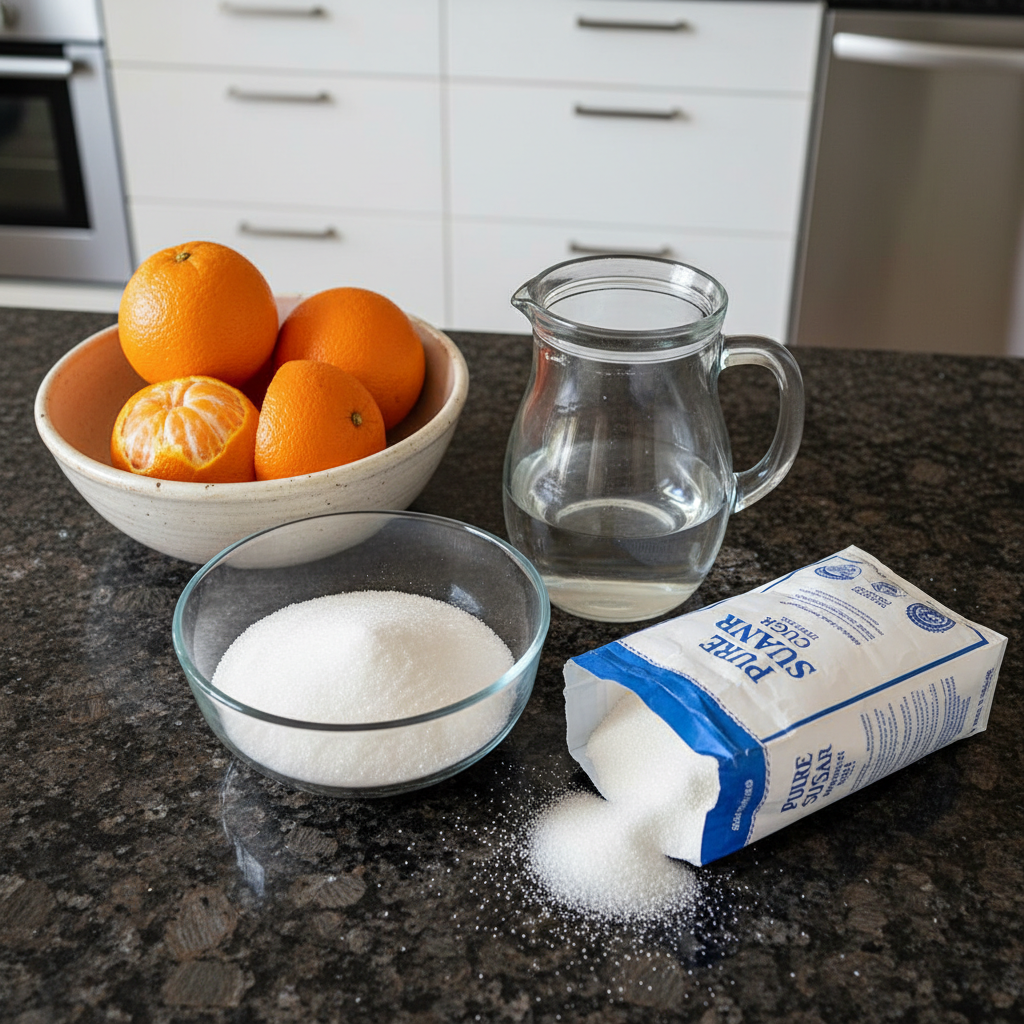
- 3 large oranges
- 2 cups granulated sugar
- 1 cup water
- Fine granulated sugar for coating
Ingredient Notes & Substitutions
- Oranges: I always recommend selecting ripe, unblemished, thick-skinned oranges, like Navel or Valencia, for the best results. It’s crucial to use organic fruits to avoid pesticide residues, especially since we’re consuming the peel. Always scrub them thoroughly under warm water with a vegetable brush before starting.
- Other Citrus: This recipe isn’t just for oranges! You can easily adapt it for other citrus fruits like lemon peel, lime peel, grapefruit peel, mandarin peel, or clementine peel. Just note that bitterness levels may vary, so you might need to make slight adjustments to the blanching steps.
- Sugar: Granulated sugar is the standard for this recipe, providing a clean sweetness and helping achieve that beautiful translucent quality. While other types of sugar like honey, agave, or maple syrup can be used in candying, they will alter the flavor, color, and crystallization behavior. For consistent results with this specific candied orange peel recipe, I recommend sticking to granulated sugar.
- Water: Always use fresh, clean water for both the blanching process and for creating your simple syrup.
How to Make Candied Orange Peel
Prepare the Oranges
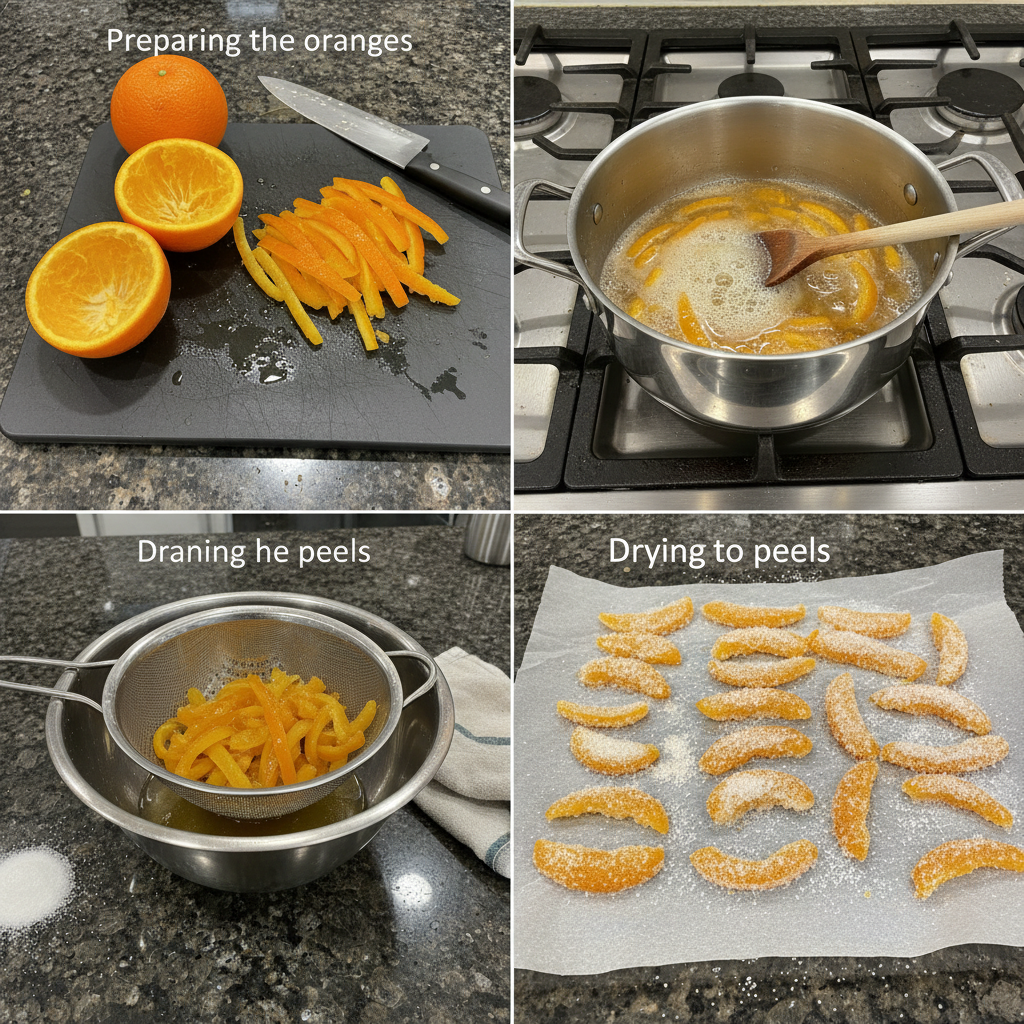
- To start, slice off both ends of your oranges. Then, cut the peel on each orange into 4 or more vertical segments, depending on the fruit’s size. Carefully peel off each segment of rind. While some recipes suggest removing all the white pith, I advise leaving a thin layer. Too much pith removal is a common mistake that can lead to leathery candied peels, as the pith helps maintain structure and tenderness. Slice the peels into uniform 1/4 inch wide strips. Don’t forget to save the peeled citrus fruit for eating, cooking, or juicing!
Initial Blanching for Bitterness Reduction
- Place the orange peel strips in a pot and cover them with fresh water. Bring to a boil and simmer for 15 minutes. This initial blanching is a crucial step in drawing out bitter compounds.
- After 15 minutes, drain the peels in a colander, rinse them thoroughly under cold water, and drain again. Discard the water from the pot. Repeat this blanching, draining, and rinsing process two more times for optimal bitterness removal. This ensures your candied orange peel will have a delightfully mild flavor.
The Unique Twist: Overnight Soaking for Tenderness and Bitterness Removal
- After the final blanching and draining, transfer the peels to a clean bowl. Cover them completely with cold water and add a pinch of salt. This is our unique twist! This overnight soak leverages the science of osmosis to actively draw out even more bitterness and further tenderize the peels. Cover the bowl and refrigerate for 8-12 hours, or overnight. You’ll wake up to peels that are perfectly primed for candying.
Prepare the Simple Syrup
- The next day, drain the peels from their overnight soak. In a clean pot, combine 1 cup of fresh water and 2 cups of granulated sugar. Bring the mixture to a boil over medium heat, stirring continuously until the sugar is completely dissolved, creating a beautiful simple syrup.
Simmering & Candying
- Add the soaked and drained citrus peels to the sugar syrup. Reduce the heat to low and simmer gently. You’ll want to simmer for 45-60 minutes, stirring occasionally, until the peels become wonderfully translucent and the syrup thickens to a lightly syrupy consistency. For precision, use a candy thermometer to ensure the syrup reaches the soft ball stage (approximately 235-240°F / 113-116°C). This careful temperature control is key to perfectly candied orange peel.
Sugar Coating & Drying
- Using a slotted spoon, carefully remove a few peels at a time from the hot syrup, allowing any excess syrup to drip off for a few seconds. Immediately place the hot, wet peels into a bowl of fine granulated sugar or a ziplock bag containing sugar. Toss or shake to coat them evenly. This sugar coating is essential for optimal room-temperature storage and provides that classic, sparkling finish.
- Spread the candied peels out on a wire rack to cool and dry completely. This typically takes 1-2 days in a cool, dry place, allowing the sugar to fully crystallize and set. Keep in mind that for immediate use or freezing, the final sugar coating step can actually be skipped for a softer texture. My recipe typically yields about 8 ounces of candied citrus peel, depending on the thickness of your orange rinds.
The Science Behind Perfectly Candied Peel
There’s a fascinating scientific journey behind every perfectly crafted batch of candied orange peel. Understanding the ‘why’ makes the ‘how’ even more rewarding.
- Blanching & Bitterness Removal: The repetitive blanching in fresh water is not just a suggestion; it’s a vital process. This thermal treatment, combined with fresh water exchanges, effectively leaches out bitter compounds like limonin and other unpleasant essential oils present in the orange peel. Simultaneously, the pectin within the peel begins to soften, preparing it for the next steps.
- The Power of Our Unique Soak: This is where my unique overnight cold water and salt soak shines. After blanching, the peels are still trying to shed bitterness. By soaking them in slightly salted cold water, we leverage osmosis. The higher concentration of solutes (salt) outside the peel encourages more bitter compounds to migrate out of the peel’s cells and into the surrounding water. The salt also subtly helps to break down the cell structures, further tenderizing the orange peel and creating a delicate texture that is far superior to peels that skip this crucial step.
- Sugar’s Role in Candying: Once the peels are tender and less bitter, they enter the sugar syrup. Here, granulated sugar acts as both a preservative and the primary tenderizing agent. Through a process of diffusion and osmosis, the concentrated sugar syrup gradually replaces the water within the peel’s cells during simmering. This exchange transforms the peel, making it translucent, chewy, and shelf-stable. The high sugar concentration inhibits microbial growth, preventing spoilage. Sugar also possesses humectant properties, meaning it attracts and retains moisture, helping to keep the finished peels moist and pliable.
- Preventing Syrup Fermentation: The high sugar concentration of your simple syrup, properly cooked to the soft ball stage, is key to its preservation. This extreme sugar level creates an environment where most microorganisms cannot thrive, preventing fermentation. Any leftover citrus syrup should be stored in an airtight container in the refrigerator to maintain its quality and prevent any unwanted microbial activity.
Optimal Drying Methods for Candied Orange Peel
The drying process is as important as the candying itself, affecting the final texture and shelf life of your candied orange peel. Here are a few methods I use in my kitchen:
- Traditional Air Drying: This is the classic method outlined in my recipe. After coating the peels in fine granulated sugar, spread them out on a wire rack and allow them to air dry for 1-2 days in a cool, dry place. This slow drying process allows the sugar to fully crystallize on the surface, creating that beautiful sparkling finish and ensuring optimal long-term room temperature storage. The texture achieved is typically firm yet chewy.
- Oven Drying (Low Temperature): If you’re in a hurry, a very low oven can speed things up. Arrange your sugar-coated peels on a parchment-lined baking sheet and place them in an oven preheated to 175-200°F (80-95°C) for 1-2 hours. Keep a close eye on them, turning occasionally, to prevent burning. This method can result in a slightly firmer texture compared to air drying.
- Dehydrator Method: For the most consistent and efficient drying, a food dehydrator is an excellent tool. Arrange the candied peels in a single layer on your dehydrator trays. Set the temperature to around 135°F (57°C) and dry for 4-8 hours, or until they reach your desired level of dryness and chewiness. This method often yields a wonderfully uniform texture.
- Skipping the Final Sugar Coat: Remember my expert tip: if you prefer very soft candied peels or plan to use them immediately, or store them in the freezer, you can omit the final fine granulated sugar coating altogether. This will result in a more tender, less firm candied peel, but it will require refrigeration or freezing for storage as it won’t have the protective sugar crust.
Pro Tips & Troubleshooting
Pro Tips
- Choose the Best Oranges: Always select large, thick-skinned, unblemished, and preferably organic citrus fruits. Scrub them thoroughly with a vegetable brush before peeling to remove any impurities.
- Don’t Skimp on Blanching & Soaking: This is absolutely crucial for reducing bitterness. My unique overnight soak with salt dramatically improves both bitterness and tenderness, so please, don’t skip it!
- Temperature Control is Key: For perfectly candied orange peel, use a candy thermometer to accurately reach the soft ball stage (235-240°F / 113-116°C) while simmering. Guesswork can easily lead to overly hard or too sticky peels.
- Manage Pith Wisely: A common mistake is removing too much pith. A thin layer of pith helps the peel maintain structure and prevents it from becoming thin and leathery after candying, contributing to that desired chewy texture.
- For Softer Peels: If you prefer very soft candied peels, reduce the final drying time or skip the fine granulated sugar coating altogether. For this softer style, store them immediately in the refrigerator or freezer.
Common Mistakes to Avoid
- Insufficient Blanching: Not blanching enough, or skipping my overnight soak, will inevitably result in overly bitter candied peels. Follow the recommended 3 blanching steps *plus* our unique overnight soak for the best flavor.
- Removing Too Much Pith: This leads to thin, leathery candied peels that lack the desired chewy texture. Aim for leaving a thin layer of pith for optimal results.
- Overcooking the Syrup: Cooking the syrup past the soft ball stage will result in candied peels that are too hard or brittle. Always use a candy thermometer to ensure accuracy.
- Under-Drying: If not dried sufficiently, candied peels will be too sticky and may clump together or spoil faster. Ensure thorough drying for 1-2 days after coating in sugar before storage.
- Sugar Crystallization: If sugar crystals form in the syrup, it can cause the finished peels to become grainy. Ensure all granulated sugar is fully dissolved at the start of the syrup-making process and avoid stirring vigorously once the peels are added, only gently turning them.
Serving & Storage
Serving Ideas
- Baking Delights: Elevate your baking by adding chopped candied orange peel to pies, cakes, muffins, cupcakes, Scottish Shortbread, cookies, and scones. They impart a wonderful citrus note and chewy texture.
- Sweet Toppings: Sprinkle over ice cream, Homemade Greek Yogurt, or Healthy Homemade Granola for a burst of vibrant flavor.
- Garnish & Drinks: Use a strip as an elegant garnish for cocktails (especially citrus-flavored drinks), mocktails, or hot beverages. You can also blend it into festive traditional English Mincemeat.
- Breakfast Boost: Chop and add to waffles and pancakes for a delightful, zesty twist.
- Chocolate Orangettes: For a classic gourmet treat, dip your candied orange peel in melted dark chocolate.
- Utilize the Syrup: Don’t discard that flavorful leftover citrus syrup! It’s excellent for making lemonade, sweetening cocktails, drizzling over desserts, or moistening cakes.
Storage and Make-Ahead
- Room Temperature Storage: Candied citrus peel that has been fully sugar coated and dried for 1-2 days will keep beautifully in an airtight container in a cool, dry place for at least a month.
- Refrigeration: For even longer storage (several months) and to maintain a softer texture, store candied peels in an airtight container in the fridge. This is particularly recommended if you skipped the final sugar coating.
- Freezing: Candied orange peel freezes beautifully! Place them in a freezer bag or container and freeze for several months. They can be frozen as is (without the final sugar coating) and used directly from frozen in most recipes.
- Leftover Syrup: The citrus syrup can be stored in an airtight container in the refrigerator for several weeks or even months. Its high sugar content acts as a natural preservative. Ensure it’s cooled completely before storing to prevent condensation.
Conclusion
Creating homemade candied orange peel is a rewarding culinary adventure, and with our unique overnight soak, you’re guaranteed a spectacular result. Say goodbye to overly bitter, tough peels and hello to beautifully translucent, tender, and intensely flavorful confections. Whether you’re a seasoned baker or a curious beginner, this recipe empowers you to create a gourmet ingredient that elevates any dish. Experiment with different citrus fruits, dip them in chocolate, or simply enjoy them as a sweet bite. Happy candying!
FAQ
- How do you store candied orange peel to maintain optimal texture?For optimal texture, store fully dried, sugar-coated peels in an airtight container at room temperature for up to a month. For softer peels or longer storage, refrigerate or freeze them in airtight containers.
- What is the best way to prevent candied orange peel from becoming too hard or sticky?To prevent hardness, ensure you don’t overcook the syrup; use a candy thermometer to hit the soft ball stage (235-240°F / 113-116°C). For stickiness, make sure the peels are thoroughly dried for 1-2 days after coating in fine granulated sugar.
- How can I reduce the bitterness of the orange peel effectively?The most effective ways are multiple blanching steps (as outlined in the recipe) combined with our unique overnight cold water and salt soak. This method uses osmosis to draw out bitter compounds like limonin for a milder flavor.
- What kind of oranges are best for candied peel, and what alternatives can I use?Thick-skinned oranges like Navel or Valencia are ideal due to their substantial peel. Always use organic fruits and scrub them thoroughly. You can also make candied lemon peel, grapefruit peel, lime peel, or even mandarin and clementine peels.
- How do I use the leftover citrus syrup, and how long does it keep?The flavorful citrus syrup can be used to sweeten drinks, cocktails, lemonade, or as a drizzle over desserts like pancakes or ice cream. Store it in an airtight container in the refrigerator for several weeks to months. Its high sugar content acts as a natural preservative. Ensure it’s cooled completely before storing to prevent fermentation.
- Can I freeze candied orange peel for longer storage?Yes, candied orange peel freezes very well. Place them in a freezer bag or container and freeze for several months. They can be used directly from frozen in most baking applications.
- What is the best way to clean oranges before making candied peel?Thoroughly scrub organic oranges under warm running water with a vegetable brush to remove any dirt or surface impurities, even if they are organic fruits. This ensures clean peel for candying.
- Why do my candied peels sometimes get sugar crystallization?Sugar crystallization can occur if sugar crystals remain undissolved when you start simmering the peels, or if the syrup is agitated too much. Ensure all granulated sugar is fully dissolved before adding peels and avoid aggressive stirring during simmering, only gently turning them.
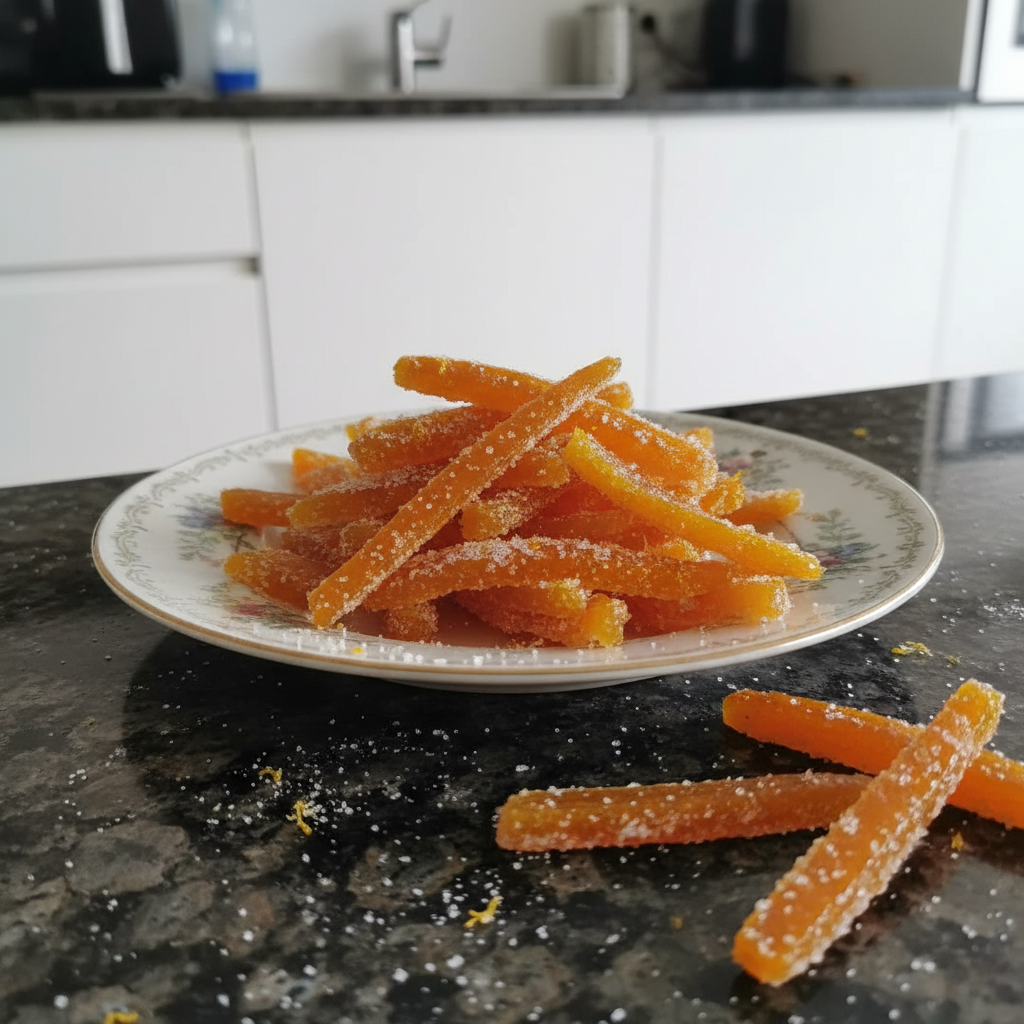
Candied Orange Peel Recipe: Less Bitter, Super Tender
Ingredients
Equipment
Method
- Slice off both ends of your oranges. Then, cut the peel on each orange into 4 or more vertical segments. Carefully peel off each segment of rind, leaving a thin layer of white pith to maintain structure and tenderness. Slice the peels into uniform 1/4 inch wide strips. Save the peeled fruit for other uses.
- Place the orange peel strips in a pot and cover them with fresh water. Bring to a boil and simmer for 15 minutes. This step is crucial for drawing out bitter compounds.
- Drain the peels in a colander, rinse them thoroughly under cold water, and drain again. Discard the water from the pot. Repeat this blanching, draining, and rinsing process two more times (for a total of three rounds) for optimal bitterness removal.
- After the final blanching and draining, transfer the peels to a clean bowl. Cover them completely with cold water and add a pinch of salt. Cover the bowl and refrigerate for 8-12 hours, or overnight. This unique soak leverages osmosis to further tenderize and draw out bitterness.
- The next day, drain the peels from their overnight soak. In a clean pot, combine 1 cup of fresh water and 2 cups of granulated sugar. Bring the mixture to a boil over medium heat, stirring continuously until the sugar is completely dissolved, creating a simple syrup.
- Add the soaked and drained citrus peels to the sugar syrup. Reduce the heat to low and simmer gently for 45-60 minutes, stirring occasionally. The peels should become wonderfully translucent and the syrup will thicken to a lightly syrupy consistency. For precision, use a candy thermometer to ensure the syrup reaches the soft ball stage (approximately 235-240°F / 113-116°C).
- Using a slotted spoon, carefully remove a few peels at a time from the hot syrup, allowing excess syrup to drip off. Immediately place the hot, wet peels into a bowl of fine granulated sugar or a ziplock bag containing sugar. Toss or shake to coat them evenly. This coating is essential for room-temperature storage and provides a classic finish.
- Spread the candied peels out on a wire rack to cool and dry completely. This typically takes 1-2 days in a cool, dry place, allowing the sugar to fully crystallize and set. For immediate use or freezing, the final sugar coating step can be skipped for a softer texture.
Notes

Taya Bennett is the founder of YumEasyMeals, a platform dedicated to easy, delicious, and quick-to-prepare recipes for busy families. Passionate about everyday cooking, she simplifies meals with practical, accessible, and always delicious ideas.
Discover her creations at: yumeasymeals.com