
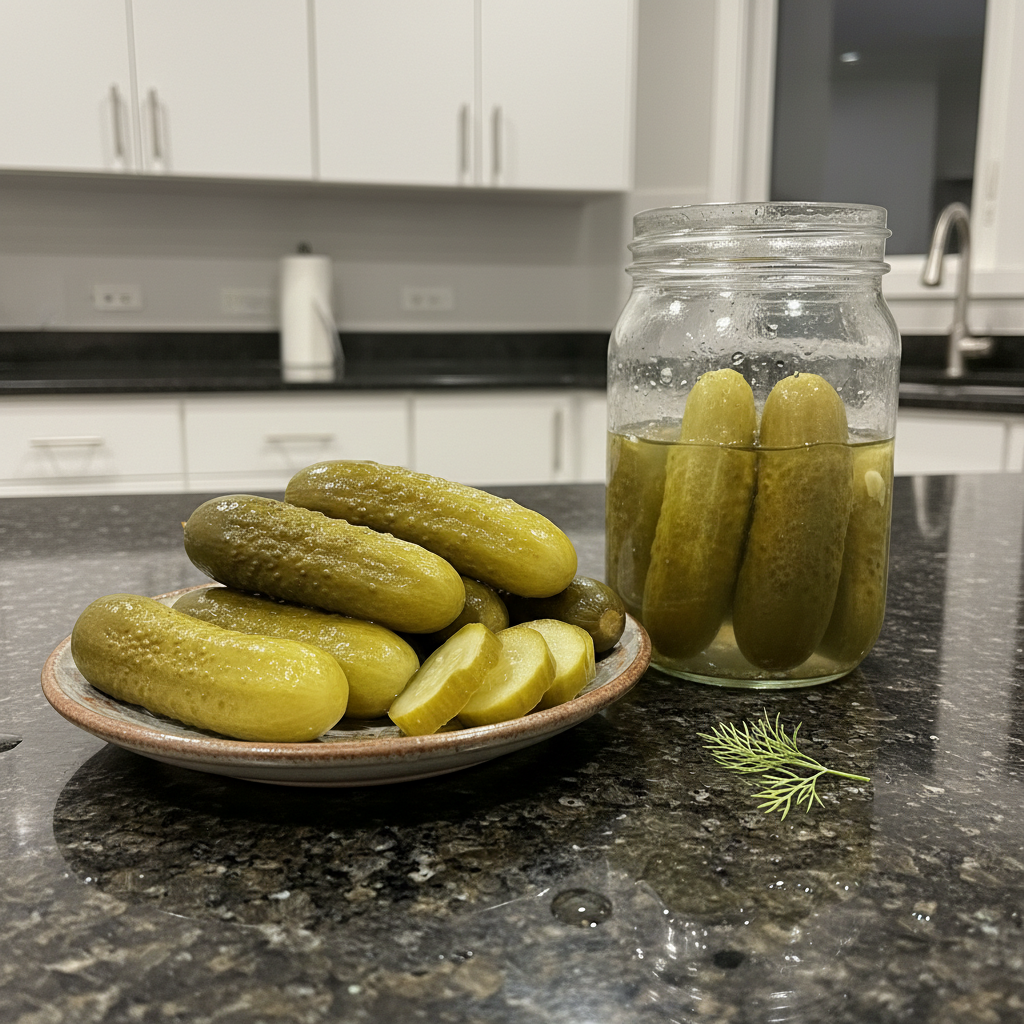
Ingredients
Equipment
Method
Prepare the Cucumbers
- Rinse the pickling cucumbers thoroughly under cold water.
- Remove approximately 1/16 inch from the flower end of each cucumber to eliminate enzymes that can lead to softening.
- Place the trimmed cucumbers in an ice-water bath for 15-30 minutes to firm them up for an extra crisp texture.
Prepare the Brine
- In a separate container, mix 2 tablespoons of fine sea salt or Himalayan salt with 5 cups of cold filtered water.
- Stir until the salt is completely dissolved and the water appears clear.
- Taste a small amount of the brine to ensure a balanced salinity. This 3 percent brine ratio is essential for safe and effective fermentation.
Assemble the Jar
- Ensure you have a clean two-quart mason jar. A good wash is sufficient for fermentation; sterilization is not necessary.
- Place all the whole spices, including fennel seeds, coriander seeds, allspice, peppercorns, dill seeds, mustard seeds, and celery seeds, into the bottom of the jar.
- Add the sliced garlic, optional sliced onion, and turmeric if you are using it.
Pack the Jar
- With clean hands, tightly pack one layer of cucumbers standing on end in the jar.
- Add the bay leaves.
- Carefully add the second layer of cucumbers, also standing on end. Press everything down firmly, leaving about 1 ½ inches of headspace at the top of the jar.
Add Brine and Weights
- If using, add 1 tablespoon of unflavored kombucha or sauerkraut brine to the jar.
- Pour the saltwater brine over the cucumbers, making sure they are fully submerged.
- It is crucial to use fermentation weights to keep the cucumbers under the brine. If any spices float to the surface, gently remove them to prevent potential mold growth.
First Fermentation
- Cover the jar loosely with a lid or a clean cloth, allowing air to escape easily.
- Place the jar in a pan or a bowl to catch any potential overflow during active fermentation.
- Store the jar in a cool, dark place, ideally between 60-70F. Let it ferment for 2-3 days.
- Check daily for bubbles or overflow, which are good signs of active fermentation. Half-sour pickles will typically take 3-5 days, while full sour pickles require 14-21 days.
Check for Fermentation
- After about 2 days, begin checking for signs of life. Look for bubbles rising, any overflow, or a slight clouding of the brine.
- Tap the jar gently and observe if tiny bubbles rise to the top. Taste the pickles after a few days; they should have a pleasant tang and still be crunchy.
Refrigerate
- Once you see active bubbles and the pickles have reached your desired level of tanginess and crispness, place the jar in the refrigerator. This will slow down the fermentation process considerably.
- Continue to keep the pickles fully submerged in the brine while stored.
Taste and Adjust
- Once chilled, give your fermented pickles a taste. They should be crispy, flavorful, and have a delightful tang.
- If you prefer a tangier or softer pickle, you can remove them from the refrigerator and allow them to ferment for a few more days at room temperature.
Optional Fizzy Brine
- For those who enjoy a fizzy brine, tighten the lid on your mason jar.
- Remember to "burp" the jar by opening it briefly every week or so to release built-up gases.
- Alternatively, you can use an airlock system, or simply give the lid one loose twist to allow gases to escape naturally.
Notes
For consistently crisp and safe pickles, ensure your cucumbers are always submerged under the brine, using fermentation weights, and maintain a precise 3% salt-to-water ratio. Always trim the flower end of cucumbers to prevent softening. Optimal fermentation occurs at 60-70F. The optional kombucha or sauerkraut brine provides a helpful kickstart to the process. Nutrition information is estimated based on common ingredients and serving sizes and may vary.