There is nothing quite like the vibrant, herbaceous aroma of fresh pesto. For many, the rich, cheesy flavor is inextricably linked to comfort and Italian tradition. As a professional chef passionate about plant-based cooking, I know the challenge of creating a vegan basil pesto that truly delivers that same depth and satisfaction without dairy. I am thrilled to share my ultimate vegan basil pesto recipe with you, featuring a secret ingredient that elevates it beyond expectation. This comprehensive guide will show you how to easily prepare a truly delicious and customizable vegan pesto, ensuring success for every home cook.
Why You’ll Love This Vegan Basil Pesto Recipe
This vegan basil pesto stands out from the rest, and it is all thanks to a subtle, ingenious twist I have perfected in my kitchen. At the very end of blending, I incorporate either 1-2 teaspoons of high-quality balsamic glaze or 1/4 cup of well-drained roasted red peppers. This simple addition makes all the difference.
The balsamic glaze introduces a perfectly balanced sweetness and a whisper of umami. Its concentrated sugars and complex flavor compounds enhance the fresh basil without overpowering it, adding a depth that is often missing from standard vegan pestos. It is a secret ingredient that makes the flavors sing.
Alternatively, if you opt for the roasted red peppers, you will notice a natural sweetness and a vibrant, savory boost. The peppers provide a lovely color and a mellow, rich flavor that amplifies the basil and garlic notes beautifully. Both options ensure your pesto is exceptionally flavorful and truly unique.
This recipe is incredibly flavorful. You will achieve a rich, cheesy, garlicky, and zesty taste without any dairy. It is also remarkably quick and easy to make, coming together in minutes with the help of a food processor. It is incredibly versatile and healthy, being naturally dairy-free, gluten-free, and packed with fresh ingredients. This vegan basil pesto is also meal prep friendly, making it perfect for preparing ahead and enjoying throughout the week.
Ingredients Needed for Vegan Basil Pesto
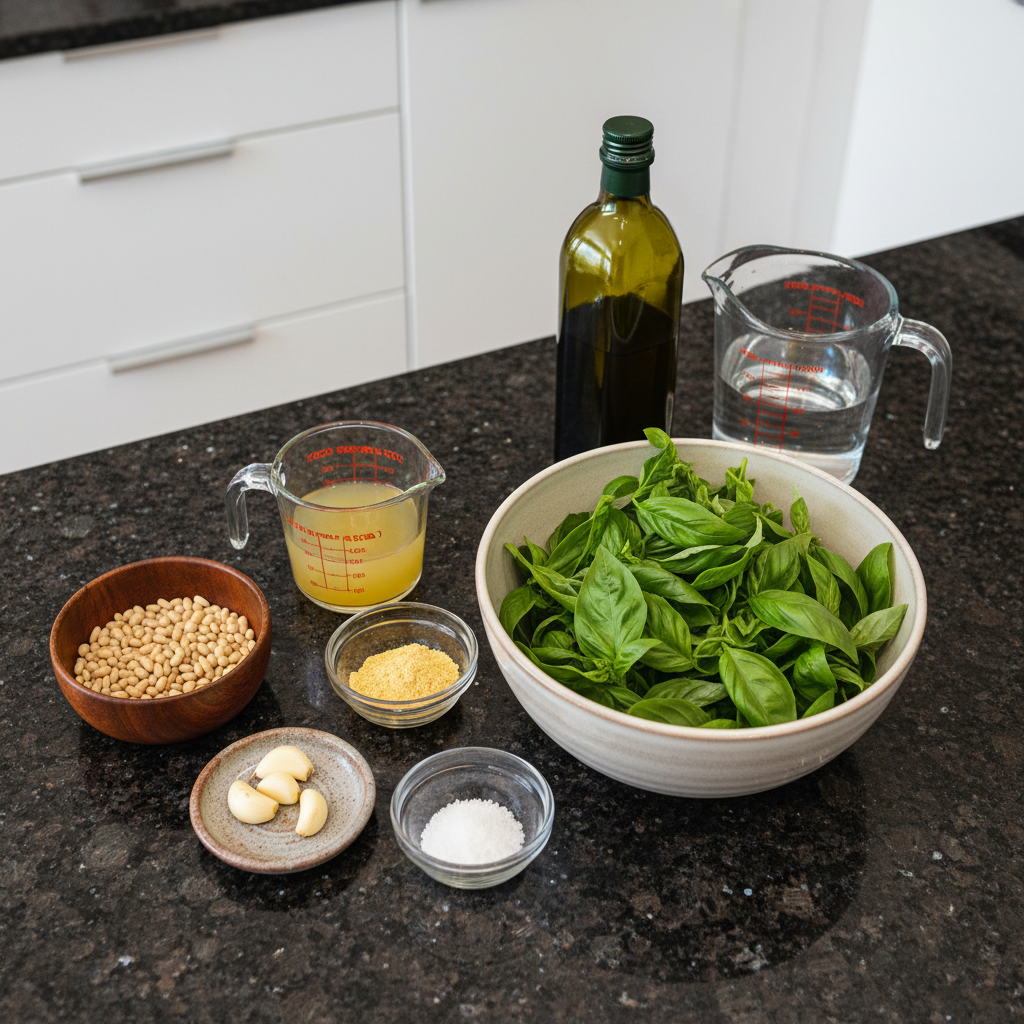
Here are the precise ingredients you will need to create this delicious vegan basil pesto:
* 2 cups packed fresh basil (large stems removed)
* 3 Tbsp pine nuts or walnuts (if nut-free, try sunflower seeds!)
* 3 large cloves garlic (peeled)
* 2 Tbsp lemon juice
* 3-4 Tbsp nutritional yeast
* 1/4 tsp sea salt (plus more to taste)
* 2-3 Tbsp extra virgin olive oil*
* 3-6 Tbsp water (plus more as needed)
Ingredient Notes & Substitutions
When making vegan basil pesto, the quality of your ingredients truly shines through.
Fresh Basil: Always reach for fresh, vibrant basil leaves. The age of your basil can impact the flavor; younger basil tends to be milder, while older leaves might have a more peppery bite. For a fun variation, you could also try fresh parsley or even carrot tops.
Nuts or Seeds: Pine nuts offer a classic rich, buttery flavor, while walnuts provide a slightly more earthy note. If you need a nut-free option, sunflower seeds or hemp seeds are excellent choices. Raw cashews or pistachios also make fantastic alternatives for a different texture and flavor profile.
Garlic: Garlic provides that essential aromatic bite and zing. Feel free to adjust the quantity to your taste. For a seasonal twist, consider using garlic scapes when they are available.
Lemon Juice: This ingredient is crucial for brightness and helps prevent the basil from oxidizing and turning brown. If you are out of lemons, lime juice or a good quality white wine vinegar can be used in a pinch. For another versatile sauce with a similar bright kick, try our ultimate lemon vinaigrette.
Nutritional Yeast: Often affectionately called “nooch,” nutritional yeast is what gives this pesto its characteristic cheesy, umami flavor. Nutritional yeast comes in different forms, usually flakes or powder, and different brands can have slightly varied flavor profiles. Just be sure to choose a plain, savory variety and avoid any barbecue-flavored versions, which would alter the pesto’s intended taste. For an extra boost of cheesiness and emulsification, you could experiment with a tiny bit of white miso paste or even aquafaba.
Olive Oil and Water: We use a combination to achieve the perfect consistency and flavor. If you are aiming for an oil-free vegan pesto, you can easily substitute the extra virgin olive oil with vegetable broth or simply use more water to reach your desired texture.
The Secret Twist: Do not forget our unique twist. The balsamic glaze or roasted red peppers are added at the end for that extra layer of sweetness and depth that truly makes this vegan basil pesto special.
How to Make Vegan Basil Pesto with a Balsamic Twist
Creating this incredible vegan basil pesto is a straightforward process. Just follow these steps, and you will have a vibrant, flavorful sauce in no time.
Prep and Initial Blend
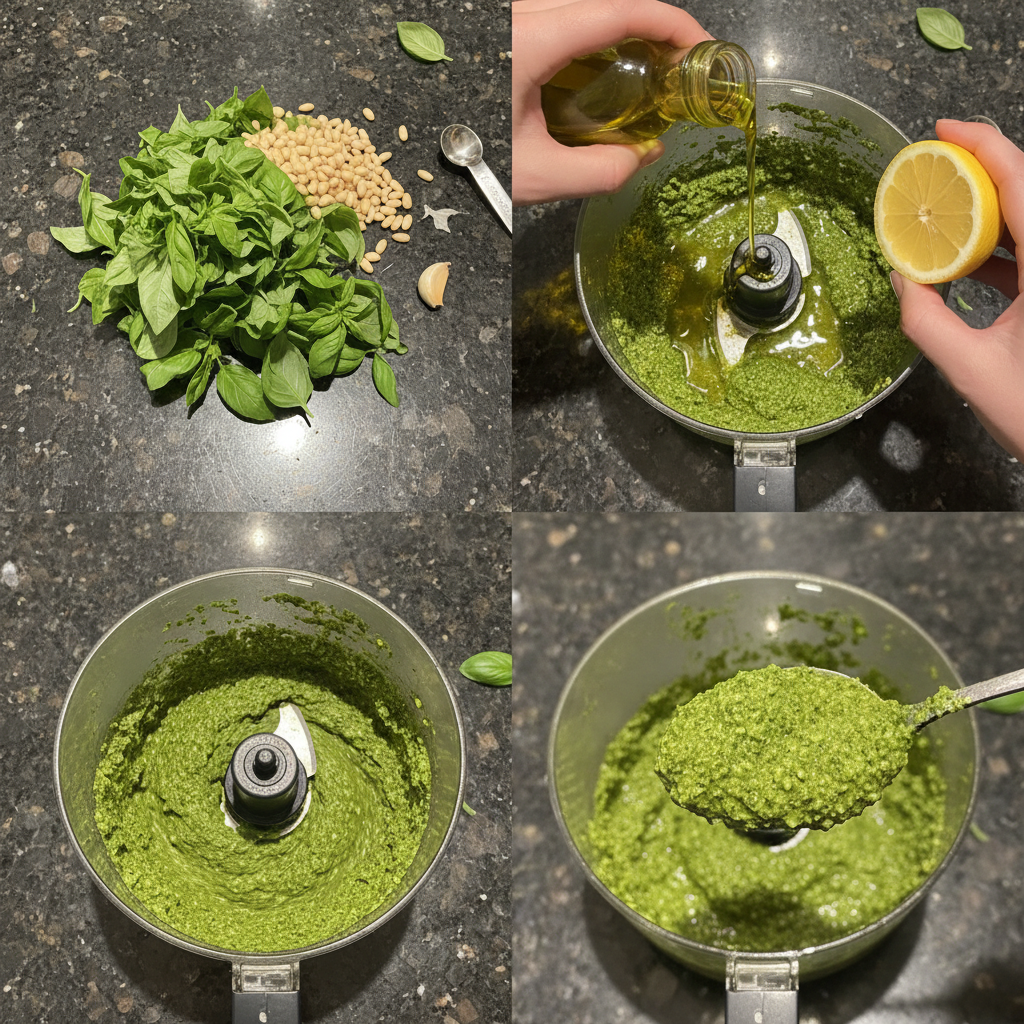
Begin by adding your fresh basil, pine nuts or walnuts, peeled garlic cloves, lemon juice, nutritional yeast, and sea salt to a food processor or a small blender. The fresh aroma of basil and garlic will already start to fill your kitchen. If you are using pine nuts, a little tip from my kitchen is to lightly toast them in a dry pan beforehand to deepen their nutty flavor. Blend or mix on high until these ingredients form a loose, textured paste.
Achieve Consistency
With the food processor running, slowly stream in the extra virgin olive oil a little at a time. This slow addition helps emulsify the pesto. Scrape down the sides of the processor bowl as needed to ensure everything is well combined. Next, add the water, one tablespoon at a time, blending after each addition until you reach your desired consistency. You are looking for a thick but pourable sauce. The texture will evolve from a crumbly paste to a smoother, vibrant green pesto. If you are avoiding oil altogether, you can substitute the olive oil with vegetable broth or simply use all water to achieve the desired texture.
Introduce the Twist
This is where the magic happens. Once your pesto has reached a smooth consistency, add 1-2 teaspoons of high-quality balsamic glaze or 1/4 cup of well-drained roasted red peppers. Blend briefly, just until these ingredients are combined. This subtle addition will infuse your pesto with a delicate sweetness and a wonderful depth without overpowering the fresh basil.
Taste and Adjust
Now for the most important step: taste your vegan basil pesto. This is your chance to make it perfect for your palate. You might want to add more nutritional yeast for an extra cheesy flavor, more sea salt to enhance the overall taste, a few more nuts for increased nuttiness, more garlic for a stronger bite and zing, or additional lemon juice for extra acidity and brightness. Keep tasting and adjusting until it is just right.
Final Notes
This versatile vegan basil pesto is perfect for adding to sauces, dressings, and various breads. I particularly love tossing it with zucchini or carrot noodles for a beautiful, healthy side dish.
Perfecting Your Pesto: Scaling & Equipment Tips
Whether you are making a small batch for tonight’s dinner or a large quantity for meal prepping, knowing how to scale your vegan basil pesto and choose the right equipment is key.
Scaling the Recipe
This vegan basil pesto recipe is incredibly adaptable. If you need a small batch for an individual meal or just a taste, you can easily halve the ingredients. For larger gatherings, meal prep, or if you simply want to stock up, feel free to double or even triple the recipe. When scaling, the most important thing is to maintain the ingredient ratios. This ensures that the delicate balance of basil, garlic, lemon, and our special twist remains consistent, providing the best flavor every time. Always consider the capacity of your equipment when deciding on batch size.
Choosing Your Tools
The choice between a food processor and a blender can influence the texture and ease of making your vegan basil pesto.
A food processor is an excellent choice for larger batches. It allows for more control over the texture, giving you the option of a slightly chunkier pesto if you prefer. Its wider bowl is also easier for scraping down the sides.
A blender, especially high-speed models like a NutriBullet, works wonderfully for smaller batches. Blenders often yield a smoother, creamy pesto due to their powerful blades. However, you might find yourself needing to scrape down the sides more frequently or add a little extra liquid to help the ingredients circulate.
For efficient blending, whether you use a food processor or a blender, I recommend pulsing rather than continuous blending. This prevents the basil from overheating and helps achieve a more even texture. Always remember to stop and scrape down the sides of the bowl or pitcher often to ensure all ingredients are thoroughly incorporated.
Pro Tips & Troubleshooting for Vegan Pesto
Making vegan basil pesto is a rewarding experience, and with these expert tips and solutions to common issues, you will consistently achieve amazing results.
Pro Tips for Success
These insights from my kitchen will help you elevate your homemade vegan basil pesto.
Toast Your Nuts: For a deeper, more pronounced nutty flavor, lightly toast your pine nuts, walnuts, or any other seeds you are using in a dry pan before adding them to the food processor. This simple step truly enhances the overall taste of your pesto.
Water Wisely: The moisture content in fresh basil can vary depending on its freshness and how it was stored. Start with the minimum amount of water specified in the recipe and add more gradually, tablespoon by tablespoon, until you reach your desired thick but pourable consistency.
Basil Quality Matters: Always use fresh, vibrant basil leaves. Older or withered basil can sometimes impart a slightly bitter taste, which will affect the final flavor of your pesto. Freshness is key for that bright, herbaceous note.
Do Not Over-Process: Pesto is best when it retains some of its fresh, raw flavors. Over-processing can generate heat, which can dull the basil’s vibrant green color and flavor. Use a pulsing action rather than continuous blending for the best results.
Balance Flavors: The true secret to great pesto lies in tasting and adjusting. Do not be shy. Taste frequently and adjust the salt, lemon juice, garlic, and nutritional yeast until you achieve a perfect balance that suits your palate.
Embrace the Twist: Our secret ingredient, whether balsamic glaze or roasted red peppers, is there to enhance the pesto. Feel free to adjust the amount of this special addition to your personal preference for that truly unique flavor boost.
Common Mistakes to Avoid
Even experienced cooks can encounter hiccups. Here is how to prevent common vegan pesto problems.
Using the Wrong Nutritional Yeast: This is a crucial one. Always double-check that you are using plain, savory nutritional yeast. Accidentally grabbing a barbecue-flavored variety, which does exist, will unfortunately ruin your pesto.
Bitter Pesto: If your pesto tastes bitter, it might be due to older basil or an imbalance of flavors. Try adding a bit more lemon juice to brighten it up, a touch more sweetener (like a tiny bit more balsamic glaze), or a pinch more salt to help balance the bitterness.
Separated Pesto: Pesto can sometimes separate if the liquid (oil/water) is not added slowly enough to emulsify properly, or if it is stored incorrectly. If it separates, give it a vigorous stir or re-blend it briefly with a tiny bit more water or olive oil until it comes back together.
Dull Flavor: If your pesto lacks vibrancy, it could be from using old or less-than-fresh basil. To perk it up, try adding more fresh lemon juice, an extra pinch of salt, or a fresh clove of garlic.
Too Thick or Too Thin: Correcting consistency is easy. If your pesto is too thick, simply blend in a tablespoon of water at a time until it reaches your desired texture. If it is too thin, you can thicken it by adding a few more pine nuts or sunflower seeds and blending again.
Serving & Storage Suggestions
Once you have made your delicious vegan basil pesto, you will find it incredibly versatile. Here are some ideas for how to enjoy and store it.
Serving Ideas
This vegan basil pesto is a culinary chameleon, perfect for countless dishes.
Classic Pairings: My absolute favorite way to enjoy this pesto is tossed with warm pasta like penne or spaghetti. It is also fantastic with spaghetti squash, zucchini noodles, or carrot noodles for a lighter option. Try it with gnocchi or even butter beans with cavolo nero kale.
Spreads and Dips: It makes an incredible spread for pesto avocado toast, a flavorful addition to Italian dishes, or a zesty condiment for sandwiches and wraps.
Sauces and Dressings: Stir it into other sauces for an herbaceous kick or thin it out slightly with a little extra water or lemon juice to create a vibrant dressing for salads, grain bowls, or roasted vegetables. You might also enjoy our best almond butter sauce for another versatile flavor enhancer.
Unique Ideas: Get creative. Try making Smashed Potatoes with Garlic Pesto, a hearty Pea Pesto Pasta with Sun-Dried Tomatoes, or a robust Sun-Dried Tomato Pesto Pasta.
Garnishing: A simple drizzle over soups, pizzas, or roasted vegetables adds a fresh finish and a burst of flavor.
Storage and Make-Ahead Tips
Proper storage ensures your vegan basil pesto stays fresh and delicious.
Refrigeration: Store any leftover vegan basil pesto in an airtight container in the refrigerator for up to 1 week. To prevent oxidation and maintain its vibrant green color, I recommend pouring a thin layer of extra virgin olive oil over the surface before sealing.
Freezing: This pesto freezes beautifully. The best way to freeze it is to pour it into ice cube molds. Once the cubes are solid, transfer them to an airtight freezer bag or container. It will keep well in the freezer for 1 month or more, ready to be pulled out for a quick meal.
Thawing and Reheating: To use frozen pesto, simply transfer the desired number of cubes to the refrigerator to thaw overnight. For quicker thawing, you can leave them at room temperature for a couple of hours. When adding to pasta or other dishes, gently warm the pesto; avoid high heat, which can dull its fresh flavors.
Canning: While freezing is an excellent option, I strongly advise against home canning pesto. Pesto has low acidity, which means there is a risk of botulism if not properly processed using specialized equipment. Freezing is the safest and easiest preservation method for homemade pesto.
Conclusion
I truly believe this vegan basil pesto recipe, with its secret balsamic glaze or roasted red pepper twist, will become a cherished staple in your kitchen. It is incredibly flavorful, remarkably easy to make, and offers a depth that often surprises those new to plant-based cooking. The freshness of the basil, the zest of the lemon, and the subtle sweetness of our special ingredient create an irresistible combination. I encourage you to try this recipe, experiment with your favorite variations, and truly make it your own. Get ready to elevate your meals and impress your taste buds.
Vegan Basil Pesto FAQ
How do I store vegan pesto?
You can store vegan pesto in an airtight container in the refrigerator for up to 1 week. For best results, cover the surface with a thin layer of extra virgin olive oil before sealing to prevent browning and keep it fresh.
Can I make this recipe nut-free?
Absolutely. The recipe already suggests sunflower seeds as a nut-free alternative to pine nuts or walnuts. Hemp seeds are another excellent option for a nut-free vegan basil pesto.
What can I use if I don’t have pine nuts?
If pine nuts are unavailable, walnuts are a great substitute, offering an earthy flavor. For nut-free options, consider sunflower seeds or hemp seeds. You could also experiment with raw cashews or pistachios for different flavor profiles.
What’s the best way to freeze vegan pesto?
The best way to freeze vegan pesto is to pour it into ice cube molds. Once the cubes are solid, transfer them to an airtight container or freezer bag. It will keep well for up to 1 month or even longer.
What can I use vegan pesto with?
Vegan basil pesto is incredibly versatile. It is fantastic tossed with pasta, spread on toast or sandwiches, used as a dressing for salads or roasted vegetables, or swirled into soups and grain bowls.
How to correct the taste if the pesto is too bitter?
If your pesto tastes a bit bitter, you can try adding more lemon juice for brightness, a touch more sweetener (like a bit more balsamic glaze), or a pinch more sea salt to help balance the flavors.
Can this recipe be canned to preserve it?
I do not recommend home canning pesto. Due to its low acidity, there is a risk of botulism if not processed correctly with professional equipment. Freezing is a much safer and easier method for preserving your homemade vegan basil pesto.
What are the correct metric measurements for each ingredient?
Here are the approximate metric conversions for the ingredients:
2 cups packed fresh basil is roughly 480 ml packed.
3 Tbsp pine nuts or walnuts is about 45 ml.
3 large cloves garlic is typically around 15 grams per clove.
2 Tbsp lemon juice is about 30 ml.
3-4 Tbsp nutritional yeast is about 45-60 ml.
1/4 tsp sea salt is about 1.25 ml.
2-3 Tbsp extra virgin olive oil is about 30-45 ml.
3-6 Tbsp water is about 45-90 ml.
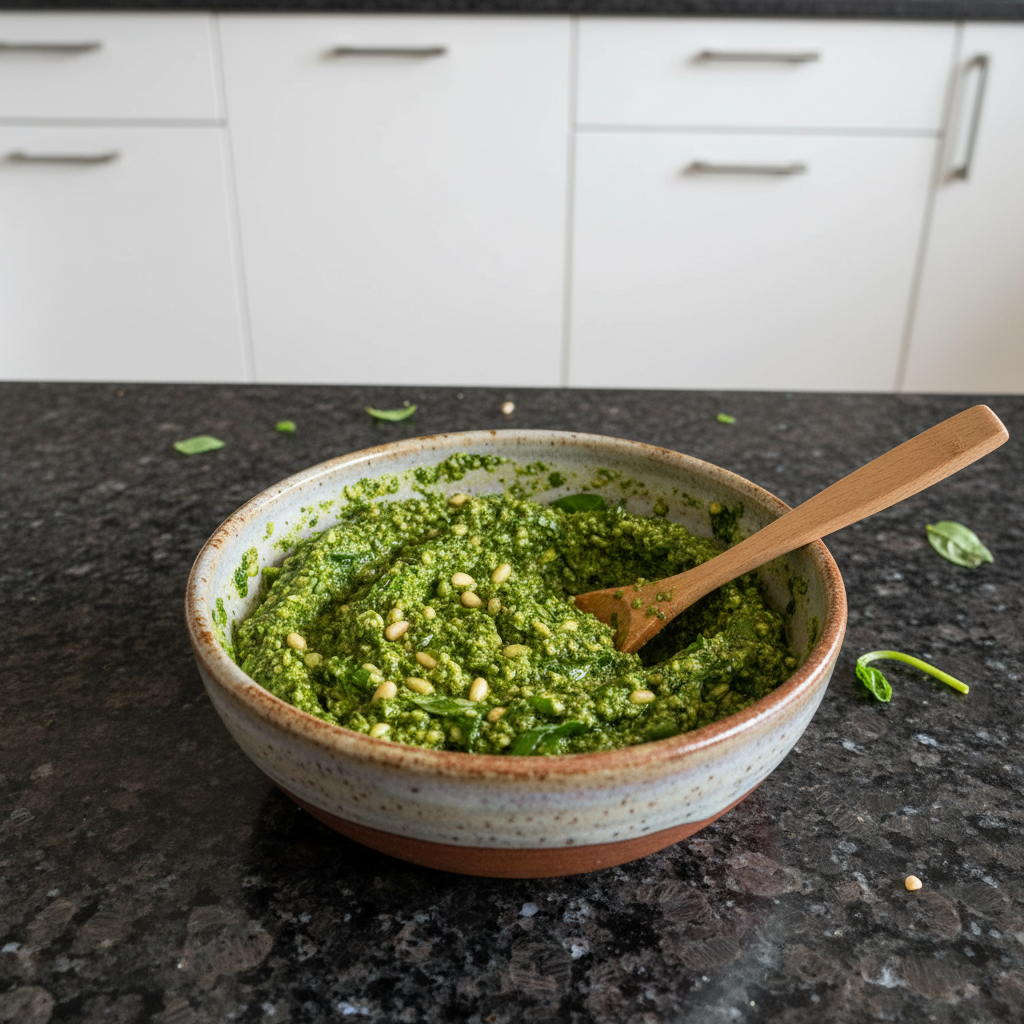
Vegan Basil Pesto with a Secret Twist
Ingredients
Equipment
Method
- Begin by adding fresh basil (large stems removed), pine nuts or walnuts, peeled garlic cloves, lemon juice, nutritional yeast, and sea salt to a food processor or a small blender. If using pine nuts, you can lightly toast them in a dry pan beforehand to deepen their nutty flavor. Blend or mix on high until these ingredients form a loose, textured paste.
- With the food processor running, slowly stream in the extra virgin olive oil a little at a time to help emulsify the pesto. Scrape down the sides of the processor bowl as needed. Next, add water, one tablespoon at a time, blending after each addition until you reach your desired consistency—a thick but pourable sauce. If avoiding oil, substitute with vegetable broth or more water.
- Once your pesto has reached a smooth consistency, add 1-2 teaspoons of high-quality balsamic glaze OR 1/4 cup of well-drained roasted red peppers. Blend briefly, just until these ingredients are combined. This subtle addition infuses the pesto with sweetness and depth without overpowering the basil.
- Taste your vegan basil pesto and adjust to your palate. Add more nutritional yeast for cheesiness, sea salt to enhance overall taste, nuts for nuttiness, garlic for a stronger bite, or lemon juice for extra acidity and brightness. Continue tasting and adjusting until it is just right.
Notes

Emily Thompson is a home cook and food enthusiast who believes that great meals bring families together. She loves exploring creative twists on classic American comfort food, always testing new ideas in her kitchen. Emily is passionate about sharing simple, practical recipes and time-saving tips to help busy people enjoy cooking at home. Her approachable style makes every dish accessible, delicious, and perfect for those seeking inspiration for everyday meals and special occasions. Find Emily’s latest creations and kitchen wisdom on yumeasymeals.com.