As a professional chef and enthusiastic home cook, I believe few dishes bring as much soul-satisfying comfort as a steaming bowl of ramen. The rich, savory broth, the perfectly chewy noodles, and the vibrant toppings all come together in a symphony of flavor and texture. For more ramen inspiration, including our general easy homemade ramen soup recipe, visit our blog. Today, I am thrilled to share my ultimate Vegetarian Ramen recipe, crafted to deliver an authentic, deeply satisfying experience without any meat. My secret weapon, and the unique twist that makes this bowl truly restaurant-quality, is a drizzle of homemade black garlic oil. Get ready to create an umami bomb in your own kitchen that will rival your favorite ramen-ya.
Why You’ll Love This Vegetarian Ramen
Recipe
This ramen recipe has a unique twist that truly elevates it. Black Garlic Oil, also known as mayu, is my secret ingredient. This magical oil adds a smoky, savory, and slightly sweet flavor that transforms the broth. It brings an incredible depth of flavor that many compare to a traditional tonkotsu ramen, even though this is entirely vegetarian.
This ramen is an Umami Bomb. You will experience an intensely savory and deeply satisfying flavor profile that keeps you coming back for more. It is also incredibly Customizable. Feel free to play with a variety of toppings and adjust the spice levels to suit your personal taste. Above all, this Vegetarian Ramen is pure Comfort Food. It is warming, nourishing, and perfect for any day you crave a hug in a bowl. This recipe is wonderfully Vegetarian-Friendly. It appeals to both vegetarians and vegans seeking an authentic and robust ramen experience without compromise.
Ingredients Needed
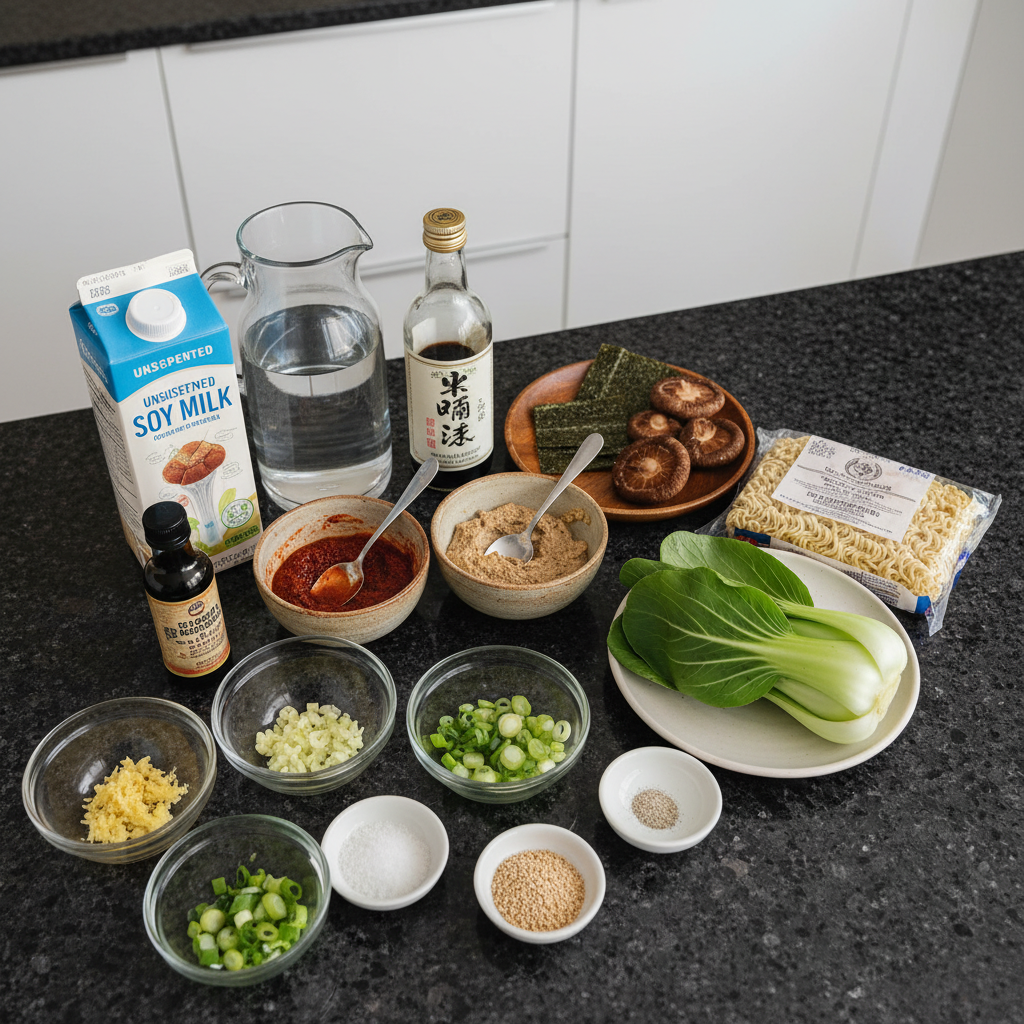
- 1 cup water
- 1 piece kombu (dried kelp) ((5 g; 2 x 2 inches, 5 x 5 cm per piece))
- 1–2 dried shiitake mushrooms
- 2 Tbsp toasted white sesame seeds
- 1½ tsp ginger ((grated; from a 1-inch, 2.5-cm knob))
- 2 cloves garlic
- 2 green onions/scallions ((save the green part for garnish))
- 1 Tbsp toasted sesame oil
- 1½ Tbsp doubanjiang (spicy chili bean paste)
- 1½ Tbsp miso
- 1 Tbsp sake
- 1½ Tbsp soy sauce ((use GF soy sauce for gluten-free))
- 2 cups unsweetened soy milk
- 1 cup Vegan Dashi ((follow the instructions below))
- ½ tsp Diamond Crystal kosher salt
- 1 dash of white pepper powder
- 2 servings fresh ramen noodles
- 1 head Shanghai bok choy ((large))
- toppings of your choice
Ingredient Notes & Substitutions
Soy Milk: It is crucial to use unsweetened soy milk for this ramen broth. Sweetened varieties will drastically alter the flavor profile of the soup, making it cloying. Other unsweetened plant-based milks like oat milk or cashew milk can be used, but soy milk provides the creamiest texture and most neutral flavor that complements the other ramen ingredients.
Miso: Miso is a key umami substance in this vegetarian ramen. There are various types of miso, each with a distinct flavor. White miso is generally milder and sweeter, while red miso is saltier and more pungent. Awase miso is a blend. I encourage you to experiment with different miso types to discover how they subtly change the flavor of your soup broth.
Doubanjiang: This spicy chili bean paste adds a wonderful kick and savory depth. If you cannot find doubanjiang, you can substitute it with gochujang, a Korean chili paste, or even doenjang with a pinch of red pepper flakes for heat. Be aware that the spice level will vary. Some varieties of doubanjiang, especially from Taiwan, Hong Kong, and Guangdong, are non-spicy if you prefer less heat.
Noodles: The noodles are vital for a perfect ramen experience. You can find fresh ramen noodles, which offer the best chew and texture, or dried ramen noodles. Noodle types vary in thickness and shape, from straight and thin to wavy and thick. In the US, brands like Myojo, Yamachan Ramen, Sun Noodles, and HIME are popular. For gluten-free options, look for brands like Gluten Free Meister.
Vegan Dashi: This recipe uses a vegan dashi made with kombu and shiitake mushrooms, which provides a clean umami base. If you are not strictly vegetarian or vegan, you could opt for Awase Dashi, made with kombu and bonito flakes, or even a good quality chicken stock for a different flavor profile.
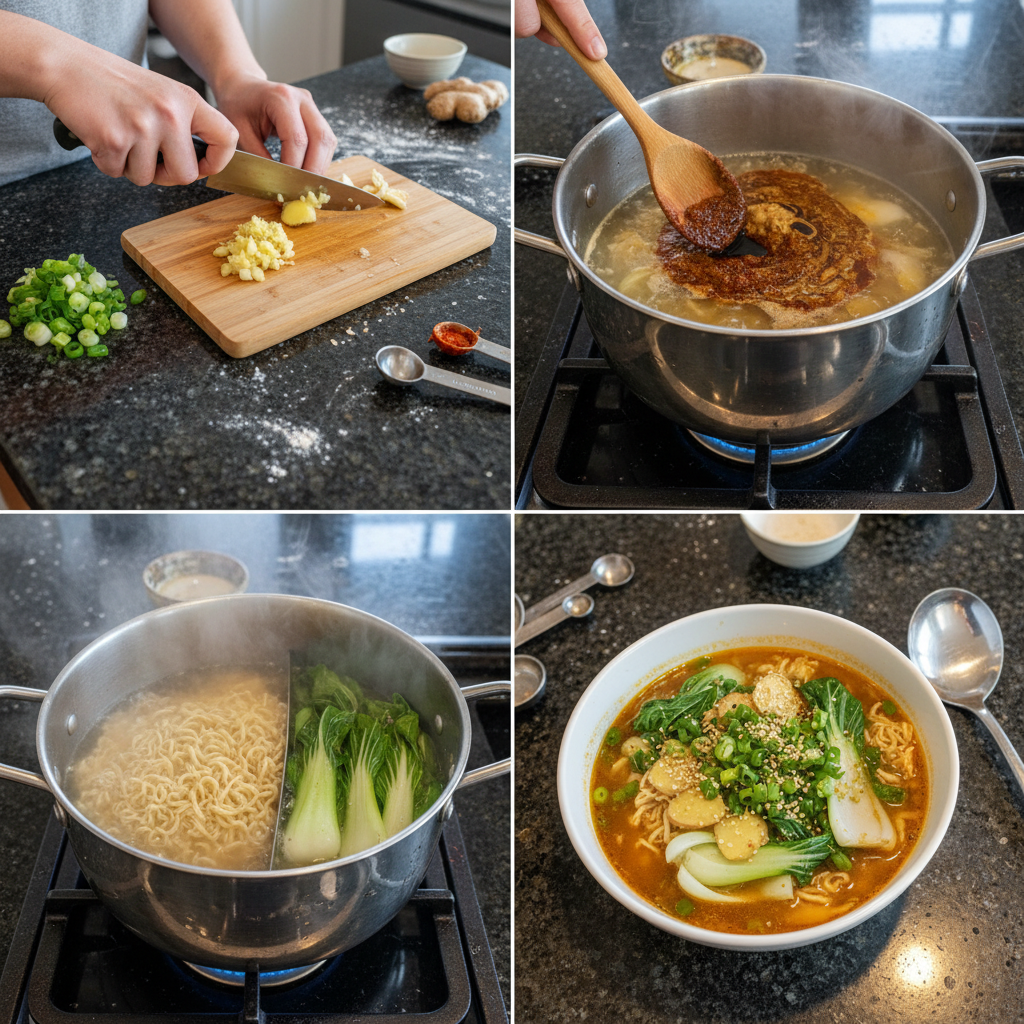
How to Make Vegetarian Ramen
Before You Start…Please note that this recipe requires 30 minutes of kombu soaking time, which is inactive prep.
First, gather all your ingredients. A typical ramen bowl can hold 1200–1400 ml of liquid. We will prepare 1½ cups (360 ml) of soup broth per bowl, which should be more than enough. If you’re using bigger bowls, you may need to prepare extra soup. Make sure all your toppings are ready to go before you begin cooking the ramen. If you‘re making my Ramen Eggs recipe, prepare them a day in advance. I also like to divide and add ½ cup of my Spicy Bean Sprout Salad and ¼ cup of my homemade vegan kimchi. Finally, ¼ cup corn, frozen or canned, and 1 sheet nori, dried laver seaweed, are other popular toppings to divide among the bowls.
To Make the Vegan Dashi
Measure 1 cup of water into a container. Add 1 piece of kombu, dried kelp, and 1–2 dried shiitake mushrooms. I like to set a small heavy cup or bowl on top to keep the mushrooms completely submerged in the water. Allow this to soak for at least 30 minutes. While the dashi soaks, you can prepare the other ramen ingredients.
After 30 minutes, transfer this cold brew vegan dashi, which includes the liquid, kombu, and shiitake, to a medium saucepan. Slowly bring it to a near boil over low heat. This slow extraction method will enhance the dashi flavor. Right before the liquid begins to boil, remove the kombu and shiitake mushroom from the dashi. Turn off the heat. If you leave the kombu in the pot, the dashi will become slimy and bitter, so remove it promptly.
Transfer the vegan dashi to a measuring cup. Make sure you have 1 cup; if not, add water to reach the correct volume. You can repurpose the spent kombu to make Simmered Kombu (Kombu Tsukudani) and Homemade Furikake (Rice Seasoning). Cut off the stem of the spent shiitake mushroom and use the cap just as you would a fresh shiitake mushroom in other dishes.
To Prepare the Ingredients
Prepare a big pot of water for cooking the bok choy and noodles. Slowly bring it to a boil on medium-low heat while you prepare all the ingredients.
Grind and crush 2 tablespoons of toasted white sesame seeds in a Japanese mortar and pestle, also known as a suribachi and surikogi.
Grate the ginger next. I use a ceramic grater for this. Reserve 1½ teaspoons of grated ginger, with its juice. If you’re unsure how much ginger flavor you’d like, start with less and add more later to taste.
Next, mince or press 2 cloves of garlic. I find a garlic press makes this step quick and easy.
Separate the green and white parts of 2 green onions or scallions. Cut the white part into thin rounds; these will be used for the soup broth. Then, cut the green part into thin rounds. Keep them in separate bowls as the green parts are for garnish.
Cut 1 large head of Shanghai bok choy into quarters lengthwise and rinse clean under running water. Debris often hides between the layers, so rinse them thoroughly to ensure cleanliness.
To Make the Soup Broth
Set a small saucepan over medium-low heat. Add 1 tablespoon of toasted sesame oil, the minced garlic, the grated ginger, and the white part of the green onions or scallions. Cook until fragrant, which typically takes about 1–2 minutes. Make sure not to burn the aromatics, as this can introduce a bitter taste to your broth.
Add 1½ tablespoons of doubanjiang, the spicy chili bean paste, and 1½ tablespoons of miso to the saucepan. Stir constantly so that they do not burn and integrate well with the aromatics. Remember that trying different miso types can create a slightly different flavor for the soup broth, so feel free to experiment.
Next, add 1 tablespoon of sake and use a wooden spatula to stir and release any bits of the sauce attached to the bottom of the saucepan. This helps deglaze the pan and incorporate all the flavors.
Add the ground sesame seeds and 1½ tablespoons of soy sauce and mix it all together until well combined.
Gradually add 2 cups of unsweetened soy milk, stirring constantly. This gradual addition and constant stirring are important to ensure the doubanjiang and miso dissolve smoothly and to prevent the soy milk from curdling.
Then, add 1 cup of your prepared Vegan Dashi.
Taste the soup now and adjust the seasoning with ½ teaspoon of Diamond Crystal kosher salt and 1 dash of white pepper powder, to taste. Do not be shy about adding salt, because the broth will taste less salty after you add the noodles. Turn off the heat, cover with a lid, and set aside while you prepare the remaining components.
To Blanch the Bok Choy
Prepare a medium bowl of cold water and set it aside. In the big pot of boiling water that you prepared earlier, add the bok choy, stem end first, and cook it for about 2 minutes. The goal is for the bottom end to be tender yet still have a slight crispness. When tender, turn off the heat.
Without draining the water, carefully remove the blanched bok choy from the pot and transfer it to the bowl of cold water. This step is crucial to stop the cooking process and preserve the bok choy’s vibrant green color and crisp texture. Keep the hot water in the big pot, as you will use it to cook the noodles in the next step. Once the bok choy is cool enough to handle, gently squeeze out any excess water and set it aside.
To Reheat the Broth and Cook the Noodles
Now, it‘s time to reheat the soup broth until it‘s piping hot. Be careful not to let it overboil, because overboiling the soup broth may cause it to curdle. Before cooking the fresh noodles, loosen them up gently with your hands to prevent them from clumping together.
Turn the heat back on for the big pot of water and bring it to a rolling boil again. Once boiling, add 2 servings of fresh ramen noodles and cook according to the package instructions, typically 1-3 minutes for fresh noodles. While cooking, stir and separate the noodles with chopsticks to ensure even cooking. I often cook the noodles inside a big noodle strainer, like one I got in Japan, that I’ve set inside the pot. This makes draining much easier. Make sure not to overcook the noodles; they should be al dente with a pleasant chew.
When the noodles are done cooking, drain them very well in a strainer, shaking it a few times to drain the water thoroughly. This is important because any excess water will dilute the rich soup broth. Transfer the noodles immediately to your individual ramen bowls.
To Serve
Divide and pour the piping-hot soup broth with its seasonings over the noodles in each bowl. Then, divide and artfully add the blanched bok choy and your chosen toppings to the bowls. For this Vegetarian Ramen, I topped mine with 2 ramen eggs sliced lengthwise, ¼ cup of frozen or canned corn, 1 sheet of nori (dried laver seaweed), ½ cup of Spicy Bean Sprout Salad, and ¼ cup of vegan kimchi. Garnish generously with the chopped green onions. Finally, drizzle a teaspoon of the homemade black garlic oil over each bowl just before serving to preserve its intense aroma and flavor. Serve immediately and enjoy your incredible homemade Vegetarian Ramen.
How to Make Black Garlic Oil (Mayu)
Black garlic oil, known as mayu, is an absolute game-changer for ramen. It is a dark, aromatic oil that brings a deep, smoky, slightly bitter, and sweet umami note, adding incredible complexity and depth to your ramen broth. This special oil is the secret to making your Vegetarian Ramen taste truly authentic and restaurant-quality, mimicking the richness of a tonkotsu broth.
To make black garlic oil at home, you will need:
* ½ cup neutral oil (such as grapeseed, canola, or vegetable oil)
* 1 head of garlic, peeled cloves
Instructions:
1. In a small saucepan, combine the peeled garlic cloves and the neutral oil.
2. Place the saucepan over very low heat. The key is slow and gentle cooking. You want the garlic to gradually brown and then blacken, not burn.
3. Simmer the garlic in the oil, stirring occasionally, for 20-30 minutes. The garlic will first turn golden, then brown, and finally black. It will become very soft and fragrant.
4. Once the garlic is deeply blackened and fragrant, remove the pan from the heat. Do not let it turn to ash.
5. Allow the oil and garlic to cool slightly.
6. Using a fine-mesh strainer or a cheesecloth-lined sieve, strain the black garlic oil into a clean, airtight jar. You can gently press on the solids to extract all the flavorful oil.
7. Discard the garlic solids or use them as a intensely flavored spread.
Tips for preventing burning: Keep the heat very low and monitor constantly. If you see the garlic browning too quickly, reduce the heat further or briefly remove it from the stove.
Storage instructions: Black garlic oil can be stored in an airtight container in the refrigerator for up to 2 weeks. Its flavor will deepen slightly over time.
If you are short on time, pre-made black garlic oil can be purchased online or found in specialty Asian markets. Look for brands that offer authentic Japanese condiments.
Pro Tips & Troubleshooting
Pro Tips
Try different miso types to create a slightly different flavor for the soup broth. Make sure not to burn the aromatics when making the soup broth. Do not be shy about adding salt because the broth will taste less salty after you add the noodles. Always taste and adjust seasoning before serving. Warm the bowls before serving to keep the ramen hot longer. Prepare all toppings in advance for a smooth assembly. Make sure not to overcook the noodles. Drizzle the black garlic oil just before serving to preserve its aroma and flavor.
Common Mistakes to Avoid
If you leave the kombu in the pot, the dashi will become slimy and bitter. Overboiling the soup broth may cause it to curdle, especially with soy milk. Toasting the sesame seeds too long will result in a stronger, less pleasant, bitter taste. Not adding enough salt to the broth will result in a bland ramen. Using low-quality soy milk or dashi will negatively impact the overall flavor. Overcooking the noodles will result in a mushy texture. Skipping the black garlic oil means missing out on the unique umami boost.
Serving & Storage
Serving Ideas
This Vegetarian Ramen is a complete meal on its own, but it pairs wonderfully with a few side dishes. Serve it with Vegetable Gyoza for a delightful dumpling addition. Another excellent vegan protein option could be crispy sesame tofu. Homemade La-Yu, a Japanese chili oil, can add an extra layer of spice and flavor. Yakitori-style Grilled Vegetables offer a nice smoky contrast. Spicy Edamame makes for a quick and easy appetizer. For a more substantial side, consider Pickled Mustard Greens Fried Rice (Takana Chahan). Always garnish generously with extra green onions, nori seaweed, or a sprinkle of sesame seeds. Offer a side of chili oil or sesame oil for guests to customize their spice level.
Storage and Make-Ahead
You can keep the soup broth in the refrigerator for 3 days when stored in an airtight container. It is best to cook the fresh ramen noodles right before serving to maintain their ideal texture. For any leftover ramen toppings, store them separately in individual airtight containers. This prevents sogginess and helps maintain their texture and flavor. When reheating the broth, do so gently over low heat, stirring occasionally to prevent curdling, especially with the soy milk base. Noodles can be briefly blanched in boiling water for about 30 seconds to reheat them without overcooking. Yes, you can freeze the broth. Allow it to cool completely, then transfer it to freezer-safe bags or containers for up to 2-3 months. Thaw frozen broth in the refrigerator overnight before gently reheating on the stovetop.
Conclusion
Creating a truly exceptional Vegetarian Ramen at home is not only achievable but deeply rewarding. This recipe, with its robust vegan dashi base and the incredible depth provided by black garlic oil, stands as a testament to how flavorful meat-free cooking can be. The umami-rich broth and perfectly cooked noodles provide a comforting and satisfying meal. If you’re looking for another deeply satisfying and creamy bowl of comfort, try our ultimate cheeseburger soup recipe. I encourage you to experiment with your favorite toppings and adjust the seasonings to create your perfect bowl of ramen. This recipe is designed to be accessible for home cooks of all levels, so do not hesitate to dive in. Share your delicious creations or explore more recipes on my blog for endless culinary inspiration.
FAQ
How long does it take to make this vegetarian ramen?
The active cooking time for this vegetarian ramen is approximately 45-60 minutes, but it does require 30 minutes of inactive kombu soaking time before you begin.
Is Soy Milk Ramen (Tonyu Ramen) always vegetarian/vegan?
Soy Milk Ramen, or Tonyu Ramen, is not always vegetarian or vegan. While it uses soy milk, the dashi (broth base) might contain bonito flakes, which are fish-based, or it could be made with chicken or pork stock. Always check the ingredients to ensure it aligns with your dietary needs.
What is the best way to store leftover broth?
The best way to store leftover broth is in an airtight container in the refrigerator for up to 3 days.
What is kansui and why is it important for ramen noodles?
Kansui is an alkaline solution, typically a mixture of potassium carbonate and sodium carbonate, added to the flour when making ramen noodles. It gives ramen noodles their characteristic elasticity, chewiness, and yellow hue. It also helps prevent the noodles from dissolving in the hot broth.
What are common toppings for vegetarian ramen?
Common vegetarian ramen toppings include blanched bok choy, corn, nori seaweed, green onions, spicy bean sprouts, vegan kimchi, tofu, mushrooms, bamboo shoots (menma), and even crispy garlic baked chickpeas or a vegetarian ajitama (ramen egg) made with tamari.
How can I make this recipe spicier?
To make this recipe spicier, you can add more doubanjiang during the broth preparation. You can also drizzle extra chili oil, such as homemade la-yu, into your bowl when serving, or sprinkle in some red pepper flakes.
Can I freeze the broth?
Yes, you can freeze the broth. Allow it to cool completely before transferring it to freezer-safe bags or containers. It can be stored in the freezer for up to 2-3 months. Thaw overnight in the refrigerator before gently reheating.
Are ramen noodles vegan?
Some ramen noodles are vegan, but many brands contain egg as an ingredient. Always check the ingredient list on the package to ensure they are egg-free if you are following a vegan diet. There are many excellent vegan ramen noodle options available now.
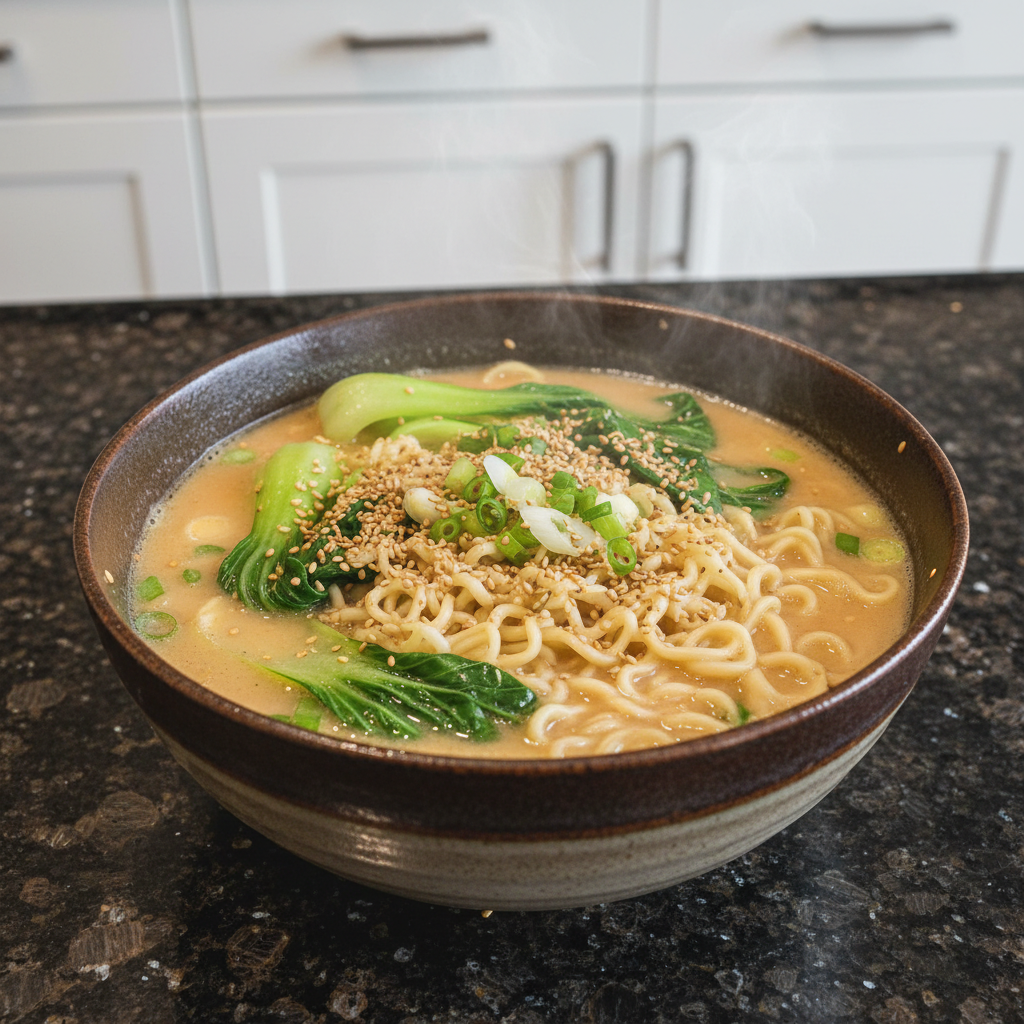
Umami Vegetarian Ramen with Black Garlic Oil
Ingredients
Equipment
Method
- In a small saucepan, combine the peeled garlic cloves and the neutral oil.
- Place the saucepan over very low heat. The key is slow and gentle cooking; you want the garlic to gradually brown and then blacken, not burn.
- Simmer the garlic in the oil, stirring occasionally, for 20-30 minutes. The garlic will first turn golden, then brown, and finally black. It will become very soft and fragrant.
- Once the garlic is deeply blackened and fragrant, remove the pan from the heat. Do not let it turn to ash.
- Allow the oil and garlic to cool slightly.
- Using a fine-mesh strainer or a cheesecloth-lined sieve, strain the black garlic oil into a clean, airtight jar. You can gently press on the solids to extract all the flavorful oil.
- Discard the garlic solids or use them as an intensely flavored spread. The black garlic oil can be stored in an airtight container in the refrigerator for up to 2 weeks.
- Measure 1 cup of water into a container. Add 1 piece of kombu and 1–2 dried shiitake mushrooms. Set a small heavy cup or bowl on top to keep the mushrooms completely submerged in the water. Allow this to soak for at least 30 minutes.
- After 30 minutes, transfer this cold brew vegan dashi, including the liquid, kombu, and shiitake, to a medium saucepan. Slowly bring it to a near boil over low heat to enhance the dashi flavor.
- Right before the liquid begins to boil, promptly remove the kombu and shiitake mushroom from the dashi to prevent it from becoming slimy and bitter. Turn off the heat.
- Transfer the vegan dashi to a measuring cup. Ensure you have 1 cup; if not, add water to reach the correct volume.
- Prepare a big pot of water for cooking the bok choy and noodles, slowly bringing it to a boil on medium-low heat.
- Grind and crush 2 tablespoons of toasted white sesame seeds in a Japanese mortar and pestle.
- Grate 1½ teaspoons of ginger, with its juice, using a ceramic grater.
- Mince or press 2 cloves of garlic.
- Separate the green and white parts of 2 green onions. Cut the white part into thin rounds for the soup broth and the green part into thin rounds for garnish, keeping them in separate bowls.
- Cut 1 large head of Shanghai bok choy into quarters lengthwise and rinse thoroughly under running water to remove any debris.
- Set a small saucepan over medium-low heat. Add 1 tablespoon of toasted sesame oil, the minced garlic, the grated ginger, and the white part of the green onions. Cook until fragrant, about 1–2 minutes, ensuring not to burn the aromatics.
- Add 1½ tablespoons of doubanjiang and 1½ tablespoons of miso to the saucepan. Stir constantly to integrate them well with the aromatics and prevent burning.
- Next, add 1 tablespoon of sake and use a wooden spatula to stir and deglaze the pan, releasing any bits of sauce attached to the bottom.
- Add the ground sesame seeds and 1½ tablespoons of soy sauce, mixing everything until well combined.
- Gradually add 2 cups of unsweetened soy milk, stirring constantly. This ensures the doubanjiang and miso dissolve smoothly and prevents the soy milk from curdling.
- Then, add 1 cup of your prepared Vegan Dashi.
- Taste the soup and adjust the seasoning with ½ teaspoon of Diamond Crystal kosher salt and 1 dash of white pepper powder, or to taste. Turn off the heat, cover with a lid, and set aside.
- Prepare a medium bowl of cold water and set it aside. In the big pot of boiling water, add the bok choy, stem end first, and cook for about 2 minutes until tender with a slight crispness. Turn off the heat.
- Carefully remove the blanched bok choy from the pot and transfer it to the bowl of cold water to stop the cooking process and preserve its color and texture. Keep the hot water in the pot for the noodles.
- Once the bok choy is cool, gently squeeze out any excess water and set it aside.
- Reheat the soup broth until it's piping hot, being careful not to let it overboil to prevent curdling.
- Loosen the fresh noodles gently with your hands to prevent clumping. Bring the big pot of water to a rolling boil again.
- Add 2 servings of fresh ramen noodles and cook according to package instructions, typically 1-3 minutes. Stir and separate the noodles with chopsticks for even cooking. Ensure they are al dente and not overcooked.
- When done, drain the noodles very well in a strainer, shaking to remove excess water, which could dilute the broth. Immediately transfer the noodles to individual ramen bowls.
- Divide and pour the piping-hot soup broth over the noodles in each bowl.
- Artfully add the blanched bok choy and your chosen toppings. Suggested toppings include 2 ramen eggs (sliced), ¼ cup corn, 1 sheet nori, ½ cup Spicy Bean Sprout Salad, and ¼ cup vegan kimchi.
- Garnish generously with the chopped green onions. Finally, drizzle a teaspoon of the homemade black garlic oil over each bowl just before serving to preserve its intense aroma and flavor. Serve immediately.
Notes

Emily Thompson is a home cook and food enthusiast who believes that great meals bring families together. She loves exploring creative twists on classic American comfort food, always testing new ideas in her kitchen. Emily is passionate about sharing simple, practical recipes and time-saving tips to help busy people enjoy cooking at home. Her approachable style makes every dish accessible, delicious, and perfect for those seeking inspiration for everyday meals and special occasions. Find Emily’s latest creations and kitchen wisdom on yumeasymeals.com.