Oh, the glorious crunch, the irresistible smoky aroma, the savory perfection that bacon brings to any dish! As a chef and a lover of all things delicious, I know that craving can be intense. But what if you’re seeking a plant-based alternative that truly satisfies? Look no further! I’ve cracked the code to making the most phenomenal, perfectly crispy Coconut Bacon right in your own kitchen. This isn’t just a substitute; it’s a flavor revelation that will elevate your salads, sandwiches, and even your snacking game. Get ready to discover the secrets to deep umami and incredible crunch, along with expert tips, serving ideas, and easy storage solutions for your new favorite vegan indulgence!
Why You’ll Love This Crispy Coconut Bacon Recipe
My kitchen thrives on finding ways to make plant-based dishes sing, and this Coconut Bacon recipe is a testament to that philosophy. What makes this version truly stand out from the rest? It’s all about a couple of secret weapons that take the flavor profile from good to absolutely unforgettable.
Umami Powerhouse: I’ve added a generous dose of nutritional yeast to the mix. This isn’t just for vegans; it’s a game-changer for anyone seeking a deeper, more robust savory flavor. It lends a cheesy, umami depth that perfectly mimics and enhances the rich, complex notes you’d expect from traditional bacon, making each bite incredibly satisfying.
Double the Smoke: While liquid smoke does its job, I’ve layered in smoked salt to amplify the smoky experience. This delivers a richer, more authentic smoky flavor that permeates every flake, complementing the smoked paprika beautifully and ensuring a truly bacon-like taste without relying solely on a single flavoring agent.
These thoughtful additions result in Coconut Bacon that boasts:
- Unparalleled Flavor Depth: A complex blend of smoky, salty, sweet, and distinctly savory notes that hit all the right spots.
- Incredible Crispness: My method ensures each flake is perfectly crunchy, holding up beautifully in various dishes.
- Quick & Easy Prep: Ready in under 20 minutes, it’s a fantastic solution for last-minute cravings or meal prep.
- Versatile Use: Beyond just a bacon substitute, it’s a stellar topping for countless meals.
- Healthier Indulgence: A naturally vegan, gluten-free, and dairy-free option that satisfies cravings guilt-free.
Ingredients Needed
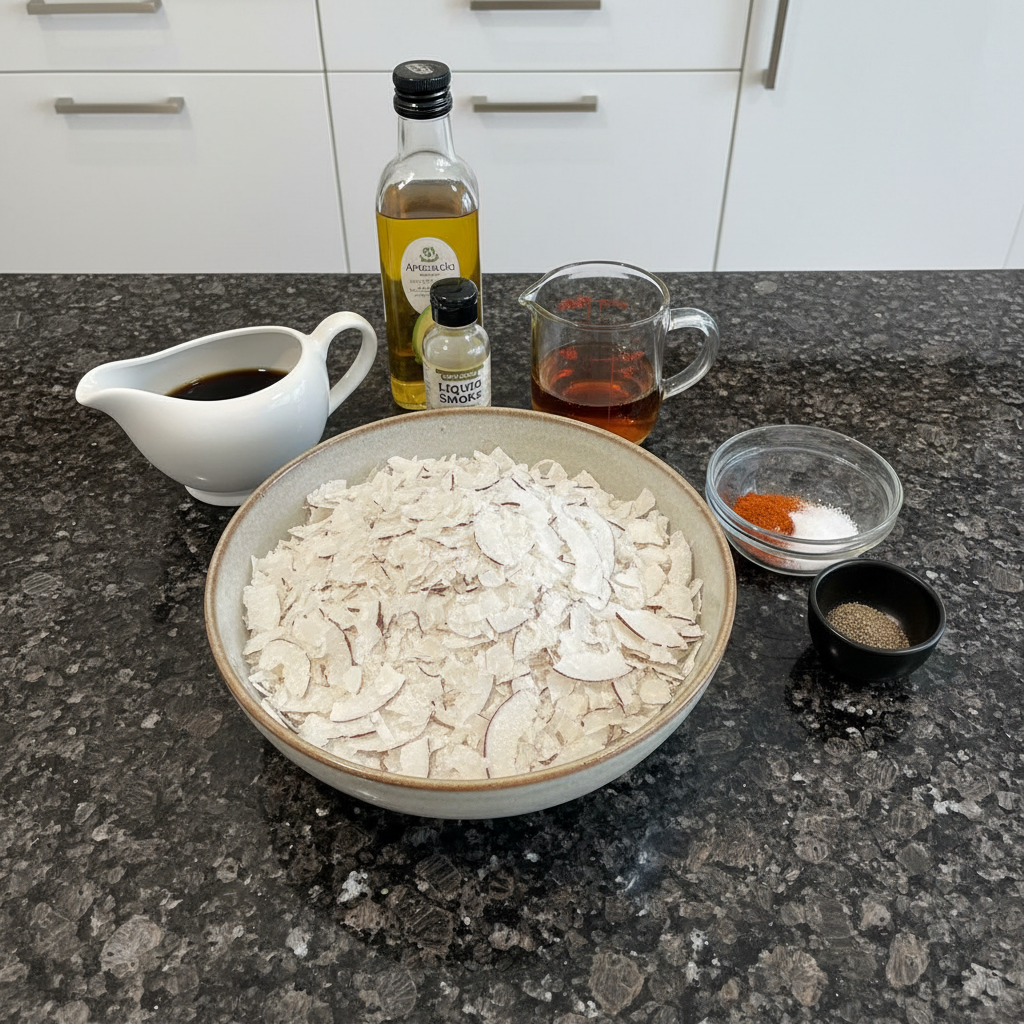
To create this magical, smoky, crispy Coconut Bacon, you’ll need a few key ingredients. Precision is important for the best results, so let’s gather everything we need.
- 2 cups large flake unsweetened coconut
- 1 Tbsp avocado or grape seed oil ((or another neutral oil))
- 2 Tbsp tamari ((ensure gluten-free for GF eaters))
- 1 tsp smoked paprika
- 1 Tbsp maple syrup
- 1/2 tsp liquid smoke*
- 1 Tbsp nutritional yeast
- 1/2 tsp smoked salt
- 1 pinch sea salt
- 1/2 tsp black pepper
Ingredient Notes & Substitutions
Here’s a deeper dive into the specific ingredients and why they’re chosen, along with some helpful substitution advice.
Large Flake Coconut: This is absolutely essential for the right texture! Large flake coconut (sometimes called “coconut chips”) provides a substantial base that crisps up beautifully, giving you that satisfying chew and crunch. Regular shredded coconut or fine flakes will burn much faster and won’t give you the desired “bacon” mouthfeel. You can typically find large flake coconut in health food stores, the bulk section of your grocery, or online.
Oil Options: I recommend avocado oil or grape seed oil because they are neutral in flavor and have high smoke points, perfect for achieving crispness without imparting unwanted tastes. Other neutral oils like sunflower or canola oil can also work. The oil is crucial for even cooking and creating that irresistible crispy texture.
Tamari vs. Coconut Aminos: I call for tamari because it’s a fantastic gluten-free soy sauce alternative that adds a deep savory, umami flavor. If you’re looking for a soy-free or lower-sodium option, coconut aminos can be used, though you might need to adjust the amount of sea salt slightly as coconut aminos are generally less salty and a bit sweeter.
Smoked Paprika: This spice is a must for building that foundational smoky flavor. It adds warmth and depth of color. While regular paprika can be used in a pinch, you’ll lose some of that crucial smoky essence. In that case, consider leaning more heavily on the liquid smoke and smoked salt.
Maple Syrup: Pure maple syrup not only adds a touch of sweetness but also helps with caramelization, contributing to the golden-brown color and slightly sticky, chewy bits that are so delicious. For refined sugar-free options, agave nectar or brown rice syrup can be used, but adjust to taste.
Liquid Smoke*: This concentrated flavoring is key to a deep, intense smoky taste. It’s made by capturing the smoke from burning wood and condensing it into a liquid. While some express concerns, in the small amounts used in recipes, liquid smoke is generally considered safe. If you prefer to avoid it entirely, you can increase the smoked paprika and ensure you use smoked salt, but the overall smoky impact will be less pronounced.
Nutritional Yeast & Smoked Salt: As highlighted in my unique twist, nutritional yeast brings a cheesy, savory, umami note that truly rounds out the bacon flavor, while smoked salt layers in additional, authentic smoky depth, making this recipe truly exceptional.
Dietary Considerations: This recipe is naturally vegan, vegetarian, gluten-free (with tamari), and dairy-free, making it a wonderful option for many dietary needs.

How to Make Crispy Coconut Bacon
Creating perfectly crispy Coconut Bacon is a simple process, but requires a keen eye and attention to detail, especially in the final minutes of baking. Follow these steps for success!
Prepping Your Workspace
First, preheat your oven to 325 degrees F (162 C). As it heats, line a large baking sheet with parchment paper. This crucial step prevents sticking and makes cleanup a breeze. If you’re doubling the batch, use two baking sheets to avoid overcrowding, which can lead to steaming instead of crisping.
Mixing the Magic Marinade
In a large bowl, combine your large flake unsweetened coconut, avocado or grape seed oil, tamari, smoked paprika, maple syrup, liquid smoke, nutritional yeast, smoked salt, sea salt, and black pepper. Now, get in there and toss or stir thoroughly until every single flake of coconut is evenly coated with the rich, aromatic marinade. This ensures a uniform flavor and crispness in every bite.
Baking to Perfection
Spread the coated coconut flakes in a single layer on your prepared baking sheet. Bake at 325 degrees F for 6 minutes. After this initial bake, carefully remove the pan, give the coconut a good stir, and flip the pan around to ensure even cooking. Return it to the oven and bake for another 5-7 minutes, or until your Coconut Bacon is beautifully crispy and a deep golden brown. This is the critical stage: watch it like a hawk in these last few minutes! Coconut flakes can go from perfectly golden to burnt very quickly.
Cooling and Crisping
Once it reaches that perfect golden crisp, remove the baking sheet from the oven. Resist the urge to dive in immediately! Let the Coconut Bacon cool for at least 10 minutes on the pan. It will continue to crisp up as it cools, transforming into those irresistibly crunchy bits we’re aiming for. The savory, smoky aroma filling your kitchen right now is a promise of the deliciousness to come.
Once cooled, your Coconut Bacon is ready to be added to things like salads, sandwiches, dips, and more!
Beyond the Oven: Dehydrator & Stovetop Methods
While the oven method is my go-to for speed and even crispness, you can absolutely make delicious Coconut Bacon without an oven. Here are a couple of alternative methods for those who prefer them.
Dehydrator Method
For a lower-temperature, often “raw” friendly approach, a dehydrator works wonderfully, though it takes longer. After mixing your ingredients, spread the coated coconut flakes thinly and evenly on dehydrator trays lined with parchment paper or non-stick sheets. Set your dehydrator to 115-120°F (46-49°C) and dehydrate for 6-10 hours, or until the coconut flakes are thoroughly dry and crispy. Stir them every couple of hours to promote even drying. This method yields a lighter, airier crispness.
Stovetop/Frying Pan Method
If you’re looking for a quick, small-batch option, the stovetop is your friend. Heat a large frying pan or skillet over medium-low heat. Add your coated coconut flakes, spreading them in a single layer. Cook, stirring constantly, for 5-10 minutes. The key here is consistent stirring to prevent burning, as the coconut will brown very quickly. Watch closely until the flakes are golden brown and crispy. This method requires your undivided attention but is fantastic for a fast snack.
Pro Tips & Troubleshooting
Even seasoned chefs encounter challenges. Here are my top tips for perfecting your Coconut Bacon and troubleshooting common issues.
Pro Tips
- Enhance Smoke Flavor: For an even richer, deeper smoky flavor, consider using applewood smoked salt in place of or in addition to regular smoked salt. It adds a nuanced, sweet smokiness that is truly delightful.
- Umami Boost to Taste: Feel free to adjust the quantity of nutritional yeast to your liking. If you crave more savory depth, a little extra goes a long way!
- Sweetness Balance: If you’re using coconut aminos instead of tamari, which is naturally sweeter, you might want to cut back slightly on the maple syrup to maintain the perfect sweet-salty balance.
- Spice it Up: Experiment with additional spices! A pinch of Plank Street Rub or Old Bay can add a unique savory twist, or a dash of Korean chili powder can introduce a lovely smoky heat.
- Ensure Even Coating: Don’t rush the mixing process! Take the time to ensure every single coconut flake is thoroughly coated in the marinade. This guarantees uniform flavor and crispness.
- Batch Size Matters: When increasing the recipe, use multiple baking sheets. Overcrowding a pan will steam the coconut instead of baking it, leading to soft, not crispy, results.
Common Mistakes to Avoid
- Burning is Quick: This is the most common pitfall! Coconut Bacon can go from golden brown to burnt in mere seconds, especially in the last few minutes of baking. Stay by the oven and watch it closely.
- Not Crispy Enough: If your coconut bacon seems a bit soft after cooling, don’t panic. It often continues to crisp as it cools. If it’s still not quite there, you can return it to a 250°F oven for another 5-10 minutes, or briefly crisp it in a dry frying pan over medium-low heat, stirring constantly.
- Soggy Storage: Storing coconut bacon improperly is a recipe for sogginess. Always use an airtight container and ensure it’s completely cooled before storing. Humidity is its enemy!
- Overcrowding the Pan: As mentioned, too many flakes on one baking sheet will trap moisture and prevent proper crisping. Give your coconut space to breathe and bake evenly.
Serving & Storage
Once you’ve mastered the art of crispy Coconut Bacon, you’ll find yourself reaching for it constantly. Its crunchy, savory, salty, and sweet profile makes it incredibly versatile.
Serving Ideas
Here are just a few of my favorite ways to enjoy this fantastic plant-based treat:
- Classic Vegan BLT: Layer it generously into your favorite toasted bread with fresh lettuce, juicy tomato, and creamy vegan mayo for the ultimate Vegan BLT sandwich.
- Breakfast Power-Up: Sprinkle it over avocado toast, a savory tofu scramble, or tucked into breakfast burritos for an extra punch of flavor and crunch.
- Salad Star: It’s an absolute game-changer for salads, adding a savory, smoky element that transforms even the simplest greens. Try it on a crisp Caesar or a hearty grain bowl.
- Dip & Dunk: Mix it into creamy dips for an unexpected textural and flavor boost, or use it as a garnish for deviled potatoes.
- Soup Garnish: A sprinkle over a warm bowl of potato leek soup, a creamy tomato soup, or a hearty lentil stew adds incredible depth and a delightful crunch.
- Snack Attack: Honestly, it’s so good, you might just find yourself snacking on it straight from the bowl!
Storage and Make-Ahead
One of the best things about Coconut Bacon is how well it stores, making it perfect for meal prep.
- Room Temperature Storage: Once completely cooled, store your Coconut Bacon in an airtight container at room temperature. It will remain wonderfully crispy for up to 1 week (and often even longer in my experience!). To prevent sogginess, make sure the container is truly airtight, and avoid introducing any moisture.
- Freezing: For longer storage, you can freeze Coconut Bacon in a freezer-safe airtight container or bag for up to 1 month. When ready to use, thaw at room temperature. For maximum crispness, you can briefly re-crisp it in a dry skillet over medium-low heat or in a 250°F oven for a few minutes after thawing.
Conclusion
And there you have it – the ultimate recipe for crispy, umami-rich, and smoky Coconut Bacon! I’m genuinely thrilled to share this unique twist, featuring nutritional yeast and smoked salt, that takes a simple plant-based ingredient and transforms it into something truly extraordinary. It’s a testament to how creative cooking can satisfy even the deepest cravings, proving that you don’t need meat to enjoy those craveable smoky, salty, and sweet flavors.
Whether you’re a seasoned vegan or just curious to explore delicious plant-based options, this recipe is straightforward, forgiving, and incredibly rewarding. I encourage you to whip up a batch, experiment with all the wonderful serving ideas, and savor every crunchy bite. Your taste buds (and your kitchen!) will thank you. Happy cooking!
FAQ
What type of coconut is best for coconut bacon?
For the best texture, always use large flake unsweetened coconut, sometimes labeled as “coconut chips.” These larger flakes provide a substantial base that crisps beautifully, giving you that satisfying chew and crunch reminiscent of bacon. Smaller, shredded coconut tends to burn much faster and won’t achieve the desired texture.
Can I make coconut bacon without liquid smoke?
Yes, you can make coconut bacon without liquid smoke, but the smoky flavor will be less intense. To compensate, I recommend increasing the amount of smoked paprika and ensuring you use smoked salt. You could also experiment with a pinch of chipotle powder for a smoky-spicy kick.
How can I store coconut bacon to keep it crispy?
The key to keeping coconut bacon crispy is an airtight container. Once completely cooled, store it at room temperature in a sealed container. Exposure to air and humidity will cause it to soften. Do not refrigerate, as this can introduce moisture.
Can I substitute ingredients like tamari or maple syrup?
Yes, with some considerations. For tamari, you can substitute with coconut aminos for a soy-free or lower-sodium option, but you may need to add a pinch more salt as coconut aminos are less salty and slightly sweeter. For maple syrup, agave nectar or brown rice syrup can be used as alternatives, just be mindful of their sweetness levels and adjust to your preference.
How do I adjust baking time for different coconut types?
If you mistakenly use smaller coconut flakes or shredded coconut, you will need to significantly reduce the baking time and watch it even more closely. Smaller flakes cook much faster and can burn very quickly. Begin checking for crispness and golden-brown color after just 3-4 minutes, stirring frequently.
Is liquid smoke a carcinogen?
The scientific consensus is that liquid smoke, when used in the small amounts typical for home cooking, is generally considered safe. It’s produced by condensing smoke, and while smoke itself contains potentially harmful compounds, the manufacturing process of liquid smoke filters out many of these. For those with concerns, increasing smoked paprika and using smoked salt are good alternatives to enhance the smoky flavor.
Why is my coconut bacon not crispy?
Several factors can lead to soft coconut bacon: The oven temperature might be too low, you might not have baked it long enough, or the baking sheet could have been overcrowded, causing the coconut to steam instead of crisp. It’s also crucial to let it cool completely; it continues to crisp as it cools. If it’s still soft, you can return it to a low oven (250°F) for a few more minutes or quickly re-crisp it in a dry frying pan.

Ultimate Crispy Coconut Bacon: Umami-Rich & Smoky Twist!
Ingredients
Equipment
Method
- First, preheat your oven to 325 degrees F (162 C). As it heats, line a large baking sheet with parchment paper to prevent sticking and make cleanup easy. If doubling the batch, use two baking sheets to avoid overcrowding.
- In a large bowl, combine your large flake unsweetened coconut, avocado or grape seed oil, tamari, smoked paprika, maple syrup, liquid smoke, nutritional yeast, smoked salt, sea salt, and black pepper. Toss or stir thoroughly until every single flake of coconut is evenly coated with the marinade, ensuring uniform flavor and crispness.
- Spread the coated coconut flakes in a single layer on your prepared baking sheet. Bake at 325 degrees F for 6 minutes. Carefully remove the pan, give the coconut a good stir, and flip the pan around to ensure even cooking. Return to the oven and bake for another 5-7 minutes, or until beautifully crispy and deep golden brown. Watch closely in these last few minutes, as coconut flakes can burn quickly.
- Once perfectly golden and crisp, remove the baking sheet from the oven. Let the Coconut Bacon cool for at least 10 minutes on the pan. It will continue to crisp up as it cools, transforming into irresistibly crunchy bits.
- Once cooled, your Coconut Bacon is ready to be added to salads, sandwiches, dips, and more!
- After mixing your ingredients, spread the coated coconut flakes thinly and evenly on dehydrator trays lined with parchment paper or non-stick sheets. Set your dehydrator to 115-120°F (46-49°C) and dehydrate for 6-10 hours, or until thoroughly dry and crispy. Stir every couple of hours to promote even drying.
- For a quick, small-batch option, heat a large frying pan or skillet over medium-low heat. Add your coated coconut flakes, spreading them in a single layer. Cook, stirring constantly, for 5-10 minutes, watching closely until the flakes are golden brown and crispy. This method requires your undivided attention as coconut browns very quickly.
Notes

Taya Bennett is the founder of YumEasyMeals, a platform dedicated to easy, delicious, and quick-to-prepare recipes for busy families. Passionate about everyday cooking, she simplifies meals with practical, accessible, and always delicious ideas.
Discover her creations at: yumeasymeals.com