There is something truly magical about roasted vegetables, and humble cabbage is no exception. When expertly roasted, this often-overlooked cruciferous vegetable transforms into something incredibly delicious, with tender interiors and wonderfully crispy, caramelized edges. Today, I am thrilled to share my recipe for Smoked Paprika Roasted Cabbage Wedges, a remarkably simple yet flavorful side dish that will quickly become a weeknight favorite in your kitchen.
My unique twist involves the addition of smoked paprika, which elevates the natural sweetness and savory depth of the cabbage, creating irresistible smoky and caramelized notes. You are about to learn how to make perfectly roasted cabbage wedges that boast both fantastic texture and a vibrant tahini sauce. I will also share my best tips for variations, ideal serving suggestions, and how to achieve that perfect roast every single time.
Why You’ll Love This Roasted Cabbage Wedges
Recipe
The unique twist in my Smoked Paprika Roasted Cabbage Wedges recipe is truly a game changer. Adding smoked paprika before roasting significantly enhances the roasted flavor of the green cabbage, making it taste richer and more complex. Smoked paprika contains compounds that boost the perception of “roasted” flavors, adding incredible depth to every bite.
This recipe is incredibly simple and easy to prepare, making it a perfect quick weeknight side dish. You will appreciate how effortlessly it comes together with minimal fuss.
Its versatility is another huge draw; these roasted cabbage wedges are suitable for various diets, including vegan, keto, and gluten-free lifestyles. It is a dish that everyone can enjoy.
Finally, you will love the budget-friendly nature of cabbage as an ingredient. It is an economical way to bring a flavorful and nutritious vegetable to your table.
Ingredients Needed

- 1 head green cabbage
- 2 tablespoons olive oil (plus more for greasing pan)
- 1 tablespoon rice vinegar
- Kosher salt and black pepper
- 1 garlic clove
- 1/3 cup tahini
- 1/3 cup parsley leaves
- 3 scallions, (thinly sliced)
- 1 tablespoon low-sodium soy sauce
- 1 lemon
- Pinch of kosher salt
- 1/4 teaspoon black pepper
- 2-3 tablespoons water
- 1 tablespoon sesame seeds
- 1 tablespoon chopped parsley
Ingredient Notes & Substitutions
Cabbage: I primarily use green cabbage for this recipe because of its mild flavor and crisp texture that roasts beautifully. However, you can certainly experiment with red cabbage or savoy cabbage as substitutes. Red cabbage will offer a slightly earthier flavor and a vibrant color, while savoy cabbage has a more delicate, crinkly leaf texture. Each type will roast well, though cooking times might vary slightly depending on the density.
Olive Oil: For the best flavor in your roasted cabbage wedges, I always recommend using a high-quality extra virgin olive oil. It brings a fruity, peppery note that enhances the vegetable beautifully.
Rice Vinegar: If you do not have rice vinegar on hand, don’t worry. White wine vinegar or even apple cider vinegar can be used as excellent alternatives. They will provide a similar tanginess that helps tenderize the cabbage.
Tahini: The tahini sauce is a highlight of this dish. If you have a tahini allergy or simply prefer a different flavor, alternatives like peanut butter or almond butter can work as substitutes for the nutty base. You might want to add a touch of sesame oil to the sauce to mimic tahini’s distinctive sesame flavor if you are using nut butters.
Soy Sauce: I always emphasize using low-sodium soy sauce to control the overall saltiness of the dish. For those following a gluten-free diet, tamari is a perfect gluten-free alternative that delivers the same umami depth.
Lemon: Fresh lemon juice brightens the tahini sauce. If you do not have a lemon, lime can be used as a substitute for a slightly different but equally refreshing citrus note.

How to Make My Smoked Paprika Roasted Cabbage Wedges
Step 1: Prepare the Oven and Pan
Preheat your oven to 400 degrees F. Lightly grease a sheet pan with olive oil. Ensuring the pan is evenly greased helps prevent the cabbage wedges from sticking and promotes even browning.
Step 2: Prepare the Cabbage Wedges
Tear off any wilted outer leaves from the green cabbage. With the cabbage stem side down, carefully cut it in half. Then, cut each of those halves into 4 wedges, so you end up with 8 uniform cabbage wedges. You will hear a satisfying crisp sound as you cut, and the fresh, earthy smell of cabbage will fill your kitchen.
Step 3: Whisk the Oil and Vinegar
In a small bowl, whisk together 2 tablespoons of olive oil and 1 tablespoon of rice vinegar. This simple mixture helps tenderize the cabbage as it roasts, contributing to a wonderfully succulent texture.
Step 4: Season the Cabbage
Arrange the cabbage wedges on the prepared sheet pan in a single layer. It is crucial that they do not touch or overlap, as this allows for optimal airflow and ensures even caramelization. Brush the cabbage all over with the oil-vinegar mixture, then generously sprinkle with kosher salt, black pepper, and my special twist: smoked paprika.
Step 5: Roast the Cabbage
Roast the cabbage for 20-25 minutes. After about 10-12 minutes, flip the wedges over halfway through roasting. You will know they are ready when they are beautifully browned in spots and caramelized at the edges, filling your kitchen with a rich, savory aroma. The perfectly roasted cabbage will be tender with a slight bite.
Step 6: Prepare the Tahini Sauce
For the creamy tahini sauce, combine the garlic clove, tahini, parsley leaves, scallions, low-sodium soy sauce, fresh lemon juice, a pinch of kosher salt, 1/4 teaspoon black pepper, and 2-3 tablespoons of water in a food processor or blender. Process until the mixture is completely combined and smooth. The sauce should have a thick but slowly pourable or spoonable consistency. Add a little more water, one tablespoon at a time, as needed to reach your desired texture.
Step 7: Serve and Garnish
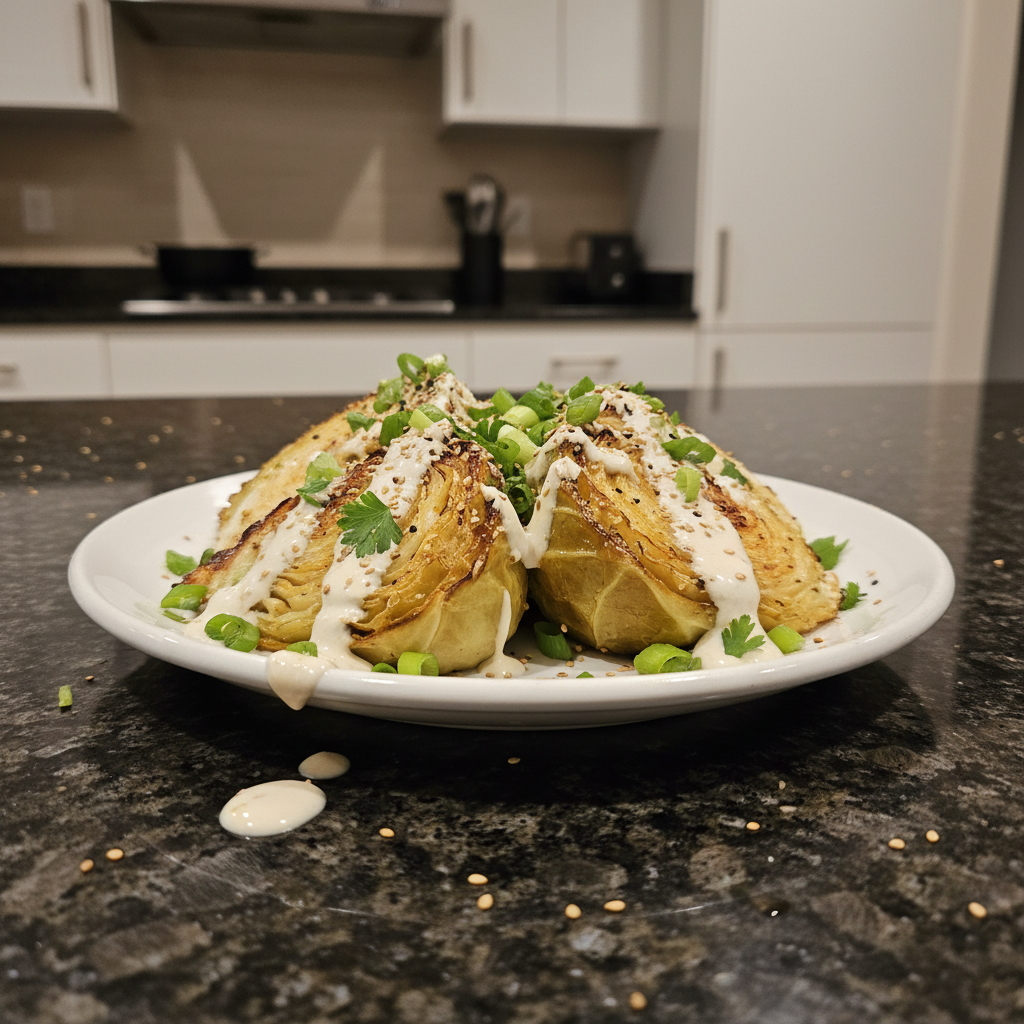
Arrange the roasted cabbage wedges attractively on a serving platter. Drizzle generously with the creamy tahini sauce, then sprinkle with sesame seeds and freshly chopped parsley for a beautiful finish. The vibrant colors and textures make for a truly appealing presentation.
Achieving Perfect Caramelization and Preventing Burning
Achieving that delightful caramelization on your Roasted Cabbage Wedges is key to their incredible flavor. The initial oven temperature of 400 degrees F is ideal for promoting the Maillard reaction, which creates those deeply savory, browned notes. Even heat distribution is crucial for consistent results.
One of the most important tips is to properly space the cabbage wedges on your baking sheet. Overcrowding the pan traps steam, which will lead to steaming rather than roasting, preventing those coveted crispy edges and beautiful caramelization. Always use multiple sheets if necessary to ensure each wedge has enough room to breathe.
The olive oil and rice vinegar mixture plays a vital role beyond just flavoring. The oil helps conduct heat and creates a crispy exterior, while the vinegar adds a touch of acidity that can also contribute to tenderizing and enhancing the browning process. This combination sets the cabbage up for success.
Remember to flip the wedges halfway through roasting. This ensures both sides of the cabbage are exposed to the direct heat of the pan and the oven’s hot air, leading to even browning and tender cooked green cabbage throughout.
Finally, always monitor your cabbage closely, especially towards the end of the cooking time. Oven temperatures can vary, so adjust the roasting time as needed. If you notice the edges are browning too quickly, you can slightly reduce the heat or tent the pan loosely with foil for the last few minutes to prevent burning while the interior finishes cooking.
Pro Tips & Troubleshooting
Pro Tips
Do not overcrowd the pan. Giving your cabbage wedges space to breathe is essential for optimal caramelization and crispy edges. Overcrowding leads to steaming instead of roasting.
Use a hot oven. A high temperature, like 400 degrees F, is key for achieving those wonderfully crispy edges and tender interiors.
Do not skip the smoked paprika. This ingredient is my unique twist, adding a unique depth of flavor and boosting the overall roasted notes of the cabbage.
Adjust the tahini sauce to your liking. Feel free to add more lemon juice for extra tanginess or a little more water for a thinner, more pourable consistency.
Always use low-sodium soy sauce to better control the salt level in your tahini sauce and overall dish.
Remember that roasting brings out a wonderful nutty flavor in the cabbage, which pairs beautifully with the tahini.
Common Mistakes to Avoid
Burning the cabbage is a common issue. To avoid this, monitor your roasted cabbage wedges closely and adjust the roasting time as needed, especially if your oven runs hot.
Overcrowding the pan is a mistake that prevents proper caramelization. Always give your cabbage wedges plenty of space on the baking sheet.
Using too much oil can make the cabbage soggy instead of crispy. A light brush or drizzle is all you need to achieve the desired texture.
Skipping the flipping step can result in uneven browning. Make sure to turn the wedges halfway through roasting to ensure both sides cook perfectly.
Serving & Storage
Serving Ideas
These Smoked Paprika Roasted Cabbage Wedges make an excellent vegan side dish on their own, vibrant and full of flavor. I often serve them alongside a main protein, but they are substantial enough to be a focal point.
To transform this into a more complete meal, pair the roasted cabbage with cooked grains like quinoa, farro, or brown rice. You can also add lentils for an extra boost of plant-based protein, making it a satisfying vegetarian main dish.
The scallion tahini sauce is so versatile and delicious that it is great with other roasted vegetables. Try it with roasted sweet potatoes, Brussels sprouts, cauliflower, broccoli, or butternut squash for a varied vegetable platter.
Consider creating a wholesome bowl. Start with a base of grains, add a beautiful roasted cabbage wedge, and mix in other roasted veggies for a nutrient-packed and flavorful meal.
Always garnish your dish with extra sesame seeds and chopped parsley before serving. This not only adds visual appeal but also enhances the texture and fresh flavor.
Storage and Make-Ahead
To store leftover roasted cabbage, allow it to cool completely before transferring it to an airtight container. It will keep well in the refrigerator for up to 3 days. The texture might soften slightly, but the flavor remains excellent.
For reheating, I recommend using the oven or a skillet to help crisp up the edges again. Place the roasted cabbage wedges on a baking sheet at 350 degrees F for about 10-15 minutes, or pan-fry them in a lightly oiled skillet until heated through and slightly re-crisped.
I advise against freezing roasted cabbage, as the high water content can make it mushy once thawed, significantly affecting the texture.
The tahini sauce, however, can be made ahead of time. Store it separately in an airtight container in the refrigerator for up to 5 days. You may need to whisk in a tablespoon or two of water to thin it out to the desired consistency before serving, as it can thicken in the cold.
Conclusion
I hope you are as excited as I am about these Smoked Paprika Roasted Cabbage Wedges. This recipe proves that simple ingredients can yield extraordinary results, offering an easy, flavorful, and incredibly versatile dish that fits beautifully into any meal plan.
The magic truly lies in that unique smoked paprika twist, which imbues the green cabbage with a depth of flavor that is truly unique and addictive. It transforms a humble vegetable into a gourmet experience.
Whether you are a seasoned chef or just starting your culinary journey, this recipe is beginner-friendly and guarantees delicious success. Feel free to experiment with different variations, perhaps using red cabbage for a different color and flavor, or adding a pinch of chili flakes for some heat. Your kitchen, your rules!
I encourage you to give this recipe a try and share the joy of these wonderfully roasted cabbage wedges with your friends and family. Happy cooking!
FAQ
What is the best temperature for roasting cabbage wedges?
400 degrees F (200 degrees C) is ideal for caramelizing the cabbage without burning it, ensuring tender insides and crispy edges.
How do I ensure even caramelization and prevent burning?
To ensure even caramelization, do not overcrowd the pan. Flip the wedges halfway through roasting, and monitor them closely as cooking times can vary by oven.
What are some alternative sauce options if I don’t like tahini?
If tahini is not your preference, consider a bright lemon-herb vinaigrette, a savory peanut sauce, or a simple creamy garlic aioli as alternative sauce options.
How long can I store leftover roasted cabbage, and what’s the best way to reheat it?
You can store leftover roasted cabbage in the refrigerator for up to 3 days. Reheat it in the oven or a skillet for the best results to help crisp it up again.
Can I use different types of cabbage for this recipe?
Yes, red or savoy cabbage can be used as substitutes for green cabbage. The cooking time may vary slightly, but they will roast beautifully.
Is roasted cabbage a healthy dish?
Yes, roasted cabbage is a very healthy dish. Cabbage is a nutrient-rich vegetable that is low in calories and high in fiber, vitamins, and antioxidants.
How long does it take to roast cabbage wedges?
It generally takes 20-25 minutes to roast cabbage wedges at 400F, with a crucial flip halfway through to ensure even cooking and caramelization.
Smoked Paprika Roasted Cabbage Wedges
Ingredients
Equipment
Method
- Preheat your oven to 400 degrees F. Lightly grease a sheet pan with olive oil. Ensuring the pan is evenly greased helps prevent the cabbage wedges from sticking and promotes even browning.
- Tear off any wilted outer leaves from the green cabbage. With the cabbage stem side down, carefully cut it in half. Then, cut each of those halves into 4 wedges, so you end up with 8 uniform cabbage wedges. You will hear a satisfying crisp sound as you cut, and the fresh, earthy smell of cabbage will fill your kitchen.
- In a small bowl, whisk together 2 tablespoons of olive oil and 1 tablespoon of rice vinegar. This simple mixture helps tenderize the cabbage as it roasts, contributing to a wonderfully succulent texture.
- Arrange the cabbage wedges on the prepared sheet pan in a single layer. It is crucial that they do not touch or overlap, as this allows for optimal airflow and ensures even caramelization. Brush the cabbage all over with the oil-vinegar mixture, then generously sprinkle with kosher salt, black pepper, and my special twist: smoked paprika.
- Roast the cabbage for 20-25 minutes. After about 10-12 minutes, flip the wedges over halfway through roasting. You will know they are ready when they are beautifully browned in spots and caramelized at the edges, filling your kitchen with a rich, savory aroma. The perfectly roasted cabbage will be tender with a slight bite.
- For the creamy tahini sauce, combine the garlic clove, tahini, parsley leaves, scallions, low-sodium soy sauce, fresh lemon juice, a pinch of kosher salt, 1/4 teaspoon black pepper, and 2-3 tablespoons of water in a food processor or blender. Process until the mixture is completely combined and smooth. The sauce should have a thick but slowly pourable or spoonable consistency. Add a little more water, one tablespoon at a time, as needed to reach your desired texture.
- Arrange the roasted cabbage wedges attractively on a serving platter. Drizzle generously with the creamy tahini sauce, then sprinkle with sesame seeds and freshly chopped parsley for a beautiful finish. The vibrant colors and textures make for a truly appealing presentation.
Notes

Taya Bennett is the founder of YumEasyMeals, a platform dedicated to easy, delicious, and quick-to-prepare recipes for busy families. Passionate about everyday cooking, she simplifies meals with practical, accessible, and always delicious ideas.
Discover her creations at: yumeasymeals.com