There is nothing quite as frustrating as dry, flavorless salmon, especially when you are trying to get a healthy dinner on the table quickly. My goal in the kitchen is always to make delicious food that is also easy to prepare. That is exactly what I am bringing you today with this Sheet Pan Lemon Garlic Salmon. It is a foolproof method for perfectly cooked, moist, and incredibly flavorful salmon, all made on a single sheet pan alongside your favorite vegetables. Whether you are a seasoned cook or just starting, this recipe will transform your weeknight meals with helpful tips and a special trick for ultimate moisture.
Why You’ll Love This Sheet Pan Lemon Garlic Salmon Recipe
You are going to absolutely adore this recipe for one simple, game-changing reason: the lemon-garlic-herb compound butter that goes right under the salmon skin. This unique twist acts like a secret basting agent, ensuring every flaky bite of salmon is infused with incredible flavor and stays incredibly moist from the inside out. No more dry fish!
The science behind this trick is quite brilliant. As the compound butter melts under the salmon skin, its healthy fats render down and baste the salmon flesh. This prevents dryness and simultaneously infuses the fish with the vibrant aromatics of fresh lemon, garlic, and herbs. It is a flavor bomb that guarantees a tender, juicy result every time.
Beyond its ingenious moisture trick, this Sheet Pan Lemon Garlic Salmon is a dream for busy weeknights. It is a quick weeknight meal, incredibly easy to clean up thanks to the one sheet pan method, and packed with healthy deliciousness. This is a family-friendly dish that delivers on taste and nutrition. Plus, it is naturally a Gluten-Free Diet friendly option, rich in omega-3 fatty acids, protein, vitamins, and minerals, making it perfect for those following a Mediterranean diet or simply looking for healthy fats.
Ingredients Needed
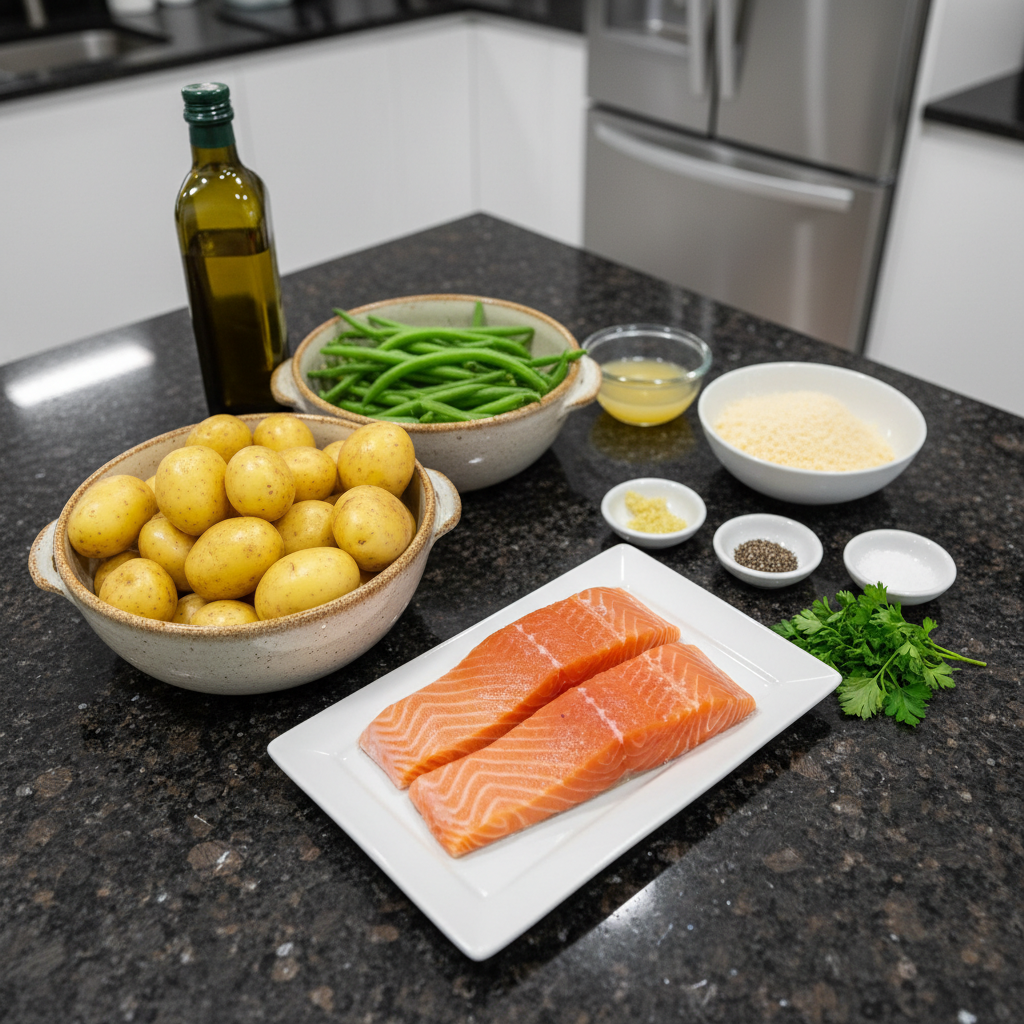
4 6-ounce salmon fillets
1 pound baby yellow potatoes
½ pound green beans
¼ cup lemon juice
¼ cup grated Parmesan cheese
2 tablespoon olive oil
2 garlic cloves (minced)
1 tablespoon chopped parsley (plus more for garnishing)
Salt and pepper
Ingredient Notes & Substitutions
Salmon: For this sheet pan salmon, I often choose wild-caught salmon for its leaner texture and robust flavor, though farm-raised also works beautifully for a richer, more buttery feel. When sourcing, look for salmon that is bright in color, smells fresh and ocean-like, and has firm, glistening flesh. Skin-on fillets are ideal for this recipe as they help hold the compound butter in place and protect the fish during baking, but skin-off will work too if that is your preference.
Lemon: I always recommend using fresh lemon juice for its bright, tangy flavor that truly elevates the dish. Bottled lemon juice can sometimes taste dull or artificial. The zest of a fresh lemon can also add an extra layer of citrusy brightness, especially in the compound butter.
Parmesan: High-quality Parmesan cheese, freshly grated, makes all the difference in the sauce. Its salty, umami notes complement the lemon and garlic perfectly. If you are looking for a dairy-free substitution, nutritional yeast offers a cheesy flavor without the dairy.
Potatoes: Baby yellow potatoes are fantastic for roasting on a sheet pan because of their tender flesh and ability to crisp up beautifully. Baby red potatoes are another excellent choice, offering a slightly waxier texture. For another delicious potato side, you might also like these Crispy Baked Potato Wedges.
Green Beans: While green beans are wonderful here, feel free to substitute with other quick-cooking vegetables. Broccoli florets, asparagus spears, or even bell peppers work well. Remember to adjust cook times as needed based on the vegetable’s density.
Olive Oil: A good quality extra virgin olive oil provides a lovely fruity depth to the sauce and helps the vegetables roast to perfection. Choose a light or regular olive oil for its mild flavor profile.
Herbs: Fresh parsley is my go-to for its vibrant color and clean flavor. However, you can experiment with other fresh herbs like dill, thyme, or even a hint of rosemary. If using dried herbs as a substitute, remember that dried herbs are more potent, so use about one-third the amount of fresh herbs.
How to Make Sheet Pan Lemon Garlic Salmon
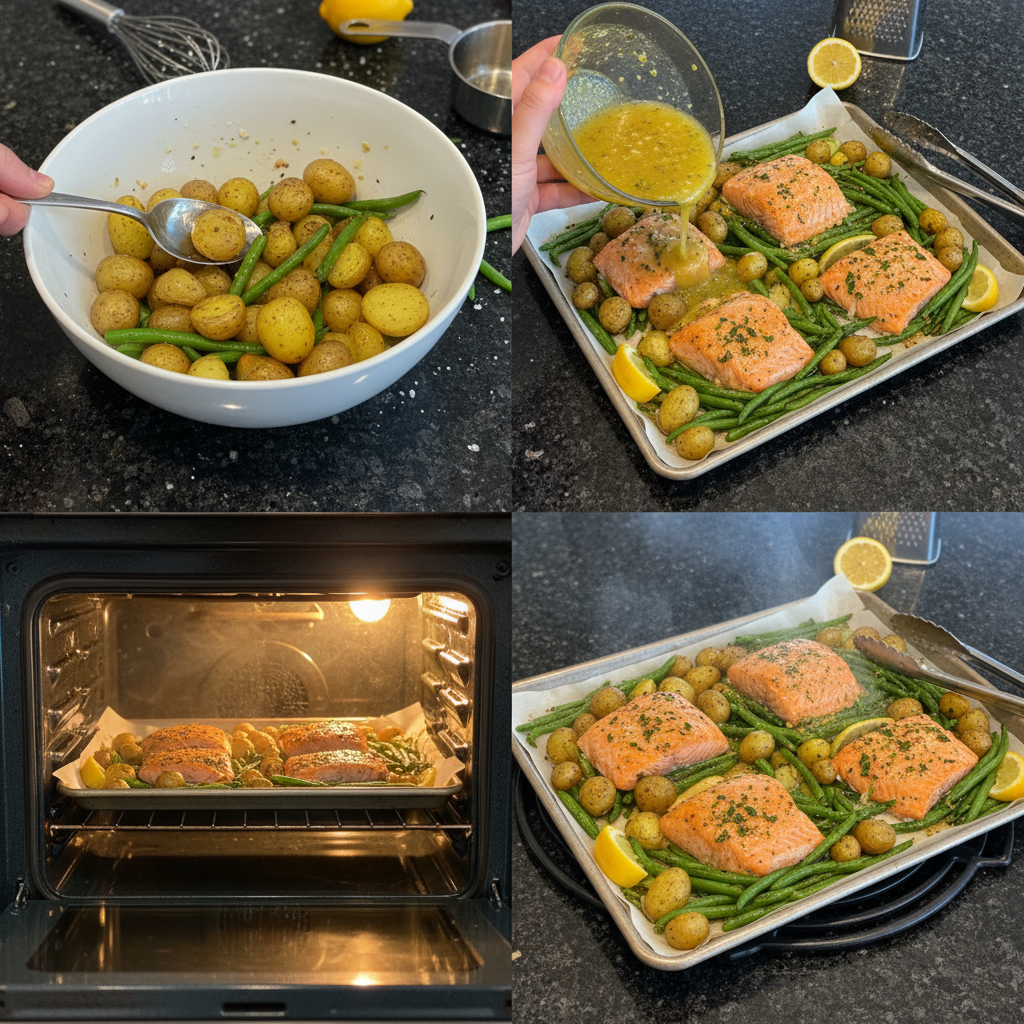
Step 1: Preheat your oven to 400°F. Line a rimmed baking sheet with parchment paper. Parchment paper is essential here for easy cleanup and preventing sticking, making your cooking experience much smoother. Ensuring your oven is at the precise temperature from the start is key for even baking.
Step 2: Bring a pot of water to a boil. Add the baby yellow potatoes and boil them until they are fork tender, which usually takes about 15 minutes. This parboiling step is a pro tip that ensures the potatoes are soft on the inside while allowing their outsides to crisp up beautifully during roasting.
Step 3: In a small bowl, combine the lemon juice, grated Parmesan cheese, olive oil, minced garlic, and chopped parsley. This vibrant mixture forms the base of our delicious lemon garlic Parmesan sauce. You can also consider adding a touch of fresh dill or thyme to this mixture, adjusting for taste and your preferred herbal notes.
Step 4: Arrange the salmon fillets, parboiled potatoes, and green beans in a single layer onto the prepared baking sheet. Season them generously with salt and pepper. Before seasoning the salmon, I highly recommend patting the fillets dry with a paper towel. This crucial step removes excess moisture, which helps the salmon achieve a lovely, crisp exterior and prevents it from steaming or getting soggy, especially if it was previously frozen. Then, brush the prepared lemon garlic Parmesan sauce evenly over the salmon and all the vegetables.
Step 5: Bake in the preheated oven until the salmon flakes easily with a fork, which typically takes about 15 minutes. The ideal internal temperature for cooked salmon should be 145°F. Once cooked, enjoy your delicious Sheet Pan Lemon Garlic Salmon immediately.
Making the Lemon-Garlic Herb Compound Butter
To create that magical lemon-garlic-herb compound butter that makes this salmon so moist and flavorful, start with 4 tablespoons of softened unsalted butter. In a small bowl, combine the softened butter with 1 teaspoon of fresh lemon zest, 1 minced garlic clove, and 1 tablespoon of finely chopped fresh parsley. Mix these ingredients thoroughly until they are well combined and the butter is evenly flavored. The butter should be soft enough to easily spread, but not melted.
Next, gently lift the skin of each salmon fillet without detaching it completely. Take a small amount of the compound butter, about half a tablespoon per fillet, and carefully spread it thinly underneath the salmon skin. The goal is to get a nice, even layer of butter directly against the salmon flesh. Replace the skin gently over the butter. This ensures the butter melts and bastes the salmon from within during baking, locking in moisture and infusing incredible flavor.
Storing the Compound Butter
If you have any leftover compound butter, or if you want to make it ahead of time, it stores beautifully. In the fridge, place the butter in an airtight container or roll it tightly in plastic wrap. It will last for up to 5 days. For longer storage, you can freeze the compound butter. Roll it into a log in parchment paper or plastic wrap, then place it in a freezer-safe bag. It will keep in the freezer for up to 2 months. When you are ready to use it, simply thaw it overnight in the refrigerator.
Sourcing and Selecting the Best Salmon
Choosing the right salmon makes a big difference in the final taste and texture of your dish. There are generally two main types you will find: wild-caught and farmed salmon. Wild salmon, such as Sockeye or King salmon, typically has a leaner texture and a more pronounced, often richer, flavor due to its natural diet. Farmed salmon, like Atlantic salmon, is usually fattier, resulting in a buttery, tender texture and a milder flavor. Both are excellent choices, so pick what you prefer.
When selecting high-quality salmon, whether wild or farmed, there are a few key indicators to look for. First, check the color of the flesh. It should be bright and vibrant, ranging from deep red to rich orange, and not dull or faded. Next, give it a sniff; fresh salmon should smell clean, like the ocean, not overtly “fishy” or like ammonia. The texture is also important. Gently press the flesh with your finger; it should be firm and elastic, springing back immediately, not mushy or slimy. Finally, observe the appearance of the surface. It should be moist and glistening, not dry, cracked, or discolored.
For sourcing, local fishmongers are often your best bet. They can provide specific information about where the salmon came from, how it was caught or raised, and when it arrived. Do not hesitate to ask them questions! Grocery stores also offer good options; look for salmon fillets that are well-packaged and adhere to the freshness indicators. For convenience, several reputable online retailers offer high-quality, often sustainably sourced salmon that can be shipped directly to your door, though you will want to consider shipping costs and handling.
Pro Tips & Troubleshooting
Pro Tips
Always pat the salmon dry before seasoning. This crucial step removes excess moisture, leading to better browning and crispier skin on your salmon fillets.
Parboil the potatoes before adding them to the sheet pan. This ensures the potatoes cook evenly and become perfectly tender on the inside while crisping up beautifully on the outside.
Do not overcrowd the sheet pan. If you are cooking a larger batch, use two separate pans to ensure everything roasts evenly instead of steaming, which prevents proper caramelization.
Make sure the salmon is cooked through to an internal temperature of 145°F for food safety and optimal texture. A meat thermometer is your best friend here.
Use parchment paper or aluminum foil on your baking sheet. This simple trick makes cleanup incredibly easy.
Brush the salmon with a little extra olive oil before baking. This can add an extra layer of healthy fats and moisture, especially if you opt out of the compound butter.
Customize the vegetables to your liking. This recipe is very flexible; feel free to swap green beans for asparagus, broccoli, or even cherry tomatoes, adjusting cook times as needed.
Common Mistakes to Avoid
One of the most common mistakes is overcooking the salmon. Overcooked salmon becomes dry and tough. Use a thermometer to check for doneness, aiming for 145°F.
Avoid using frozen salmon without properly thawing it first. Always thaw frozen salmon overnight in the refrigerator to ensure even cooking.
Not seasoning the vegetables adequately can lead to bland sides. Do not be afraid to generously use salt, pepper, and your favorite herbs to enhance their flavor.
Overcrowding the pan is a big no-no. This causes vegetables and fish to steam rather than roast, preventing that desirable browning and crispy texture.
Skipping the compound butter means missing out on the secret to truly flavorful and moist salmon. This unique twist is what elevates the dish from good to exceptional.
Serving & Storage
Serving Ideas
This Sheet Pan Lemon Garlic Salmon is a complete meal on its own with the potatoes and green beans. However, if you are looking to round out your plate, I love serving it alongside a fresh Mediterranean Chopped Salad for extra greens and crunch. For something a bit heartier, a side of Garlic & Herb Skillet Dinner Rolls or fluffy Cilantro Lime Rice pairs wonderfully. If you are aiming for more protein and complex carbohydrates, a simple serving of quinoa is always a great choice. Always finish with a sprinkle of fresh parsley or a few bright lemon wedges for a touch of color and extra zest.
Storage and Make-Ahead
Leftovers of this delicious Sheet Pan Lemon Garlic Salmon can be stored in an airtight container in the refrigerator for up to 3 days. It makes for a fantastic quick lunch the next day.
If you want to freeze cooked salmon and vegetables, I recommend doing so separately for the best results. Store them in freezer-safe airtight containers or bags for up to 2 months. Thaw them overnight in the refrigerator before reheating.
To reheat, gently warm the salmon and vegetables in the oven at 350°F until heated through to prevent drying out. A quick reheat in the microwave is also an option, but be mindful not to overcook the salmon. For make-ahead convenience, you can prepare the lemon-garlic-herb compound butter in advance and store it in the refrigerator for up to 5 days, making assembly on cooking day even quicker.
Conclusion
There you have it, my friends: a simple, healthy, and incredibly flavorful Sheet Pan Lemon Garlic Salmon recipe that guarantees a moist and delicious outcome every time. This easy weeknight dinner brings together perfectly cooked salmon and vibrant vegetables on just one pan, making cleanup a breeze.
The secret to its success truly lies in that clever lemon-garlic-herb compound butter, nestled under the salmon skin. It is a foolproof method for preventing dry fish and infusing every bite with fantastic flavor, making this recipe a winner for anyone craving a healthy, satisfying meal.
Do not be intimidated if you are new to cooking salmon. This method is designed for success, providing tender, flaky results even for beginners. I encourage you to try this Sheet Pan Lemon Garlic Salmon, perhaps experimenting with different seasonal vegetables or adding a sprinkle of chili flakes for a hint of heat. Share this fantastic recipe with your friends and family, and explore other healthy fish recipes on my blog!
FAQ
How do I know when the salmon is done?
The salmon is done when it flakes easily with a fork in the thickest part of the fillet. You can also use a meat thermometer to check for an internal temperature of 145°F, which is the ideal doneness for perfectly cooked salmon.
What is the best type of salmon to use and where can I source it?
Both wild-caught and farm-raised salmon work wonderfully for this recipe. Wild salmon, like Sockeye, tends to be leaner with a stronger flavor, while farm-raised, like Atlantic, is often richer and more buttery. Look for fresh salmon at a local fishmonger or your grocery store with bright, firm, glistening flesh that smells clean, not fishy. You can find more details in my “Sourcing and Selecting the Best Salmon” section above.
Can I use frozen salmon and how should I thaw it?
Yes, you can absolutely use frozen salmon. It is crucial to thaw it properly first, preferably overnight in the refrigerator. Once thawed, pat the salmon fillets thoroughly dry with paper towels to remove any excess moisture. This step helps prevent the salmon from getting soggy during cooking and promotes better browning.
What vegetables work best with this recipe and how to adjust cook times?
This Sheet Pan Lemon Garlic Salmon is versatile with vegetables. Aside from green beans and baby yellow potatoes, great alternatives include broccoli florets, asparagus spears, bell peppers, or even cherry tomatoes. For denser vegetables like broccoli or carrots, you might want to parboil them slightly longer or chop them into smaller pieces to ensure they cook through at the same time as the salmon. Lighter vegetables like asparagus or cherry tomatoes will require less cooking time.
How long does sheet pan salmon last in the fridge?
Cooked sheet pan salmon leftovers can be stored in an airtight container in the refrigerator for up to 3 days. Ensure it cools completely before storing to maintain freshness and safety.
Can I prepare the salmon ahead of time?
You can prepare the lemon-garlic-herb compound butter in advance and keep it in the refrigerator for up to 5 days. However, I recommend seasoning the salmon and vegetables and assembling the sheet pan just before baking to ensure the freshest taste and best texture.
Can I add other cheeses besides Parmesan?
Yes, you can definitely experiment with other hard cheeses. Pecorino Romano or Asiago are excellent choices that would complement the lemon and garlic flavors. Be mindful of the salt content of the cheese you choose, as some can be saltier than Parmesan.
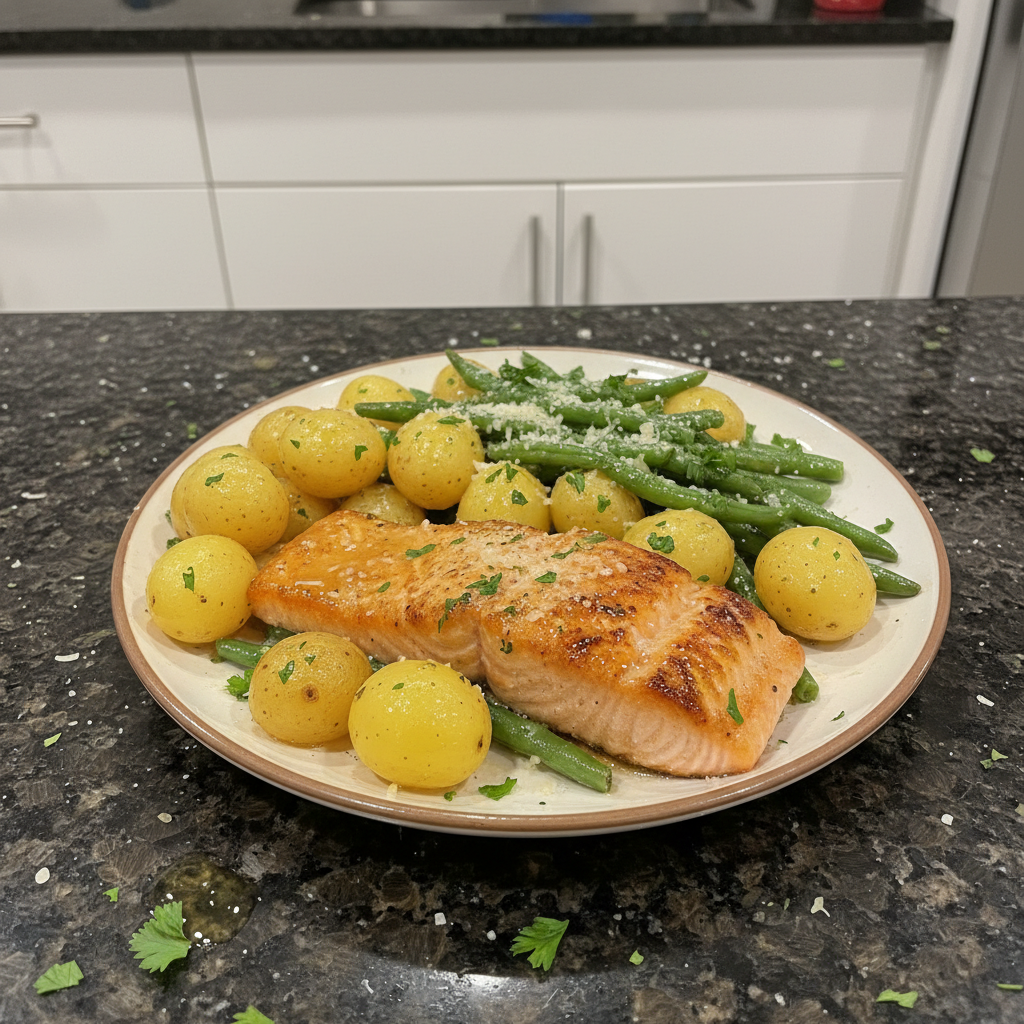
Sheet Pan Lemon Garlic Salmon
Ingredients
Equipment
Method
- In a small bowl, combine 4 tablespoons of softened unsalted butter with 1 teaspoon of fresh lemon zest, 1 minced garlic clove, and 1 tablespoon of finely chopped fresh parsley. Mix these ingredients thoroughly until they are well combined and the butter is evenly flavored. The butter should be soft enough to easily spread, but not melted.
- Gently lift the skin of each salmon fillet without detaching it completely. Take about half a tablespoon of the compound butter per fillet and carefully spread it thinly underneath the salmon skin, directly against the salmon flesh. Replace the skin gently over the butter. This ensures the butter melts and bastes the salmon from within during baking, locking in moisture and infusing incredible flavor.
- Preheat your oven to 400°F (200°C). Line a rimmed baking sheet with parchment paper for easy cleanup and preventing sticking. Ensuring your oven is at the precise temperature from the start is key for even baking.
- Bring a pot of water to a boil. Add the baby yellow potatoes and boil them until they are fork tender, which usually takes about 15 minutes. This parboiling step ensures the potatoes are soft on the inside while allowing their outsides to crisp up beautifully during roasting.
- In a small bowl, combine the ¼ cup lemon juice, ¼ cup grated Parmesan cheese, 2 tablespoons olive oil, 2 minced garlic cloves, and 1 tablespoon chopped parsley. This vibrant mixture forms the base of your delicious lemon garlic Parmesan sauce.
- Arrange the salmon fillets (with compound butter applied if using), parboiled potatoes, and green beans in a single layer onto the prepared baking sheet. Pat the salmon fillets dry with a paper towel before seasoning. Season them generously with salt and pepper. Then, brush the prepared lemon garlic Parmesan sauce evenly over the salmon and all the vegetables.
- Bake in the preheated oven until the salmon flakes easily with a fork, which typically takes about 15 minutes. The ideal internal temperature for cooked salmon should be 145°F (63°C). Once cooked, enjoy your delicious Sheet Pan Lemon Garlic Salmon immediately.
Notes

Taya Bennett is the founder of YumEasyMeals, a platform dedicated to easy, delicious, and quick-to-prepare recipes for busy families. Passionate about everyday cooking, she simplifies meals with practical, accessible, and always delicious ideas.
Discover her creations at: yumeasymeals.com