Are you tired of expensive protein powders filled with artificial ingredients? I was too! That’s why I started making my own homemade protein powder. It’s surprisingly simple, packed with nutrients, and completely customizable to your taste. In this recipe, you’ll learn how to create a healthy, plant-based protein powder from scratch, perfect for smoothies, oatmeal, baking, and more. Get ready to ditch the store-bought stuff and embrace a healthier, tastier alternative!
Why You’ll Love This Recipe
This isn’t just another protein powder recipe. It has a little something extra that elevates it!
Toasted Coconut Twist: The secret is adding toasted, shredded coconut to the mix. Toasting the coconut brings out its natural sweetness and enhances its flavor, creating a subtly tropical note that you’ll love.
Taste & Aroma: The toasted coconut not only adds a delicious flavor but also a pleasant aroma that makes this protein powder a joy to use.
Texture & Nutrition: The coconut contributes a slight textural improvement, and it adds healthy fats to the nutritional profile.
Quick & Easy: This recipe requires minimal effort and time, making it perfect for busy lifestyles.
Healthy & Nutritious: Packed with whole-food ingredients, this protein powder is a powerhouse of nutrients, providing essential amino acids, fiber, and healthy fats.
Customizable: Easily adapt the recipe to suit your taste preferences by experimenting with different flavors and seed substitutions.
Ingredients Needed

- 1 cup chia seeds, divided
- 1 cup hemp seeds, divided
- ¼ cup raw pepitas, divided
Ingredient Notes & Substitutions
Chia Seeds: These tiny seeds are a powerhouse of fiber and omega-3 fatty acids. Look for high-quality chia seeds at your local health food store or online. They are known for their gelling properties, which can thicken smoothies. For more information, see this article about the health benefits of chia seeds.
Hemp Seeds: Hemp seeds are a complete protein source and rich in omega fatty acids. If you’re looking for a substitution, you can use flaxseeds, sesame seeds, or sunflower seeds. However, be aware that each seed has a slightly different flavor profile. For instance, flaxseeds have a nuttier taste compared to the mild flavor of hemp seeds.
Raw Pepitas: Pepitas (pumpkin seeds) are an excellent source of protein and iron. When buying pepitas, make sure they are fresh and have a vibrant green color.
Coconut (for the twist): Be sure to use unsweetened, shredded coconut. Toasting it is essential for bringing out its flavor!
Allergen Information: This recipe is naturally vegan, vegetarian, gluten-free, dairy-free, nut-free, and soy-free (when using only the listed ingredients). However, always check the labels of your ingredients to ensure they are processed in a facility that avoids cross-contamination, especially if you have severe allergies.
How to Make Homemade Protein Powder
Step 1: Toast the Coconut
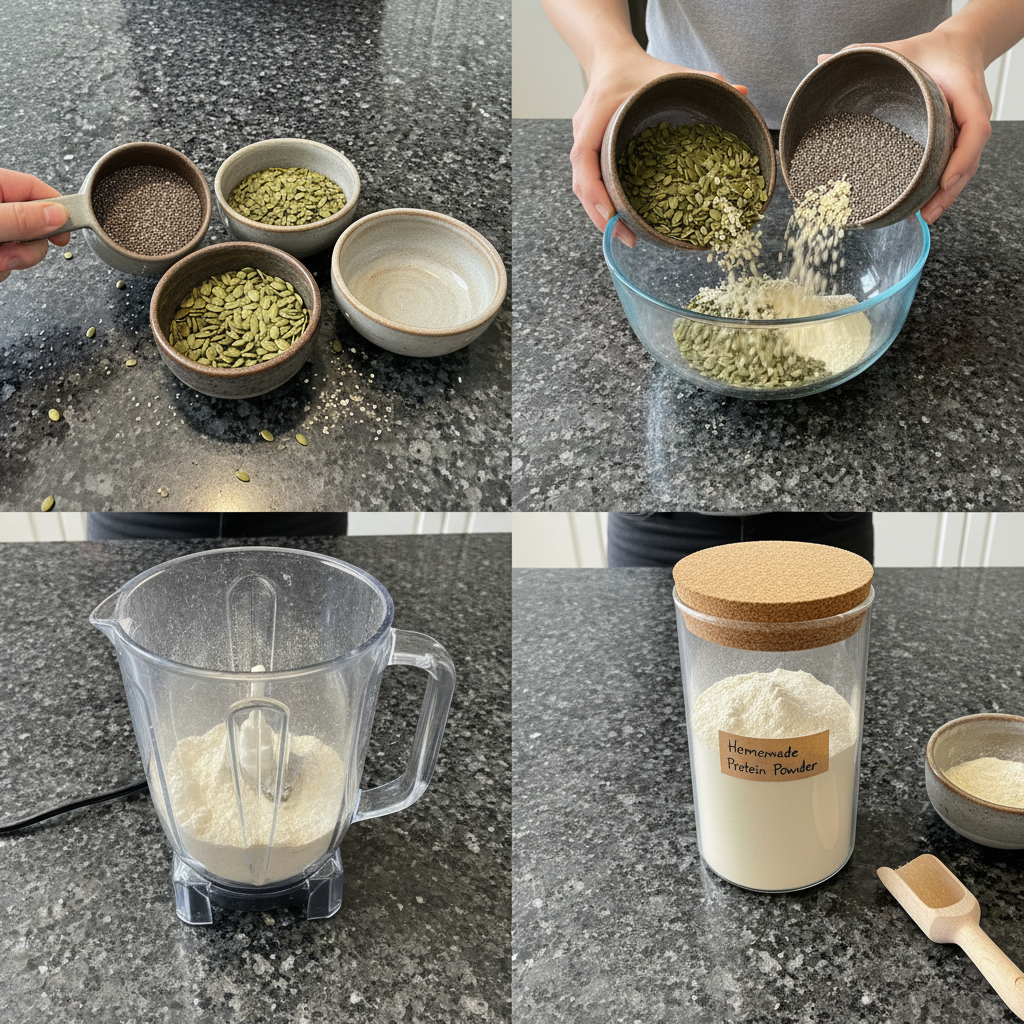
Before you start grinding any seeds, toast ¼ cup of unsweetened shredded coconut in a dry pan over medium heat. Stir frequently until the coconut is lightly golden brown and smells fragrant. The toasting process should take about 3-5 minutes. Remove from the pan and let it cool completely before adding it to the seed mixture. This step is crucial for that wonderful toasted coconut flavor!
Step 2: Grinding in Batches (Spice Grinder Method)
In a spice grinder, combine ¼ cup chia seeds, ¼ cup hemp seeds, ¼ cup raw pepitas, and ¼ cup toasted coconut. Pulse until finely ground, about 10 pulses. You’ll hear the grinder working, and you’ll see the mixture transforming into a fine powder. The texture should be smooth to the touch, without any large chunks of seeds. Transfer the ground mixture to a bowl. Repeat this process in 3 more batches with the remaining chia seeds and hemp seeds.
Step 3: Grinding (High-Speed Blender Method – Alternative)
Alternatively, you can use a high-speed blender. Add all the chia seeds, hemp seeds, pepitas and toasted coconut to the blender. Pulse until finely ground, about 15 (1-second) pulses, stopping to scrape the seed mixture from the bottom of the blender occasionally. Be careful not to over-blend, as the seeds can turn into a paste. You want a finely ground powder, not a seed butter!
Step 4: Combining and Mixing
Stir all the ground batches together in the bowl to ensure a consistent mixture. Now your homemade protein powder is ready to use!
Optimizing Particle Size for Different Uses
The particle size of your homemade protein powder can affect its texture and how well it incorporates into different foods. Here’s how to adjust the grind for various applications:
Smoothies: A finer powder is ideal for smoothies to avoid a gritty texture. The chia seeds’ gelling properties will also help thicken your smoothie, so you might need to adjust the liquid accordingly.
Oatmeal: A slightly coarser powder can be acceptable for oatmeal. Consider adding it after cooking to retain more of the texture.
Baking: For baking, a finer powder is generally better to ensure it incorporates evenly into batters for muffins, quick breads, and other baked goods.
Speaking of baking, if you’re looking for another easy recipe, you might enjoy these homemade cranberry muffins.
Tips for Achieving Desired Particle Size: Adjust the grinding time to achieve the desired consistency. You can also sift the powder to remove any larger particles.
Pro Tips & Troubleshooting
Pro Tips
- Use a spice grinder for the finest powder.
- Toast the coconut lightly to enhance flavor.
- Store in an airtight container to prevent oxidation.
- Grind in small batches for consistent results.
- Don’t over-blend when using a high-speed blender to avoid seed butter.
- Experiment with different flavor additions like cocoa or cinnamon.
Common Mistakes to Avoid
- Over-blending the seeds into a paste.
- Using old or stale seeds.
- Not toasting the coconut.
- Exposing the powder to air and moisture.
- Not storing it properly.
Serving & Storage
Serving Ideas
- Smoothies: Blend with your favorite fruits, vegetables, and liquids.
- Oatmeal: Stir into cooked oatmeal for added protein and fiber.
- Baked Goods: Add to muffins, pancakes, and breads.
- Yogurt: Sprinkle on top of yogurt for a protein boost.
- Other Ideas: Sprinkle in soups, salads, or sauces.
Storage and Make-Ahead
Storage: Store your homemade protein powder in an airtight container in a cool, dark place. Proper storage is crucial for preventing oxidation, which can lead to rancidity.
Shelf Life: When stored properly, this protein powder will stay fresh for about 2-3 months. If it develops a rancid smell, it’s time to discard it.
To prevent oxidation and rancidity, it’s important to store your protein powder properly; more information on food storage can be found at the Food Safety and Inspection Service website.
Freezing: Yes, you can freeze this protein powder to extend its shelf life. Store it in an airtight container and freeze for up to 6 months. Thaw at room temperature before using.
Conclusion
Making your own homemade protein powder is a simple and rewarding way to boost your nutrition without the added cost and artificial ingredients of store-bought versions. The touch of toasted coconut adds a unique and delicious flavor that sets this recipe apart. Don’t be intimidated! The steps are easy, and the results are fantastic. Experiment with different variations and serving ideas to find your perfect blend. If you enjoyed this recipe, please share it with your friends and family or explore other healthy recipes on my blog!
For another healthy recipe idea, consider trying this healthy white chicken chili. It’s packed with protein and flavor!
FAQ
Can I freeze this protein powder?
Yes, freezing is a great way to extend the shelf life. Store in an airtight container and freeze for up to 6 months.
What can I use to flavor this protein powder?
Cocoa powder, cinnamon, vanilla extract, or even a pinch of sea salt can enhance the flavor.
What can I use this protein powder in?
This protein powder is perfect for smoothies, oatmeal, baked goods, yogurt, and more. It’s a versatile way to add protein to your diet.
Can I swap out the hemp seeds for something else?
Yes, you can substitute flaxseeds, sesame seeds, or sunflower seeds. Keep in mind that each seed has a slightly different flavor and nutritional profile.
How much liquid should I add to a serving?
Start with a 1:2 ratio of powder to liquid and adjust to your preference. The chia seeds will thicken the mixture over time, so you may need to add more liquid.
How long does this protein powder stay fresh and how should I store it to maximize shelf life?
Properly stored in an airtight container, this protein powder will stay fresh for about 2-3 months. Store it in a cool, dark place to prevent oxidation.
Is this protein powder suitable for people with nut allergies?
Yes, as long as you ensure the ingredients you use are processed in a nut-free facility, this recipe is naturally nut-free.
“`

Homemade Protein Powder
Ingredients
Equipment
Method
- Toast ¼ cup of unsweetened shredded coconut in a dry pan over medium heat, stirring frequently until lightly golden brown and fragrant (about 3-5 minutes). Remove from the pan and let it cool completely.
- In a spice grinder, combine ¼ cup chia seeds, ¼ cup hemp seeds, ¼ cup raw pepitas, and ¼ cup toasted coconut. Pulse until finely ground, about 10 pulses. Transfer the ground mixture to a bowl. Repeat this process in 3 more batches with the remaining chia seeds and hemp seeds.
- Alternatively, you can use a high-speed blender. Add all the chia seeds, hemp seeds, pepitas and toasted coconut to the blender. Pulse until finely ground, about 15 (1-second) pulses, stopping to scrape the seed mixture from the bottom of the blender occasionally. Be careful not to over-blend, as the seeds can turn into a paste.
- Stir all the ground batches together in the bowl to ensure a consistent mixture. Now your homemade protein powder is ready to use!
Notes

Taya Bennett is the founder of YumEasyMeals, a platform dedicated to easy, delicious, and quick-to-prepare recipes for busy families. Passionate about everyday cooking, she simplifies meals with practical, accessible, and always delicious ideas.
Discover her creations at: yumeasymeals.com