For years, I struggled to find a healthy and truly satisfying alternative to my beloved pasta dishes. So many low-carb options felt like a compromise, lacking the comforting texture and rich flavor I craved. That all changed when I discovered the magic of baked spaghetti squash. It’s a game-changer, offering a nutritious foundation for hearty, flavorful meals. This recipe for twice baked spaghetti squash is designed to be both delicious and incredibly easy, becoming a staple in my kitchen for its amazing versatility and wholesome goodness. You’ll learn how to transform a simple squash into a creamy, cheesy delight, complete with unique twists and handy tips for customization and storage.
Why You’ll Love This Baked Spaghetti Squash Recipe
My secret ingredient for taking this baked spaghetti squash to the next level is adding a touch of ricotta cheese. Before mixing in the delicious sauce and cheeses, I gently stir in about 1/4 cup of creamy ricotta.
The ricotta creates a wonderfully creamier texture. It acts like a binder, helping the marinara sauce cling beautifully to the spaghetti squash strands instead of creating a watery mess. This small addition provides a richness that truly elevates the dish.
This recipe is incredibly family-friendly. Even the pickiest eaters will appreciate the cheesy, savory flavors. It’s a fantastic low-carb and gluten-free alternative to traditional pasta, making it a healthier choice without sacrificing taste. Plus, it’s genuinely easy to make, relying on simple steps and readily available ingredients to bring an Italian cuisine favorite to your table.
Ingredients Needed

- 1 large spaghetti squash (I find organic spaghetti squash has way better flavor)
- 2 Tbsp extra-virgin olive oil
- 1 teaspoon salt
- ½ cup water
- 1 lb. hot Italian pork sausage, pasture-raised, if possible
- 1 large onion, diced
- ½ cup ish sliced mushrooms
- 1 tsp dried oregano
- 1 tsp garlic powder
- ½ tsp black pepper
- 1 jar high-quality marinara sauce or 3-4 cups homemade marinara
- 12 oz mozzarella cheese, shredded (from grass-fed milk, if possible)
- 6 oz Parmesan cheese, shredded (from grass-fed milk, if possible)
Ingredient Notes & Substitutions
When selecting your spaghetti squash, I always recommend choosing an organic variety for the best flavor. Look for a squash that feels heavy for its size, indicating good moisture content.
For the Italian sausage, feel free to use sweet Italian sausage if you prefer a milder flavor, or even ground beef. If you’re looking to make this dish vegetarian, plant-based sausage crumbles work wonderfully, or you can create a hearty filling with a mix of sauteed mushrooms and lentils.
Regarding the cheeses, if you have dietary restrictions, vegan mozzarella and Parmesan are excellent dairy-free alternatives. Part-skim mozzarella will melt beautifully and keep the dish a bit lighter.
The marinara sauce is a key flavor component. I always emphasize using a high-quality marinara sauce, whether it’s a gourmet store-bought brand or your own homemade version. A good sauce makes all the difference.
For the olive oil, extra virgin olive oil offers a more robust flavor compared to regular olive oil, making it my preferred choice for this recipe.
How to Make Baked Spaghetti Squash
Prepare the Spaghetti Squash
Preheat your oven to 400 degrees F. Allow it to come to full temperature before you start baking.
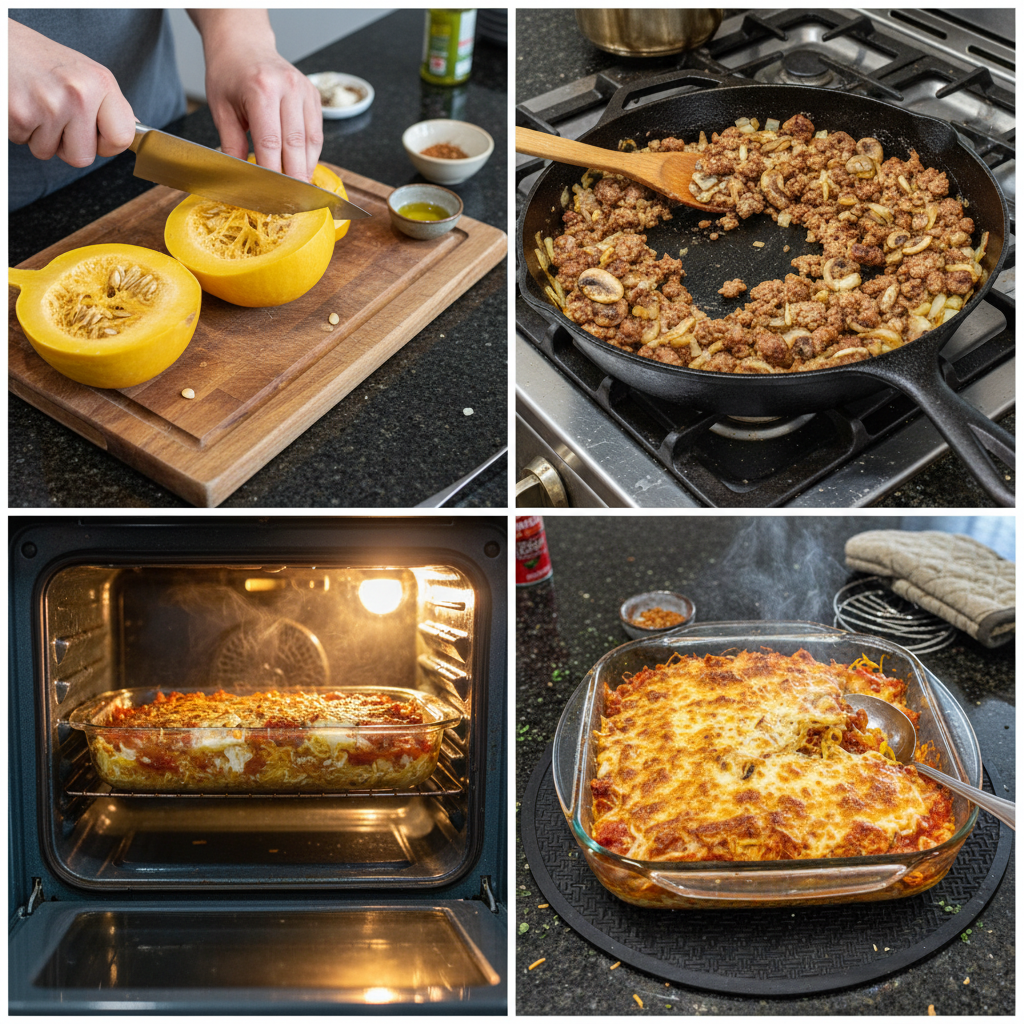
Carefully slice the spaghetti squash in half lengthwise and scoop out the seeds. Please watch your fingers and use a large, sharp knife for safety. You can reserve these seeds; I’ll show you how to roast them into a delicious snack later.
Rub the inside of each squash half with extra-virgin olive oil and sprinkle generously with salt.
Place each squash half, cut side down, on a large rimmed baking sheet, such as a lasagna pan. Add ½ cup water to the pan. This helps create steam, ensuring the squash cooks evenly and stays moist.
Bake for 30-45 minutes, until the spaghetti squash is tender. You’ll know it’s cooked when it gives slightly when you push on the outside skin, or if the inside flesh easily forks into spaghetti-like strands. It should be slightly firm, not mushy, to avoid a watery texture.
Prepare the Filling
While the spaghetti squash is cooking, it’s the perfect time to prep the flavorful filling.
In a large cast iron pan, cook the hot Italian pork sausage, breaking it into chunks as it cooks. As the sausage browns, a wonderful aroma will fill your kitchen. When enough fat has rendered, add the diced onions and sliced mushrooms. Stir in the dried oregano, garlic powder, and black pepper. Continue to cook until the onions are translucent and slightly caramelized, and the meat is thoroughly cooked through.
Add the high-quality marinara sauce to the pan. Bring the mixture to a gentle simmer and then remove it from the heat. Set this rich sauce aside.
Assemble and Bake
Once the spaghetti squash is cooked, carefully remove it from the oven. Fill each half generously with the prepared meat and marinara sauce.
Top the sauce with a generous amount of shredded mozzarella cheese and Parmesan cheese. Return the baking sheet to the oven, placing it on the top rack. Bake for an additional 10-15 minutes, or until the cheese is melted, bubbly, and browned to your liking. For an extra golden crust, you can broil for the last minute or two, watching carefully to prevent burning.
Let the dish sit for 10 minutes (if you can wait!) to allow the flavors to meld and the juices to settle. This resting period is crucial for the best taste and texture.
Serve by scooping the flesh of the spaghetti squash with a large spoon. The squash should easily break apart into those satisfying spaghetti-like strands while serving, coated in that delicious sauce and melted cheese.
Roasting Spaghetti Squash Seeds
Don’t toss those spaghetti squash seeds! Roasting them is a fantastic way to reduce food waste and create a surprisingly delicious, healthy snack. They taste much like pumpkin seeds.
First, rinse the seeds thoroughly under cold water to remove any clinging pulp. This is important for crispiness.
Next, dry the seeds completely. Pat them with a paper towel or spread them out on a clean kitchen towel for an hour or so until no moisture remains.
Toss the dried seeds with a small amount of olive oil, a pinch of salt, and any desired spices. I love a bit of garlic powder or smoked paprika for extra flavor.
Spread the seasoned seeds in a single layer on a baking sheet. Avoid overcrowding them, as this prevents even roasting.
Roast them in the oven at 325°F (160°C) for 10-15 minutes, or until they are golden brown and wonderfully crispy. Be sure to stir them occasionally to ensure even toasting.
Let them cool completely before enjoying your crunchy, homemade snack!
Pro Tips & Troubleshooting
Pro Tips
Always roast your spaghetti squash cut-side down. This helps prevent the squash from drying out and locks in moisture.
Do not overcook the squash. It should be slightly firm when pressed, not mushy, to avoid a watery texture in your final dish.
Using high-quality ingredients truly makes a difference in flavor, especially for your marinara sauce and cheeses.
If you choose to add ricotta, mix it gently with the squash strands. This helps distribute the creaminess without breaking up the delicate “noodles.”
For an extra bubbly and beautifully browned cheese topping, broil the dish for the last minute or two. Keep a very close eye on it to prevent burning.
Using a cast iron pan for cooking the sausage and sauce provides even heat distribution and can help create slightly crispy edges on the meat.
Common Mistakes to Avoid
A common mistake is using a dull knife to cut your spaghetti squash. This is not only inefficient but also dangerous. Invest in a good chef’s knife for easier and safer prep.
Overcooking the squash is a frequent error. This can lead to a watery or mushy texture, which nobody wants in their baked spaghetti squash.
Forgetting to properly season the squash before baking means missing out on a foundational layer of flavor.
Adding too much sauce can overwhelm the delicate spaghetti squash and make the dish soggy. Find a good balance.
Skipping the resting time before serving is another common oversight. Allowing the dish to rest for 10 minutes lets the flavors meld together beautifully.
Serving & Storage
Serving Ideas
I love serving this hearty baked spaghetti squash with a crisp side salad or some roasted vegetables for a well-rounded meal. A simple green salad with a light vinaigrette is perfect.
For those who enjoy a bit of indulgence, pairing it with garlic bread or crusty Italian bread is fantastic for soaking up every last bit of that delicious sauce.
A sprinkle of fresh basil or parsley before serving not only adds a burst of fresh flavor but also makes the dish look even more appealing. For a little kick, offer a pinch of red pepper flakes on the side.
Consider pairing this Italian-inspired dish with a nice glass of medium-bodied Italian red wine to complete the experience.
Storage and Make-Ahead
Store any leftover twice baked spaghetti squash in an airtight container in the refrigerator for up to 3 days. It reheats wonderfully for quick lunches or dinners.
This recipe is also great for making ahead. You can roast the spaghetti squash in advance and prepare the meat sauce separately. Store them both in the refrigerator. When you’re ready to eat, simply assemble the dish and bake as directed. This makes weeknight meals a breeze.
To reheat, I recommend warming it in the oven at 350°F (175°C) until thoroughly heated through. Alternatively, you can use a microwave in short intervals, stirring occasionally, until it’s warm.
Conclusion
There you have it, my favorite recipe for twice baked spaghetti squash! It truly is a delicious and healthy alternative to traditional pasta, packed with incredible flavors. The subtle addition of ricotta is my secret to ensuring that creamy texture and preventing a watery dish, making every forkful a joy.
I encourage you to try this baked spaghetti squash recipe in your own kitchen and feel free to customize it with your favorite herbs or vegetables. It’s wonderfully versatile. Print this recipe and share it with your friends and family! And be sure to explore our other delicious pasta alternative recipes for more inspiration.
FAQ
How do you properly roast spaghetti squash to avoid a watery consistency?
Roast it cut-side down on a baking sheet with a little water in the pan. Avoid overcooking, as it should be slightly firm when pressed. Also, try to avoid piercing the squash too many times before roasting.
What are some vegetarian alternatives to pork sausage?
Plant-based sausage crumbles, a flavorful mix of sauteed mushrooms and lentils, or a hearty vegetable ragu are all excellent vegetarian options for this dish.
How can I make this recipe ahead of time?
You can roast the spaghetti squash and prepare the sauce in advance. Store them separately in airtight containers in the refrigerator, and then assemble the dish just before you’re ready to bake it.
How should leftover twice baked spaghetti squash be stored and reheated?
Store any leftovers in an airtight container in the refrigerator for up to 3 days. Reheat gently in the oven at 350°F (175°C) until warmed through, or use the microwave in short intervals.
What are the nutritional benefits of spaghetti squash compared to regular pasta?
What are common variations for the sauce to customize the flavor?
To customize the sauce, you can add different herbs and spices like basil or bay leaf, incorporate different types of cheese, or mix in extra vegetables such as fresh spinach or bell peppers. For a little heat, a pinch of red pepper flakes is a great addition.
How do you roast spaghetti squash seeds?
After rinsing and completely drying the seeds, toss them with a little olive oil and salt. Spread them on a baking sheet and roast at 325°F (160°C) for 10-15 minutes, or until golden brown and crispy, stirring occasionally.
Can you use ground beef instead of sausage?
Yes, ground beef is a perfectly suitable substitute for Italian sausage in this recipe. Brown the ground beef thoroughly and drain off any excess fat before adding the onions and mushrooms to the pan.
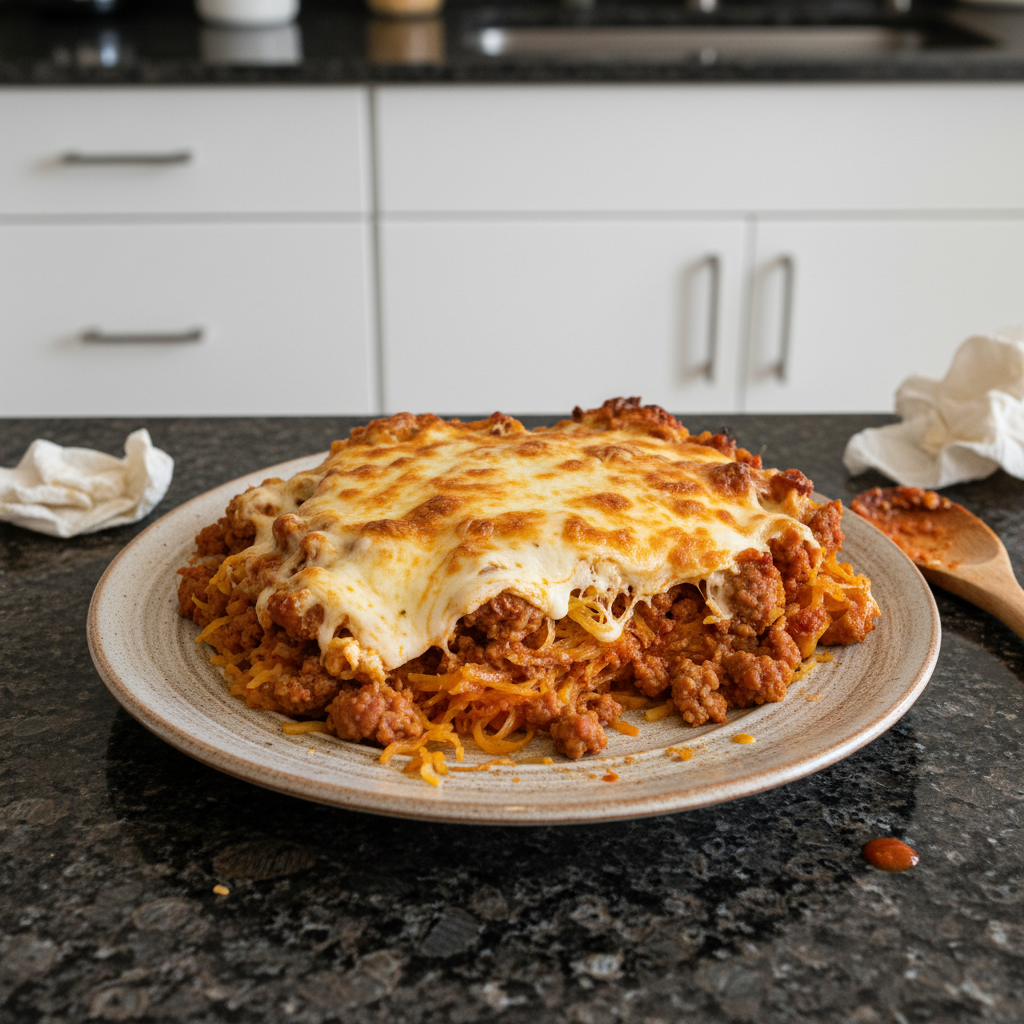
Twice Baked Spaghetti Squash with Ricotta - Easy Recipe!
Ingredients
Equipment
Method
- Preheat your oven to 400 degrees F (200°C).
- Carefully slice the spaghetti squash in half lengthwise and scoop out the seeds, using a large, sharp knife for safety.
- Rub the inside of each squash half with extra-virgin olive oil and sprinkle generously with salt.
- Place each squash half, cut side down, on a large rimmed baking sheet. Add ½ cup water to the pan.
- Bake for 30-45 minutes, until the spaghetti squash is tender and the inside flesh easily forks into spaghetti-like strands. It should be slightly firm, not mushy.
- While the spaghetti squash cooks, in a large cast iron pan, cook the hot Italian pork sausage, breaking it into chunks as it cooks.
- When enough fat has rendered, add the diced onions and sliced mushrooms. Stir in the dried oregano, garlic powder, and black pepper. Continue to cook until the onions are translucent and the meat is thoroughly cooked through.
- Add the high-quality marinara sauce to the pan. Bring the mixture to a gentle simmer and then remove it from the heat. Set aside.
- Once the spaghetti squash is cooked, carefully remove it from the oven.
- Gently stir ¼ cup creamy ricotta cheese into the spaghetti squash strands before filling.
- Fill each half of the spaghetti squash generously with the prepared meat and marinara sauce.
- Top the sauce with a generous amount of shredded mozzarella cheese and Parmesan cheese.
- Return the baking sheet to the oven, placing it on the top rack. Bake for an additional 10-15 minutes, or until the cheese is melted, bubbly, and browned. For an extra golden crust, you can broil for the last minute or two, watching carefully.
- Let the dish sit for 10 minutes to allow the flavors to meld and the juices to settle before serving.
- Serve by scooping the flesh of the spaghetti squash with a large spoon, allowing it to break apart into spaghetti-like strands coated in sauce and cheese.
Notes

Taya Bennett is the founder of YumEasyMeals, a platform dedicated to easy, delicious, and quick-to-prepare recipes for busy families. Passionate about everyday cooking, she simplifies meals with practical, accessible, and always delicious ideas.
Discover her creations at: yumeasymeals.com