Welcome, home cooks! If you’ve been chasing that elusive diner-style crispy hash brown, the kind with a shatteringly crisp exterior and a tender, fluffy interior, your search ends here. This guide will walk you through a foolproof method for making the best crispy hash browns you’ve ever had, perfectly golden brown and savory, using a couple of smart techniques that truly make a difference. Get ready to transform your breakfast and brunch!
Why You’ll Love This Crispy Hash Browns Recipe
I know the struggle – soggy hash browns are a culinary disappointment. That’s why I’ve perfected this recipe, which incorporates two game-changing steps to guarantee an utterly irresistible crispy texture every single time.
* The Ice Water Soak: My first secret weapon is soaking the shredded potatoes in ice water for 15 minutes. This crucial step meticulously removes excess surface starch from the Russet potatoes, which would otherwise make them sticky and prevent proper browning. The result? Potatoes that are primed for ultimate crispiness.
* The Cornstarch Coating: The second secret is a light dusting of cornstarch after squeezing out the moisture. This creates a thin, invisible coating that works magic in the pan, ensuring an extra-crisp exterior and promoting that coveted golden brown finish.
Together, these techniques prevent sticking, enhance the Maillard reaction, and deliver a consistently reliable, diner-style hash brown recipe that is easy to master. Say goodbye to guesswork and hello to perfect breakfast or Brunch side dishes!
Ingredients Needed

* 1 pound Russet baking potatoes
* 3 tablespoons extra virgin olive oil
* Salt and pepper
Ingredient Notes & Substitutions
When it comes to making truly crispy hash browns, the right ingredients make all the difference.
* Potatoes: I always recommend using Russet potatoes, also known as baking potatoes, for this recipe. Their high starch content and relatively low moisture make them ideal for achieving that coveted crispy texture. Waxy potatoes (like Yukon Golds or red potatoes) tend to stay softer and steam rather than crisp when fried.
* Fat: I’ve specified extra virgin olive oil for its lovely flavor, but feel free to experiment with other fats. You could use vegetable oil for a higher smoke point, butter for a richer, nutty flavor (though watch its smoke point!), or even render some bacon fat for an incredibly robust, savory taste. Just ensure you use enough oil to generously coat the frying pan for proper cooking.
* Salt & Pepper: Don’t underestimate the power of good seasoning. I like to use freshly ground pepper and a good quality salt. A sprinkle of flake salt right before serving can add an extra textural pop.
* Dietary Notes: This recipe is naturally gluten-free and Vegetarian, making it a versatile Side dish for many dietary needs.
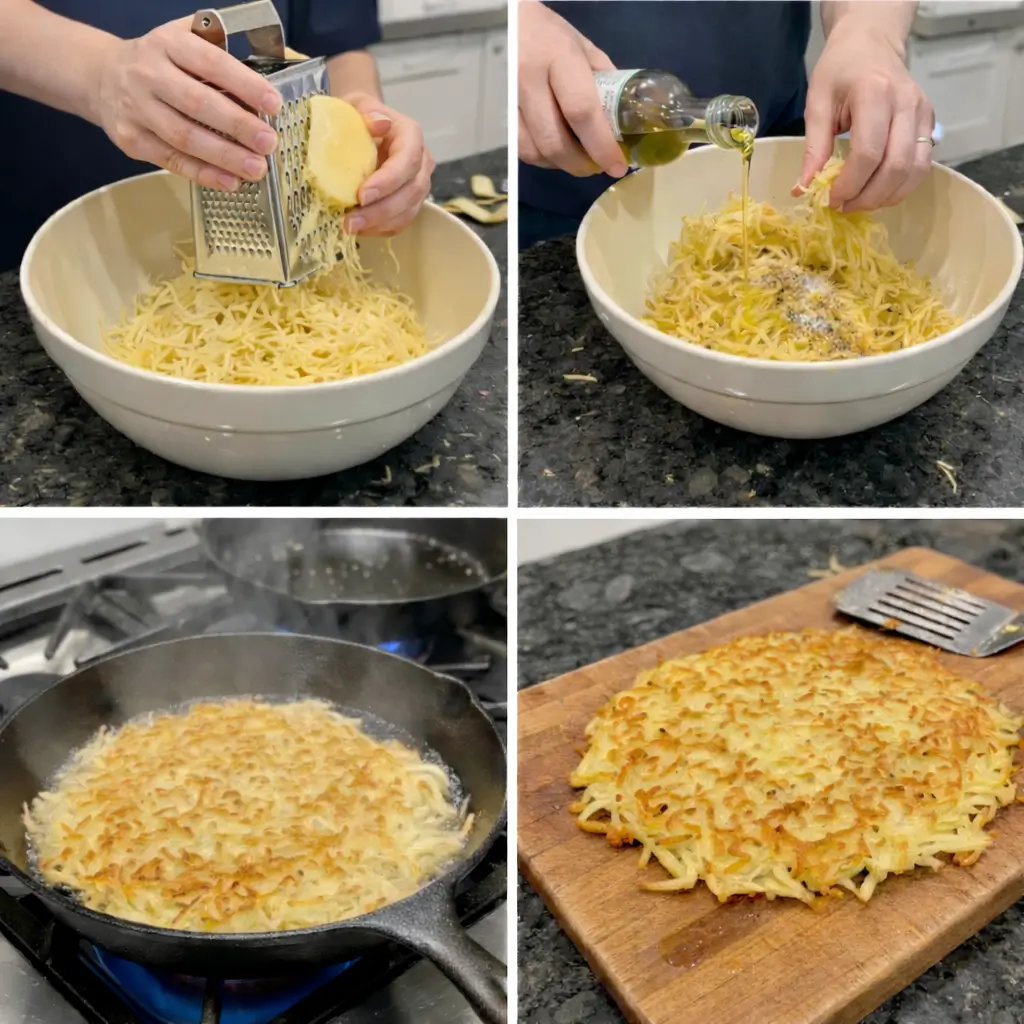
How to Make Crispy Hash Browns
Making diner-style crispy hash browns at home is incredibly satisfying. Follow these steps for perfect results every time.
Prepare and Grate the Potatoes
Peel the Russet potatoes and grate them using the large holes of a box grater. It’s a quick process, and having them freshly grated makes a big difference.
Soak the Shredded Potatoes
Place the shredded potatoes in a bowl of ice water and let them soak for 15 minutes. This crucial step helps remove excess surface starch, preventing the potatoes from sticking together and promoting maximum crispiness.
Squeeze Out the Moisture
This is perhaps the most important step for truly crispy hash browns! You need to squeeze out as much moisture as you can from the grated potatoes. An easy way to do this is with a potato ricer (or an orange or lemon press), using it like you would a garlic press but without forcing the potatoes through it completely. You just want to press out the excess moisture. Work in batches and only fill the ricer half-way with the raw grated potatoes.
If you don’t have a ricer, wrap the raw shredded potatoes in a clean tea towel and squeeze it until you have removed as much water as possible. Work in batches to make it more manageable. Note that the potatoes can sometimes stain a cloth towel, so use one that you don’t mind showing a bit of wear.
Coat with Cornstarch
Return the thoroughly squeezed shredded potatoes to a dry bowl and toss them with 1 tablespoon of cornstarch. This forms a thin coating for ultimate crispiness, contributing to that incredible golden brown crust.
Cook the Hash Browns
Heat 3 tablespoons of extra virgin olive oil in a large frying pan on medium-high heat. When the oil heats up to the point of shimmering but not smoking, add the shredded potatoes, spreading them out evenly along the bottom of the pan. The potatoes should not be too thick in any one place—aim for about 1/4 to a 1/2-inch thick layer for optimal crisping. Overcrowding the pan or making the layer too thick is a common mistake that leads to steaming instead of frying.
Sprinkle some salt and pepper generously on the potatoes as they cook.
Flip and Finish
After about 5-7 minutes, gently lift up one edge of the potatoes with a spatula to check their progress. If they have fried to a deep golden brown and have a beautiful crust, they are ready to flip.
Use a large metal spatula (or two spatulas) to carefully flip the potatoes over all at once, or divide the large potato cake into halves or quarters and then flip. Continue to cook for another 5-7 minutes until the other side is also a glorious golden brown and perfectly crispy.
Serve
Use a metal spatula to cut into quarters and serve immediately. These crispy hash browns are best enjoyed fresh off the frying pan! Did you enjoy this recipe? Let us know with a rating and review!
The Science of Perfectly Crispy Hash Browns & Pan Mastery
Achieving those picture-perfect crispy hash browns isn’t just luck; it’s a delicious blend of culinary technique and a little kitchen science.
The Science of Crispiness
At the heart of every crispy hash brown is understanding the potato itself. Russet potatoes are rich in starch, which is exactly what we want, but paradoxically, too much surface starch can lead to gummy, sticky results.
* Starch Removal: Soaking potatoes in cold water directly addresses this. The cold water washes away the excess starch from the potato’s surface. This prevents the individual strands from sticking together, allowing them to brown independently and achieve that desired crisp separation. Less surface starch means more direct contact with the hot oil, promoting a superior crust.
* Cornstarch Role: My unique addition of cornstarch acts as a superfine coating. When heated, this thin layer undergoes a rapid textural transformation, creating an incredibly crisp barrier. It further prevents sticking and significantly enhances the Maillard reaction, contributing to that irresistible golden brown color and complex flavor development.
* Moisture is the Enemy: For crispy hash browns, moisture removal methods are paramount. Any residual water turns to steam in the hot pan, effectively steaming the potatoes rather than frying them. This leads to a soggy, limp texture. Thoroughly squeezing out water with a potato ricer or tea towel ensures that when the shredded potatoes hit the frying pan, they immediately begin to crisp.
* Maillard Reaction: This is the chemical reaction responsible for the beautiful golden brown color and rich, savory flavors in our hash browns. It occurs when amino acids and carbohydrates in the potatoes react at high heat and low moisture, creating hundreds of new flavor compounds and that incredible crust.
Choosing Your Fat & Mastering the Pan
The fat you choose and how you manage your frying pan are critical components for golden brown perfection.
* Fats: Each best type of oil to use brings its own benefits. Extra virgin olive oil offers a lovely flavor, while vegetable oil (like canola or grapeseed) has a higher smoke point, making it more forgiving at medium-high heat. Butter delivers incredible richness and a nutty aroma but browns quickly due to its milk solids, so it’s best used in combination with another oil or clarified. For a truly diner-style experience, don’t overlook bacon fat for its robust, smoky flavor profile.
* Pan Types: Your choice of frying pan significantly impacts the outcome. A cast iron skillet is fantastic for crispy hash browns because it retains heat exceptionally well and distributes it evenly, leading to a superb, consistent crust. However, it often requires a bit more oil and careful temperature management. Nonstick pans are easier to clean and manage, reducing the risk of sticking, but they may not achieve as deep or uniform a golden brown crust as cast iron.
* Temperature Control: The sweet spot is medium-high heat. Too low, and your potatoes will absorb too much oil and become greasy without crisping. Too high, and they’ll burning on the outside before the interior cooks through. You want the oil to be shimmering but not smoking, indicating the perfect pan temperature for the Maillard reaction to occur without scorching. Adjust your cooking time and temperature slightly based on your pan’s material to ensure even cooking and prevent burning.
Pro Tips & Troubleshooting
Even with the perfect recipe, a few insider tips can elevate your crispy hash browns from great to legendary, and knowing how to sidestep common pitfalls ensures success.
Pro Tips
* Maximize Moisture Removal: I cannot stress this enough! Use a potato ricer or a sturdy tea towel to squeeze out as much moisture as possible. This is the single biggest factor in preventing soggy hash browns.
* Embrace the Twist: My unique methods — the ice water soak and the cornstarch addition — are truly game-changers for crispy texture. Don’t skip them!
* Generous Oil, Perfect Heat: Ensure you use enough oil (like extra virgin olive oil) to generously coat the frying pan. Heat the pan to medium-high heat until the oil is shimmering but not smoking before adding the shredded potatoes.
* Thin Layer for Even Crispness: Spread the shredded potatoes in a thin layer, about ¼ to ½ inch thick, for even golden brown cooking. Resist the urge to pile them high!
* Patience is a Virtue: The hardest part is waiting! Don’t be tempted to wait to flip until a deep golden brown crust has formed on the first side. This patience is rewarded with superior crispiness.
* Season Liberally: Sprinkle salt and pepper generously on the potatoes both when you first add them to the pan and after you flip them. Seasoning throughout layers enhances flavor.
Common Mistakes to Avoid
* Wrong Potatoes: Using waxy potatoes instead of Russet potatoes is a common pitfall. Waxy varieties have less starch and more moisture, making them prone to steaming and staying soft rather than crisping.
* Too Much Moisture: This is the cardinal sin of crispy hash browns. If you don’t adequately squeeze out moisture, your hash browns will be soggy and lackluster.
* Overcrowding the Pan: Spreading the potatoes too thickly or trying to cook too many at once drastically lowers the pan temperature and releases excess steam, which prevents crisping and leads to steaming. Work in batches if necessary.
* Not Enough Fat/Oil: Using too little oil is a recipe for sticking and uneven browning. The potatoes need enough fat to conduct heat and crisp properly.
* Flipping Too Soon: If you flip before a solid golden brown crust has formed, your hash browns will break apart and won’t develop that beautiful exterior.
* Heat Too Low/High: Medium-high heat is key. Too low, and they’ll get greasy; too high, and they’ll burning on the outside before cooking through, leaving a raw interior.
Serving & Storage
Once you’ve mastered these crispy hash browns, you’ll want to enjoy them often! Here are my favorite ways to serve and store them.
Serving Ideas
These diner-style crispy hash browns are the ultimate Side dish for any breakfast or Brunch.
* Classic Pairings: My absolute favorite way to enjoy them is alongside perfectly cooked eggs and bacon or sausage. They’re also fantastic with steak and eggs.
* Savory Toppings: Elevate your hash browns with a dollop of sour cream and chives or a drizzle of your favorite hot sauce. And of course, a good squirt of ketchup is always a welcome addition for many!
* Versatile Side: Don’t limit them to morning meals! They make a wonderful accompaniment to roast chicken or a simple weeknight burger. For another easy and crispy side, try our crispy air fryer asparagus.
Storage and Make-Ahead
* Refrigeration: Leftover crispy hash browns can be stored in an airtight container in the fridge for 3-4 days.
* Reheating: To bring them back to their crispy texture, reheat in a hot frying pan with a little oil over medium-high heat until golden and heated through. You can also warm them in a toaster oven or a hot oven at 375°F (190°C) until crisp again. Microwaving will heat them but won’t restore the crispness.
* Freezing: While best fresh, cooked crispy hash browns can be frozen in a single layer on a baking sheet, then transferred to a freezer bag for up to 1-2 months. Reheat from frozen in a hot oven or frying pan for best results.
Delicious Variations
Get creative with your shredded potatoes!
* Sweet Potato Hash Browns: For a twist, try using sweet potatoes instead of Russets. The method remains largely the same, but the flavor profile will be sweeter and earthier.
* Grated Onion & Seasonings: For an extra layer of flavor, mix in a tablespoon of finely grated onion with your shredded potatoes before cooking. You can also experiment with other seasoning options like a pinch of garlic powder, paprika, or even a touch of cayenne for a subtle kick.
Conclusion
There you have it – the secrets to making truly exceptional crispy hash browns right in your own kitchen! With my unique ice water soak and cornstarch method, you can consistently achieve that coveted diner-style perfection. Gone are the days of soggy, sad breakfast potatoes; now you’ll be serving up golden brown, savory masterpieces.
I encourage you to try this recipe, experiment with the suggested serving ideas and variations, and proudly share your crispy hash brown creations with friends and family. It’s an easy-to-master technique that will elevate any Brunch or breakfast spread. Don’t forget to leave a rating and review to let me know how much you loved them!
FAQ
What kind of potatoes are best for crispy hash browns, and why?
I strongly recommend Russet potatoes, also known as baking potatoes. They are high in starch and relatively low in moisture, which is the perfect combination for achieving a crispy texture when fried. The starch content is essential for browning, while low moisture prevents steaming.
How does removing moisture affect the final texture of hash browns?
Removing as much moisture as possible from the shredded potatoes is the single most critical step for crispy hash browns. Excess water turns to steam in the hot pan, which steams the potatoes instead of frying them, resulting in a soggy, soft texture. Thorough moisture removal allows the potatoes to fry properly and develop a golden brown, crispy texture.
What are the best fats to use for cooking hash browns, and how do they affect the flavor?
I typically use extra virgin olive oil for its flavor, but other fats work well too. Vegetable oil (like canola or grapeseed) has a high smoke point and a neutral flavor. Butter adds a rich, nutty taste but can burn easily, so it’s often best used in combination with another oil or clarified. For a robust diner-style flavor, bacon fat is an excellent choice. Each oil will impart a slightly different flavor profile.
What are the most common mistakes people make when cooking hash browns, and how can I avoid them?
Common mistakes include using waxy potatoes (they won’t crisp as well), not adequately squeeze out moisture (leads to sogginess), spreading the potatoes too thickly or overcrowding the pan (causes steaming and uneven cooking), using too little oil (causes sticking), and flipping too soon (results in broken, pale pieces). To avoid these, follow my tips on potato type, moisture removal, pan loading, medium-high heat, and patience!
How can I customize my hash browns by adding seasonings or other ingredients?
Absolutely! Beyond salt and pepper, try mixing in a tablespoon of finely grated onion for extra flavor. Other great seasoning options include garlic powder, onion powder, smoked paprika, or a pinch of cayenne pepper for a subtle kick. Add these to the shredded potatoes along with the cornstarch before cooking.
How do I prevent my hash browns from sticking to the pan?
Preventing sticking involves several key steps: ensuring you’ve removed as much moisture as possible from the shredded potatoes, using enough oil to generously coat the frying pan, making sure the pan temperature is at medium-high heat before adding the potatoes, and my secret ingredient: tossing the potatoes with cornstarch creates a protective, non-stick coating. Also, avoid flipping too early!
Can I use frozen shredded potatoes for hash browns?
Yes, you can use frozen shredded potatoes, but they need careful preparation. Thaw them completely first, then, and this is crucial – squeeze out as much moisture as possible, even more vigorously than with fresh potatoes, as frozen potatoes tend to retain more water. Once thawed and dried, proceed with the ice water soak and cornstarch steps as usual.
How long do hash browns last in the fridge?
Cooked crispy hash browns can be stored in an airtight container in the refrigerator for 3 to 4 days. Reheat them in a hot frying pan or oven to restore their crispness.
Is it better to boil potatoes before frying them for hash browns?
For this particular recipe aiming for crispy hash browns with a distinct, separated shredded potatoes texture, it’s best to use raw, grated potatoes. Boiling them first would create a softer texture more suitable for mashed potatoes or potato cakes, not the shatteringly crisp individual strands we’re after here.
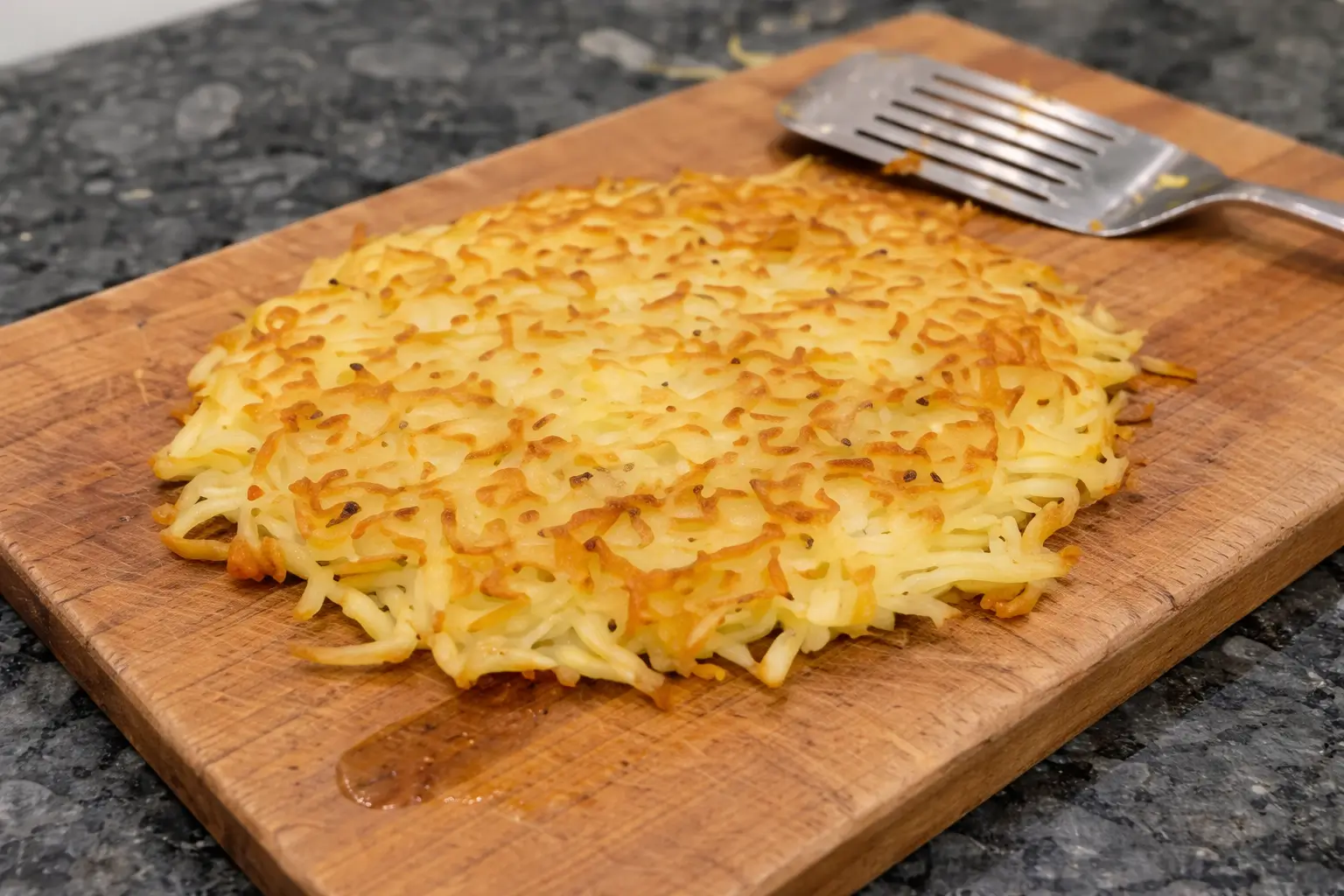
Ultimate Crispy Hash Browns: The Secret to Diner-Style Perfection
Ingredients
Equipment
Method
- Peel the Russet potatoes and grate them using the large holes of a box grater. This is a quick process and using freshly grated potatoes makes a big difference.
- Place the shredded potatoes in a bowl of ice water and let them soak for 15 minutes. This crucial step removes excess surface starch, preventing sticking and promoting maximum crispiness.
- This is perhaps the most important step for truly crispy hash browns. You need to squeeze out as much moisture as you can from the grated potatoes. An easy way to do this is with a potato ricer, using it like a garlic press but without forcing the potatoes completely through. Work in batches, filling the ricer half-way.
- If you don’t have a ricer, wrap the raw shredded potatoes in a clean tea towel and squeeze until as much water as possible is removed. Work in batches. Note that potatoes can stain a cloth towel.
- Return the thoroughly squeezed shredded potatoes to a dry bowl and toss them with 1 tablespoon of cornstarch. This forms a thin coating for ultimate crispiness, contributing to an incredible golden-brown crust.
- Heat 3 tablespoons of extra virgin olive oil in a large frying pan on medium-high heat. When the oil is shimmering but not smoking, add the shredded potatoes, spreading them out evenly along the bottom of the pan. The potato layer should be about 1/4 to 1/2-inch thick for optimal crisping; avoid overcrowding the pan.
- Sprinkle some salt and pepper generously on the potatoes as they cook.
- After about 5-7 minutes, gently lift up one edge of the potatoes with a spatula to check for a deep golden-brown color and a beautiful crust. If ready, use a large metal spatula (or two) to carefully flip the potatoes over all at once, or divide into halves or quarters and then flip.
- Continue to cook for another 5-7 minutes until the other side is also gloriously golden brown and perfectly crispy.
- Use a metal spatula to cut into quarters and serve immediately. These crispy hash browns are best enjoyed fresh off the frying pan!
Notes

Taya Bennett is the founder of YumEasyMeals, a platform dedicated to easy, delicious, and quick-to-prepare recipes for busy families. Passionate about everyday cooking, she simplifies meals with practical, accessible, and always delicious ideas.
Discover her creations at: yumeasymeals.com