This oven-baked salmon with roasted vegetables is the kind of complete dinner that looks special without requiring complicated techniques. The salmon is brushed with a bright lemon, mustard, garlic, and parsley marinade, then roasted beside baby potatoes, carrots, red onion, mushrooms, and broccoli. A warm lemon dill mustard sauce brings the whole plate together with a creamy, tangy finish.
The vegetables become caramelized around the edges while the salmon stays tender and flaky. Because the potatoes and carrots are briefly parboiled before roasting, every component finishes at the right texture. It is a practical three-serving dinner for a family meal, a relaxed weekend supper, or any evening when plain baked salmon needs a little more character.
Why You’ll Love This Recipe
- A complete meal on one plate: Salmon, potatoes, and five vegetables make this satisfying without needing several side dishes.
- Bright, balanced flavor: Lemon and mustard cut through the richness of the salmon and creamy sauce, while garlic, parsley, dill, and paprika add savory depth.
- Better vegetable texture: Parboiling the potatoes and carrots gives them soft centers before they roast and brown with the quicker-cooking vegetables.
- A sauce worth making: The simple butter-and-flour base creates a smooth sauce that clings to the salmon instead of running off the plate.
Ingredients Needed

For the Salmon
- 3 salmon fillets
- 4 tablespoons olive oil
- Juice of ½ small lemon
- 1 teaspoon mustard
- 2 garlic cloves, grated
- 1 tablespoon finely chopped fresh parsley
- ½ teaspoon black pepper
- ½ teaspoon sweet paprika
- ½ teaspoon crushed red pepper flakes
- ½ teaspoon salt
For the Roasted Vegetables
- 500g baby potatoes, halved if needed
- 2 carrots, cut into thick slices
- 2 small red onions, cut into wedges
- 5–6 mushrooms, halved or quartered
- 250g broccoli, cut into florets
- ½ teaspoon sweet paprika
- ½ teaspoon garlic powder
- ½ teaspoon black pepper
- ½ teaspoon salt
- 4–5 tablespoons olive oil
For the Lemon Dill Mustard Sauce
- 2 tablespoons butter
- 1 tablespoon all-purpose flour
- 280ml milk
- 1 generous handful fresh dill, finely chopped (about 2 tablespoons)
- 1 teaspoon mustard
- Juice of ½ small lemon, or slightly less for a milder sauce
- 1 garlic clove, grated
- 1 teaspoon sweet paprika
- Salt and black pepper, to taste
Ingredient Notes
Salmon: Choose three fillets of similar thickness so they cook at the same rate. Fresh salmon should have firm flesh and a mild smell. The FDA’s seafood selection and handling guide explains what to look for when buying fresh or frozen fish.
The three pepper seasonings: Black pepper, sweet paprika, and crushed red pepper flakes all belong in the salmon marinade. The paprika adds color, black pepper adds warmth, and the red pepper flakes provide a gentle kick.
Baby potatoes and carrots: These dense vegetables need a short head start. Parboiling them prevents hard centers without forcing the salmon and broccoli to stay in the oven too long.
Fresh dill: The original sauce is a lemon mustard dill sauce, so the finely chopped herb is fresh dill rather than carrot. Add it near the end so its fresh flavor and green color remain noticeable.
Milk: Add it gradually while whisking. Cold or room-temperature milk both work, but gradual additions make it much easier to keep the sauce smooth.
Before cutting the vegetables, rinse them under running water. The FDA’s produce-safety guidance also recommends keeping clean produce and its utensils separate from raw seafood.
Equipment
- Large rimmed baking sheet
- Parchment paper
- Medium saucepan for parboiling the vegetables
- Small saucepan for the sauce
- Mixing bowl
- Whisk
- Pastry brush or spoon
- Instant-read thermometer
How to Make Baked Salmon with Roasted Vegetables
1. Marinate the salmon
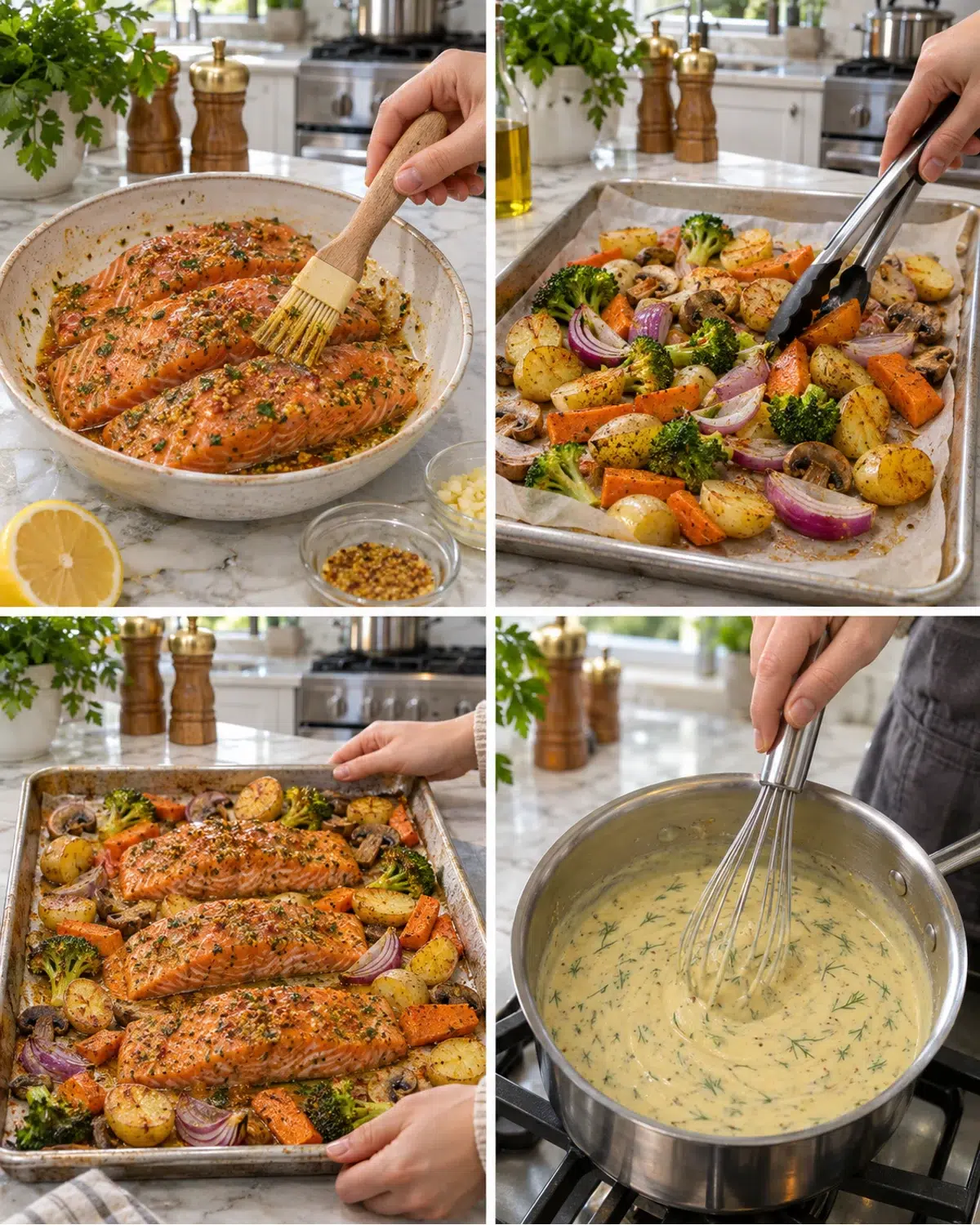
Pat the salmon fillets dry. In a shallow bowl, combine 4 tablespoons olive oil, the juice of half a small lemon, mustard, grated garlic, chopped parsley, black pepper, sweet paprika, crushed red pepper flakes, and salt. Coat the salmon on all sides, cover, and refrigerate for 30 minutes.
Keep the marinade that touched raw salmon away from ready-to-eat foods, and do not reuse it unless it is boiled first, following the FDA’s food-safety guidance for raw-food marinades.
2. Parboil the potatoes and carrots
Preheat the oven to 400°F (200°C) and line a large rimmed baking sheet with parchment paper. Place the baby potatoes and carrots in a saucepan of lightly salted water. Bring to a boil and cook for 10–12 minutes, until just beginning to soften but not fully tender. Drain thoroughly and let excess steam escape for a few minutes.
3. Start roasting the vegetables
Combine the parboiled potatoes and carrots with the red onions, mushrooms, and broccoli. Add the paprika, garlic powder, black pepper, salt, and 4–5 tablespoons olive oil. Toss gently, then spread everything in a single layer on the prepared baking sheet. Roast for 10 minutes.
4. Add the salmon
Remove the pan from the oven and make room among the vegetables. Arrange the marinated salmon fillets on the pan, leaving a little air space around each piece. Return the pan to the oven and bake for 15–20 minutes, depending on fillet thickness, until the vegetables are browned and the salmon is cooked through.
For food safety, check the thickest part of each fillet. The FoodSafety.gov temperature chart lists 145°F (63°C) for fish. Insert the thermometer into the thickest section rather than touching the pan.
5. Make the creamy lemon dill sauce
While the salmon roasts, melt the butter in a small saucepan over medium-low heat. Add the grated garlic and cook for about 30 seconds without browning it. Whisk in the flour and cook for 1 minute.
Gradually pour in the milk while whisking continuously. Cook for 4–5 minutes, stirring often, until the sauce is smooth and lightly thickened. Stir in the mustard and sweet paprika. Remove the pan from the heat, then stir in the lemon juice and chopped dill. Season with salt and black pepper to taste.
6. Finish and serve
If you want deeper color, increase the oven to 410°F (210°C) for the final 3–5 minutes, watching the broccoli and salmon carefully. Divide the roasted vegetables among three plates, add a salmon fillet to each, and spoon the warm lemon dill mustard sauce over the fish.
How to Keep the Salmon Tender While the Vegetables Brown
The vegetables and salmon do not need the same amount of cooking time. Potatoes and carrots are dense, mushrooms contain moisture, and broccoli can brown quickly. Giving the potatoes and carrots a brief boil and the full vegetable mixture a 10-minute roasting head start solves that timing problem.
Once the salmon is added, begin checking thinner fillets at 15 minutes. Remove any fillet that reaches 145°F before the rest of the tray is ready. The vegetables can continue roasting for a few more minutes without drying out the fish. This staggered approach is also useful in this sheet pan lemon garlic salmon and keeps the meal from tasting steamed or overcooked.
How to Make a Smooth Lemon Dill Mustard Sauce
Cook the flour in the melted butter for a full minute to remove its raw taste, but keep the heat moderate so the garlic and butter do not brown. Add the milk in several small additions, whisking each one smooth before pouring in more.
The lemon juice and dill go in after the saucepan leaves the heat. Boiling an acidic milk sauce can make it look grainy, while gentle finishing keeps it creamy. If it thickens too much before serving, whisk in a small splash of milk. If it seems thin, return it to low heat for another minute while stirring.
Tips for the Best Baked Salmon with Roasted Vegetables
- Dry the salmon first. Removing surface moisture helps the marinade cling instead of sliding into the pan.
- Cut vegetables evenly. Similar-sized potato halves, carrot slices, mushroom pieces, and broccoli florets roast more consistently.
- Drain the roots well. Wet potatoes and carrots steam on the tray instead of developing golden edges.
- Use a large pan. Crowded vegetables release moisture and stay soft. Use two pans if your baking sheet is small.
- Add lemon off the heat. This protects the texture of the milk-based sauce and keeps the citrus flavor fresh.
- Check temperature, not color alone. Salmon thickness varies, so an instant-read thermometer is more reliable than a fixed time.
What to Serve with This Salmon Dinner
This baked salmon with roasted vegetables recipe already includes potatoes, vegetables, salmon, and sauce, so it can be served without an additional side. A simple leafy salad or crusty bread works well if you want something extra for the sauce.
For other bright salmon dinners, try this easy lemon salmon or the simpler easy baked salmon recipe. If you want a different marinade, baked or broiled miso salmon offers a savory alternative. For a richer sauce, the creamy one-pan Marry Me salmon is another useful option, while this grilled salmon salad makes a lighter meal. For a sweet-and-savory bowl, try sticky honey soy salmon bowls; for a cozy pasta dinner, see this creamy Tuscan salmon penne.
Storage and Reheating
For baked salmon with roasted vegetables leftovers, store the salmon, vegetables, and sauce in separate airtight containers when possible. Refrigerate them within two hours and use within 3–4 days, consistent with the USDA’s cooked-fish storage guidance. Keep the refrigerator at 40°F (4°C) or below, as explained in the FDA’s refrigerator food-safety guide. Keeping the sauce separate prevents the roasted vegetables from becoming soft.
Reheat the vegetables in a 375°F oven or air fryer until hot and crisp at the edges. Warm the salmon gently, covered, so it does not dry out. Reheat the sauce over low heat with a splash of milk, whisking until smooth. Leftovers should reach 165°F (74°C), as listed in the FDA’s safe food-handling temperature chart.
Frequently Asked Questions
Can I use frozen salmon?
Yes. Thaw it completely in the refrigerator and pat it dry before adding the marinade. Avoid thawing salmon on the counter; the USDA explains the refrigerator, cold-water, and microwave options in its safe thawing guidance.
Do I have to parboil the potatoes and carrots?
It is strongly recommended. Without that head start, the salmon and broccoli may finish before the centers of the potatoes and carrots become tender.
Can I make the sauce ahead?
Yes. Prepare it, cool it, and refrigerate it in a covered container. Reheat gently with a little milk and add a small amount of fresh dill after warming if you want to refresh the flavor.
Why did my sauce become lumpy?
The milk may have been added too quickly or the flour may not have been whisked evenly into the butter. Add the milk gradually and whisk continuously, especially during the first few additions.
Can I reduce the lemon flavor?
Yes. The recipe allows slightly less than the juice of half a small lemon in the sauce. Start with a smaller amount, taste, and add more only if needed.
How do I know when the salmon is done?
The flesh should turn opaque and separate easily, and the thickest part should reach 145°F (63°C). Use a clean thermometer and check each fillet because their thickness can vary.
Baked Salmon with Roasted Vegetables Recipe
Marinated oven-baked salmon served with colorful roasted vegetables and a smooth lemon dill mustard sauce.
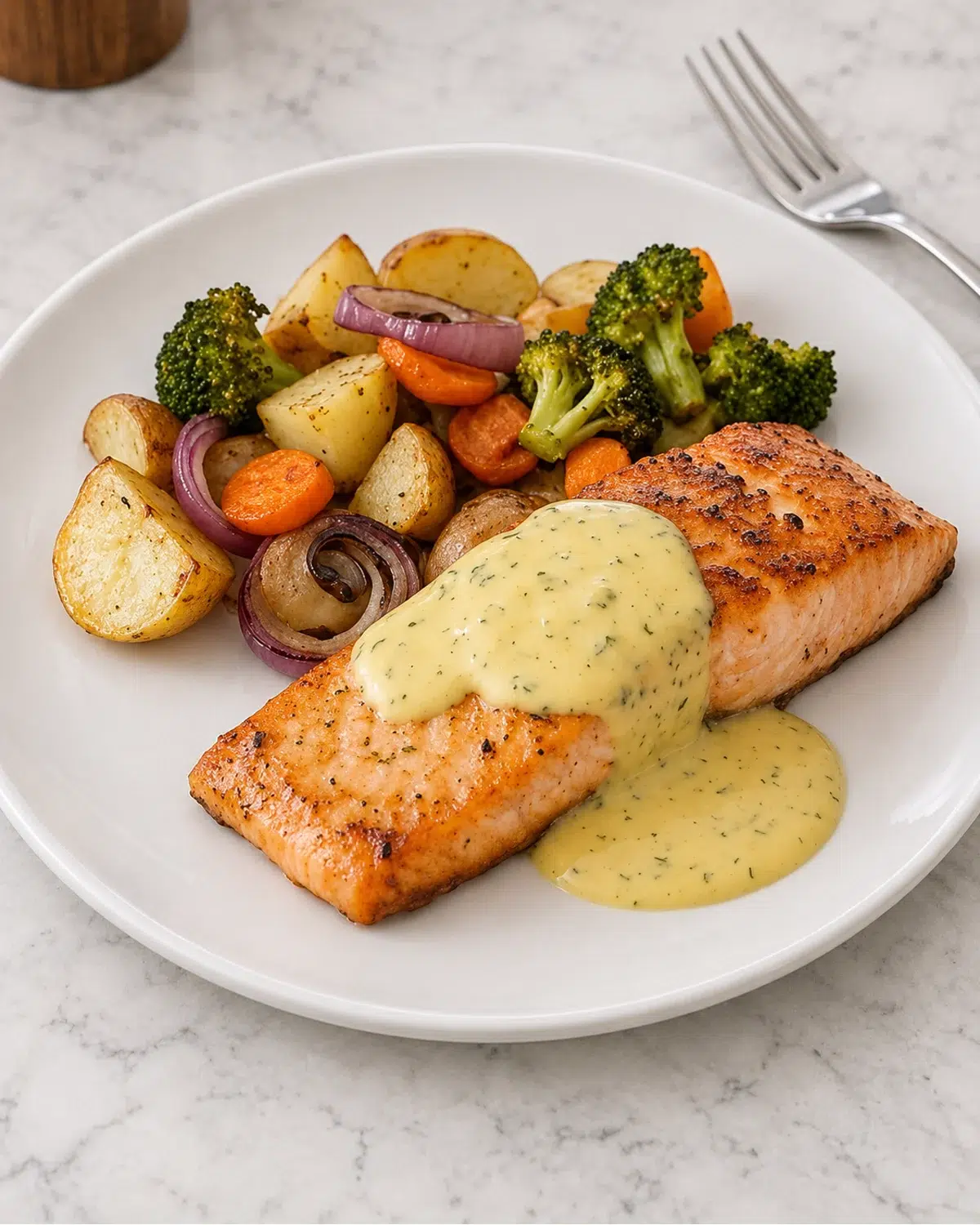
Oven-Baked Salmon with Roasted Vegetables and Lemon Dill Mustard Sauce
Ingredients
Method
- Pat the salmon dry. Mix the olive oil, lemon juice, mustard, garlic, parsley, black pepper, paprika, crushed red pepper flakes, and salt. Coat the salmon, cover, and refrigerate for 30 minutes.
- Preheat the oven to 400°F (200°C). Parboil the potatoes and carrots for 10–12 minutes, then drain well.
- Toss all vegetables with paprika, garlic powder, black pepper, salt, and olive oil. Roast in one layer for 10 minutes.
- Add the salmon to the tray and bake for 15–20 minutes, until the vegetables are browned and the salmon reaches 145°F (63°C).
- Melt the butter, cook the garlic for 30 seconds, whisk in the flour for 1 minute, then gradually whisk in the milk. Cook 4–5 minutes, stir in mustard and paprika, remove from heat, and add lemon juice and dill. Season to taste.
- If desired, raise the oven to 410°F (210°C) for the final 3–5 minutes. Plate the vegetables and salmon and spoon the sauce over the fish.
Notes

Taya Bennett is the founder of YumEasyMeals, a platform dedicated to easy, delicious, and quick-to-prepare recipes for busy families. Passionate about everyday cooking, she simplifies meals with practical, accessible, and always delicious ideas.
Discover her creations at: yumeasymeals.com