There’s nothing quite like pizza night, bringing everyone together for a delicious, comforting meal. But for those of us navigating dietary restrictions, especially a vegan lifestyle, finding a truly satisfying pizza can sometimes feel like a quest. I’m here to tell you that the search ends now. My ultimate Vegan Pizza recipe is not only incredibly delicious and easy to make at home, but it also features a unique twist that elevates it to gourmet status: a delicate drizzle of balsamic glaze. Get ready to master a perfect chewy crust, layered with vibrant toppings, and that sophisticated finishing touch. This recipe will guide you through creating a memorable vegan pizza experience.
Why You’ll Love This Vegan Pizza Recipe
This recipe for Vegan Pizza stands out for so many reasons. The balsamic glaze is truly the star. Its sweet and tangy notes cut through the richness of the vegan cheese and savory toppings, creating a beautifully balanced flavor profile. This adds an unexpected depth and complexity, transforming a simple pizza into something truly special and restaurant-quality.
Beyond the glaze, you’ll adore the chewy crust we create and the vibrant, flavorful toppings. This recipe is easy to make at home, making it perfect for your next family pizza night. It is fully customizable, allowing you to cater to everyone’s preferences. It’s ideal for those following vegan and vegetarian diets, demonstrating how truly satisfying plant-based eating can be. Even if you’re a beginner cook, you’ll find this recipe approachable and impressive.
Ingredients Needed
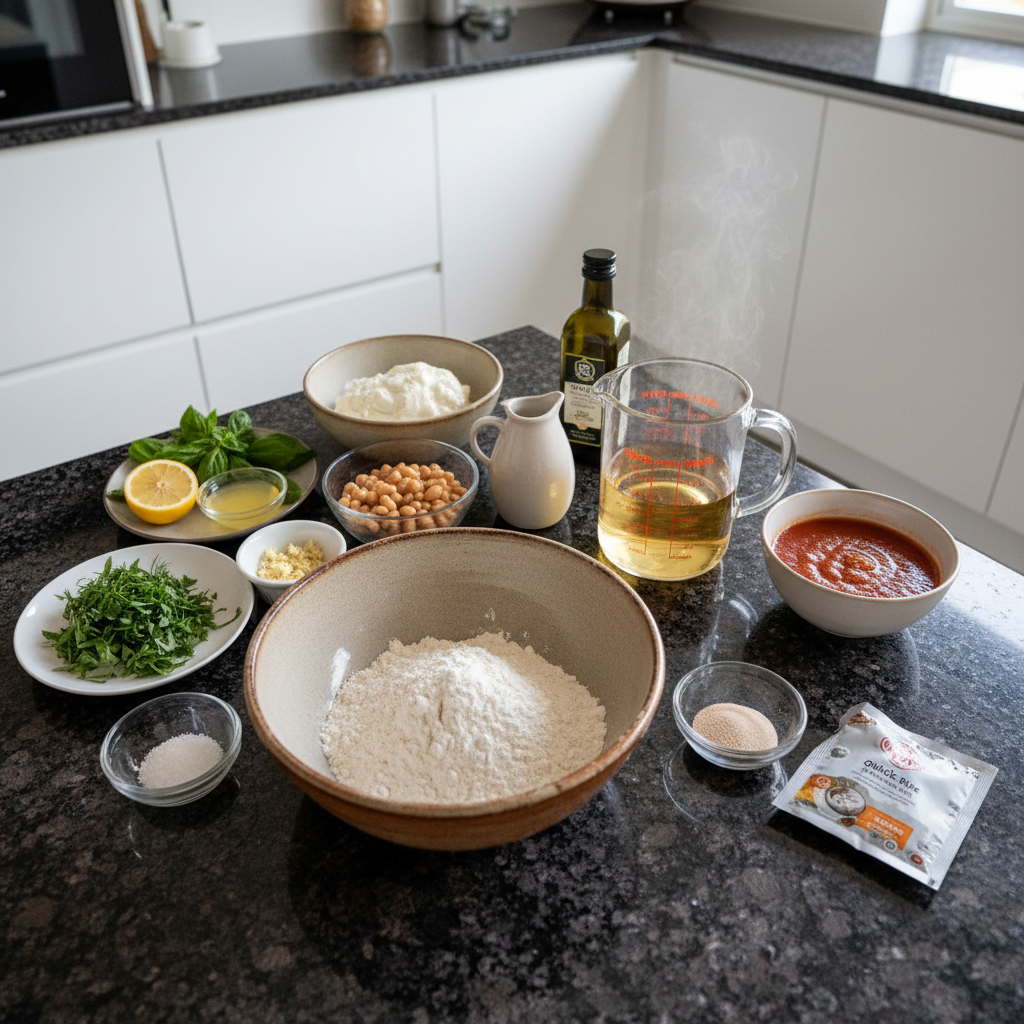
3 1/2 cups (440 grams) 00 flour or all-purpose flour or bread flour, plus more for kneading
1 packet (2.5 tsp) quick rise yeast
1 1/3 cup (320 mL) water, heated to 110F
1 tsp sea salt
1 tbsp olive oil
1 cup-1 2/3 cup your favorite pizza sauce
1 batch homemade vegan mozzarella cheese or store bought vegan cheese
Fresh basil for garnish
For the Garlicky White Beans:
1/2 cup cannellini beans
3 cloves garlic, minced
2 tbsp olive oil
Juice from 1 lemon
1 tbsp fresh dill, chopped
Sea salt + pepper to taste
Additional toppings: tomato sauce, vegan pesto, olives, mushrooms, vegan cheese
Ingredient Notes & Substitutions
Flour Types: Choosing the right flour makes a difference for your vegan pizza crust. 00 flour is very finely milled, resulting in a super tender and slightly crispy crust, reminiscent of authentic Neapolitan pizza. All-purpose flour is a great everyday option, yielding a good balance of chewiness and crispness. Bread flour has a higher protein content, giving you a chewier, more substantial crust with excellent structure. Feel free to use whichever you have on hand or prefer for your desired texture.
Yeast: This recipe calls for quick rise yeast, which you can add directly to your dry ingredients without proofing. If you only have active dry yeast, you’ll need to activate it first. Simply dissolve it in the warm water with a pinch of sugar for 5-10 minutes until it becomes foamy. Always use a kitchen thermometer to ensure your water is precisely 110F; too cold, and the yeast won’t activate, too hot, and it will kill the yeast. This precise temperature is crucial for a perfectly risen pizza dough.
Vegan Mozzarella: The world of vegan cheese has come a long way. For an exceptional melt, I often make my own homemade vegan mozzarella. If you prefer store-bought, brands like Violife, Miyoko’s Kitchen, or Daiya offer great options. To encourage a better melt, shred your cheese finely or add a tiny splash of olive oil to the cheese before baking. Many nut-free and soy-free vegan cheese options are also available, ensuring everyone can enjoy this delicious vegan pizza. If you’re looking for another fantastic dairy-free cheese option, check out my recipe for the best vegan parmesan cheese.
Olive Oil: For the best flavor in your pizza dough and a rich aroma, I always recommend using a high-quality extra virgin olive oil. It makes a subtle but noticeable difference in the final taste.
Cannellini Beans: These creamy white beans are fantastic in the garlicky white bean topping. If you can’t find cannellini beans, great northern beans or navy beans make excellent alternatives. They will provide a similar texture and mild flavor.
How to Make Vegan Pizza
Step 1: Prepare the Dough
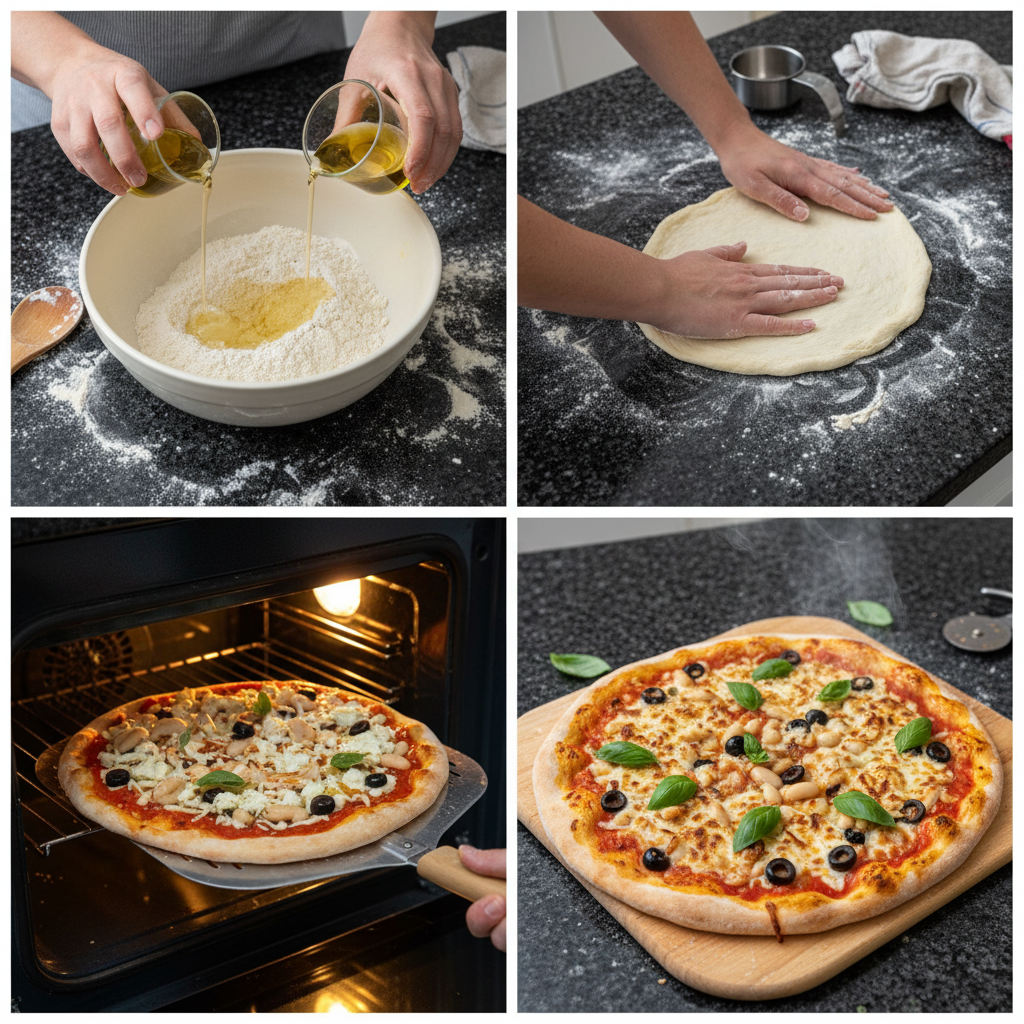
In a stand mixer bowl or a large bowl, whisk together the flour, sugar, salt, and quick rise yeast. If you are using a stand mixer, attach the dough attachment. If mixing by hand, grab a large wooden spoon. Pour in the hot water and olive oil, then begin mixing the dough. If you are using a stand mixer, mix the dough on medium-high speed for 7-9 minutes. Otherwise, knead the dough vigorously in the bowl. At this stage, the dough should appear slightly shaggy and feel tacky to the touch.
Lightly flour a clean surface and transfer the dough onto it. Gently knead the dough for 2-3 minutes. You’ll notice it becoming less tacky and wonderfully smooth and elastic under your hands. Place the smooth dough ball into an oiled bowl, cover it with a clean cloth or plastic wrap, and allow the dough to double in size. This usually takes about an hour or two in a warm area, ideally at least 85F. A great tip is to use your oven with just the light on to create this perfect warm environment. A common mistake is not allowing enough time for the dough to rise properly, which results in a dense crust.
Step 2: Shape the Pizza
Preheat your oven to a hot 475F. Once your pizza dough has wonderfully doubled in size, lightly punch it down to release the air. Re-flour a clean surface or lay out a piece of parchment paper; this will be your workspace for forming the pizza dough. Carefully remove the dough from the bowl and divide it in half. If you plan to freeze the other half of the dough for a future pizza night, please see my blog post for detailed freezing instructions.
For the first pizza, begin to gently form the dough into a disk shape. Place the pizza dough on your floured parchment paper or lightly floured surface, and carefully push the middle of the dough out with your fingertips. Be careful not to stretch the dough too aggressively. Watch for the dough to become thin and even across the surface. Avoid using a rolling pin, as this can deflate the precious air bubbles that give your crust its texture. Your pizza should measure about 18 inches in diameter. Repeat this process for the remaining dough ball.
Step 3: Add Toppings
Now for the fun part: toppings! Spread about 1/2 to 2/3 cup of your favorite pizza sauce evenly over the dough, leaving a small border for the crust. Then, generously sprinkle your vegan cheese on top. If you’re making the garlicky white beans, combine the cannellini beans, minced garlic, olive oil, fresh lemon juice, chopped dill, and sea salt and pepper to taste in a small bowl. Mix them well. Then, spoon this delicious mixture onto your pizza as an additional topping. You can watch me do it in this video here for a better visual!
Step 4: Bake the Pizza
Carefully place your topped pizzas onto a pizza tray or preheated pizza stone. Bake them in the 475F oven for 10-12 minutes, or until the vegan cheese has melted beautifully and the edges of the dough are lightly golden brown and look wonderfully crispy. The internal temperature of a fully baked crust should be around 200-210F. Remove the pizzas from the oven.
Step 5: Garnish and Serve
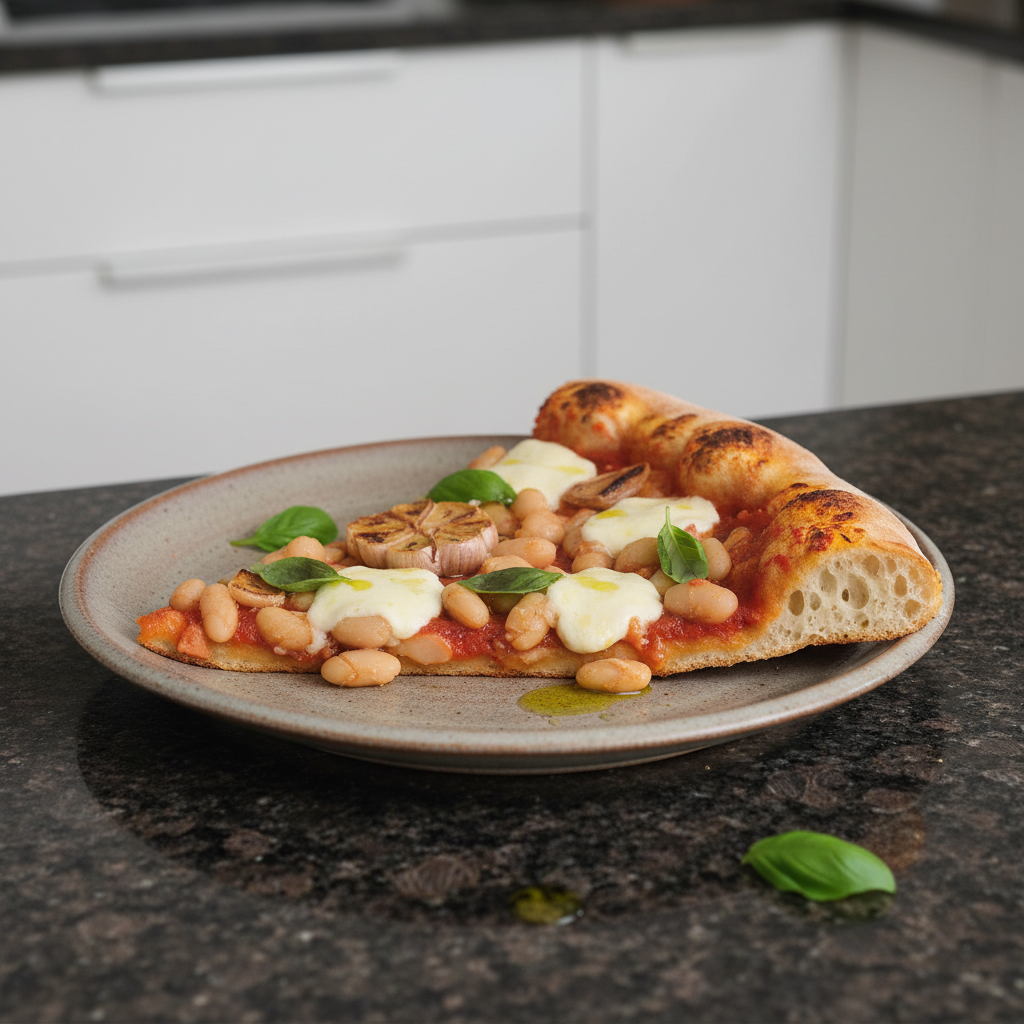
Once out of the oven, immediately garnish your Vegan Pizza with fresh basil leaves. The final, magical touch is a drizzle of balsamic glaze. Then, slice and enjoy your incredible creation!
Step 6: Grilling Instructions
For a different take, you can grill your Vegan Pizza. First, heat your grill to a high temperature and arrange all your toppings, like sauce and vegan mozzarella, conveniently near the grill. Lightly brush your prepared pizza dough with a little olive oil. Once the grill reaches 500F, carefully place the dough directly onto the grates. Cover the grill and allow the dough to cook for 2-3 minutes. You will see it puff up and develop grill marks. Then, flip the dough and let it cook for another minute.
Remove the partially cooked dough from the grill and transfer it onto a baking sheet. Quickly add all your desired toppings. Place the topped dough back onto the grill and cook for another 3 minutes until the cheese melts. If the cheese isn’t melting quickly enough but your crust is perfectly cooked, transfer the pizza to an oven preheated to 475F for about 5 minutes. Remove your grilled pizza from the oven and top with fresh basil and an extra drizzle of olive oil if you desire, then serve immediately!
Achieving the Perfect Pizza Crust
The foundation of any great pizza, especially a Vegan Pizza, is its crust. The choice of flour significantly impacts the final texture. Using 00 flour will give you a very tender, slightly crispy crust with a delicate chew, ideal for a classic Italian style. All-purpose flour provides a reliable, balanced texture that is both chewy and a bit crisp. Bread flour, with its higher protein content, yields a chewier, more robust crust that has great structure.
Troubleshooting common dough problems can save your pizza night. If your dough is too sticky after mixing, add a little more flour, one tablespoon at a time, until it becomes manageable and easy to handle without excessive sticking. If your dough isn’t rising, the most common culprits are incorrect water temperature or expired yeast. Always ensure your water is heated to precisely 110F using a kitchen thermometer, and double-check your yeast’s expiration date. Old yeast simply won’t activate. If your dough turns out tough, it’s usually a sign of over-kneading. Knead just until it’s smooth and elastic, but not overly developed.
For an extra crispy pizza, I highly recommend par-baking the crust. To do this, simply bake the shaped, untopped crust for 5-7 minutes at 475F until it is lightly set but not browned. Then remove it, add your toppings, and finish baking. This method creates a sturdier base that can withstand wetter toppings and prevents a soggy bottom. A perfectly baked pizza dough, once cooked with toppings, will typically reach an internal temperature of around 200-210F when measured with a food thermometer.
Pro Tips & Troubleshooting
Pro Tips
Use a kitchen thermometer to ensure the water is heated to 110F for optimal yeast activation. This is a critical step for a light and airy pizza dough.
When shaping the pizza, do not use a rolling pin. Instead, gently stretch it with your hands. This preserves the air bubbles within the dough, leading to a much better texture for your Vegan Pizza.
For a crispier crust, preheat a pizza stone or an inverted baking sheet in the oven for at least 30 minutes before baking the pizza. This gives the dough an initial burst of heat.
Do not overload the pizza with toppings, as this can make the crust soggy and prevent it from cooking evenly. Less is often more for a truly great pizza.
Drizzle the balsamic glaze after baking to preserve its vibrant flavor and prevent it from burning in the oven.
Experiment with different vegan cheeses and toppings to find your favorite combinations. The possibilities for Vegan Pizza are endless.
Brush the crust edges with olive oil before baking for a beautiful golden-brown finish and a little extra flavor.
Common Mistakes to Avoid
Not using the proper temperature water is a frequent mistake. Water that is too cold will prevent the yeast from blooming, and water that is too hot can kill the yeast, both resulting in a dense, flat crust.
Over-kneading the dough can lead to a tough, chewy crust. Knead just until the dough is smooth and elastic.
Using expired yeast is another common pitfall. Always check the expiration date, as old yeast won’t activate properly, and your dough won’t rise.
Adding too much flour results in a dry and dense crust that is difficult to work with and lacks a pleasant chew.
Overbaking the pizza can lead to a burnt crust and dry toppings. Keep a close eye on it, especially during the last few minutes.
Adding the balsamic glaze before baking is a mistake to avoid, as the high heat can cause it to burn and lose its complex flavor profile.
Serving & Storage
Serving Ideas
My Vegan Pizza with balsamic glaze pairs wonderfully with a variety of sides. Serve it alongside a freshly made garlic bread or a flavorful vegan focaccia for an extra treat. A bowl of hearty Tuscan white bean soup makes a comforting accompaniment, especially on a cooler evening. For a touch of freshness, a crisp green salad with a light vinaigrette perfectly balances the richness of the pizza. Don’t forget to offer a selection of dipping sauces, such as classic marinara, bright vegan pesto, or even more balsamic vinaigrette, for an interactive meal. Garnish with additional fresh basil leaves or a sprinkle of red pepper flakes for a little kick.
Storage and Make-Ahead
If you have any delicious leftovers from your Vegan Pizza, store them in an airtight container in the refrigerator for up to 3 days. For longer storage, individual slices can be wrapped well and frozen for up to 2 months. To reheat, simply warm them in the oven or microwave until hot. You can also prepare the pizza dough ahead of time. It can be stored in the refrigerator for up to 24 hours, or frozen for extended storage. Just remember to thaw it completely in the refrigerator before you plan to use it.
Conclusion
I hope you are now inspired to create the most incredible Vegan Pizza right in your own kitchen. This recipe delivers a wonderfully chewy crust, incredibly flavorful toppings, and that special, unexpected twist of balsamic glaze that truly elevates the experience. It is easy to follow and infinitely customizable to your preferences, whether you prefer classic veggie toppings or something more adventurous like the garlicky white beans.
Don’t hesitate to experiment with different toppings and serving suggestions to make it uniquely yours. Print this recipe and share it with your friends and family. I promise, it will become a new favorite for pizza night!
FAQ
Is pizza dough vegan?
Many pizza dough recipes are naturally vegan, using only flour, water, yeast, salt, and olive oil. However, it is always best to check the ingredients list if you are buying pre-made dough, to ensure that it does not contain any dairy or eggs. This recipe provides a completely vegan pizza dough recipe for you to enjoy.
What vegan cheese should I use and how do I ensure it melts well?
There are many great vegan cheese options available on the market today that melt wonderfully, such as Violife, Miyoko’s Kitchen, and Daiya. To help vegan cheese melt better, I recommend shredding it finely, using a blend of different types for complexity, or adding a little bit of olive oil directly to the shredded cheese before you sprinkle it on your pizza and bake.
What can I use instead of a pizza stone?
If you do not have a pizza stone, there are several excellent alternatives you can use to achieve a crispy crust. A sturdy baking sheet, a cast iron skillet, or even an inverted heavy-duty baking sheet can work effectively. The key is to preheat your chosen alternative in the oven before placing the pizza on it. This initial blast of heat helps to crisp up the bottom of the crust.
How to freeze pizza dough for later use?
To freeze pizza dough for future use, first, let it complete its first rise. Then, punch it down, shape it into a ball, and wrap it tightly in plastic wrap. After wrapping, place the dough ball into a freezer-safe bag or container, removing as much air as possible. It can be frozen for up to 2 months. When you are ready to use it, thaw the dough overnight in the refrigerator, and then allow it to come to room temperature before shaping and baking.
What are some alternative vegan pizza topping ideas?
Get wonderfully creative with your vegan pizza toppings! Some delicious options include a medley of roasted peppers, sweet roasted tomatoes, fresh spinach, tangy artichoke hearts, various olives, sautéed mushrooms, and a swirl of vibrant vegan pesto. Don’t forget, a drizzle of balsamic glaze after baking is always a fantastic addition for that extra layer of flavor and sophistication.
How do I prevent my dough from sticking during shaping?
To prevent your pizza dough from sticking while you are shaping it, make sure to flour your work surface generously. Also, lightly flour your hands. Using a piece of parchment paper underneath your dough can also be very helpful, as it provides a non-stick surface and makes transferring the pizza to the oven much easier.
Can I use active dry yeast instead of quick rise yeast?
Yes, you can certainly use active dry yeast instead of quick rise yeast in this Vegan Pizza recipe. The main difference is that active dry yeast needs to be proofed first. To do this, mix the active dry yeast with the warm water and a pinch of sugar, then let it sit for 5-10 minutes until it becomes foamy. Once activated, add it to your flour mixture as directed in the recipe. You might find that the dough requires a slightly longer rising time with active dry yeast compared to quick rise yeast.
The Best Vegan Pizza Recipe with Balsamic Glaze
Ingredients
Equipment
Method
- In a stand mixer bowl or a large bowl, whisk together the flour, sugar, salt, and quick rise yeast. If you are using a stand mixer, attach the dough attachment. If mixing by hand, grab a large wooden spoon. Pour in the hot water and olive oil, then begin mixing the dough. If you are using a stand mixer, mix the dough on medium-high speed for 7-9 minutes. Otherwise, knead the dough vigorously in the bowl. At this stage, the dough should appear slightly shaggy and feel tacky to the touch.
- Lightly flour a clean surface and transfer the dough onto it. Gently knead the dough for 2-3 minutes. You'll notice it becoming less tacky and wonderfully smooth and elastic under your hands. Place the smooth dough ball into an oiled bowl, cover it with a clean cloth or plastic wrap, and allow the dough to double in size. This usually takes about an hour or two in a warm area, ideally at least 85F. A great tip is to use your oven with just the light on to create this perfect warm environment. A common mistake is not allowing enough time for the dough to rise properly, which results in a dense crust.
- Preheat your oven to a hot 475F. Once your pizza dough has wonderfully doubled in size, lightly punch it down to release the air. Re-flour a clean surface or lay out a piece of parchment paper; this will be your workspace for forming the pizza dough. Carefully remove the dough from the bowl and divide it in half. If you plan to freeze the other half of the dough for a future pizza night, please see my blog post for detailed freezing instructions.
- For the first pizza, begin to gently form the dough into a disk shape. Place the pizza dough on your floured parchment paper or lightly floured surface, and carefully push the middle of the dough out with your fingertips. Be careful not to stretch the dough too aggressively. Watch for the dough to become thin and even across the surface. Avoid using a rolling pin, as this can deflate the precious air bubbles that give your crust its texture. Your pizza should measure about 18 inches in diameter. Repeat this process for the remaining dough ball.
- Now for the fun part: toppings! Spread about 1/2 to 2/3 cup of your favorite pizza sauce evenly over the dough, leaving a small border for the crust. Then, generously sprinkle your vegan cheese on top. If you're making the garlicky white beans, combine the cannellini beans, minced garlic, olive oil, fresh lemon juice, chopped dill, and sea salt and pepper to taste in a small bowl. Mix them well. Then, spoon this delicious mixture onto your pizza as an additional topping.
- Carefully place your topped pizzas onto a pizza tray or preheated pizza stone. Bake them in the 475F oven for 10-12 minutes, or until the vegan cheese has melted beautifully and the edges of the dough are lightly golden brown and look wonderfully crispy. The internal temperature of a fully baked crust should be around 200-210F. Remove the pizzas from the oven.
- Once out of the oven, immediately garnish your Vegan Pizza with fresh basil leaves. The final, magical touch is a drizzle of balsamic glaze. Then, slice and enjoy your incredible creation!
- For a different take, you can grill your Vegan Pizza. First, heat your grill to a high temperature and arrange all your toppings, like sauce and vegan mozzarella, conveniently near the grill. Lightly brush your prepared pizza dough with a little olive oil. Once the grill reaches 500F, carefully place the dough directly onto the grates. Cover the grill and allow the dough to cook for 2-3 minutes. You will see it puff up and develop grill marks. Then, flip the dough and let it cook for another minute.
- Remove the partially cooked dough from the grill and transfer it onto a baking sheet. Quickly add all your desired toppings. Place the topped dough back onto the grill and cook for another 3 minutes until the cheese melts. If the cheese isn’t melting quickly enough but your crust is perfectly cooked, transfer the pizza to an oven preheated to 475F for about 5 minutes. Remove your grilled pizza from the oven and top with fresh basil and an extra drizzle of olive oil if you desire, then serve immediately!
Notes

Taya Bennett is the founder of YumEasyMeals, a platform dedicated to easy, delicious, and quick-to-prepare recipes for busy families. Passionate about everyday cooking, she simplifies meals with practical, accessible, and always delicious ideas.
Discover her creations at: yumeasymeals.com