
There’s nothing quite like a steaming bowl of hearty soup to chase away the chill of a cold day, and for me, a classic beef barley soup recipe hits all the right notes. It’s a dish that evokes warmth, comfort, and the promise of a satisfying family dinner. This isn’t just any beef barley soup, though; I’ve got a special twist that transforms humble ingredients into a deeply flavorful, aromatic masterpiece. Get ready to master a robust, soul-warming soup that’s surprisingly easy to make and guaranteed to become a household favorite.
Why You’ll Love This Hearty Beef Barley Soup Recipe
My beef barley soup recipe is built on the foundation of classic comfort, but I’ve added a chef’s secret to truly elevate its flavor profile, making it unlike any you’ve tried before. This unique approach ensures every spoonful is bursting with incredible depth.
Bloomed Thyme for Aromatic Bliss: My signature twist involves blooming the dried thyme in hot olive oil right along with the onions and garlic. This simple step is a game-changer! When dried herbs are gently heated in fat, their volatile oils are released, intensifying their aroma and flavor. This technique, often referred to as blooming spices, significantly enhances their aromatic compounds. The result is a much more pronounced, beautifully fragrant herbal note that permeates the entire soup, creating an inviting scent that will fill your kitchen.
Red Wine Deglazing for Depth: Next, if you choose to use it, we’ll deglaze the pot with red wine. This crucial step lifts all those delicious browned bits from the bottom of the pot, incorporating them back into the liquid. Deglazing a pan adds layers of complex flavor and a subtle acidity that brightens the entire beef broth, preventing the soup from tasting flat. It’s a nuanced touch that truly distinguishes this hearty comfort food.
Perfect for Any Occasion: These techniques transform a simple soup into a deeply flavorful and aromatic dish. It’s the perfect comfort food for chilly evenings, a satisfying and hearty family dinner, and even an excellent option for meal prep thanks to its fantastic keeping qualities.
Ingredients Needed
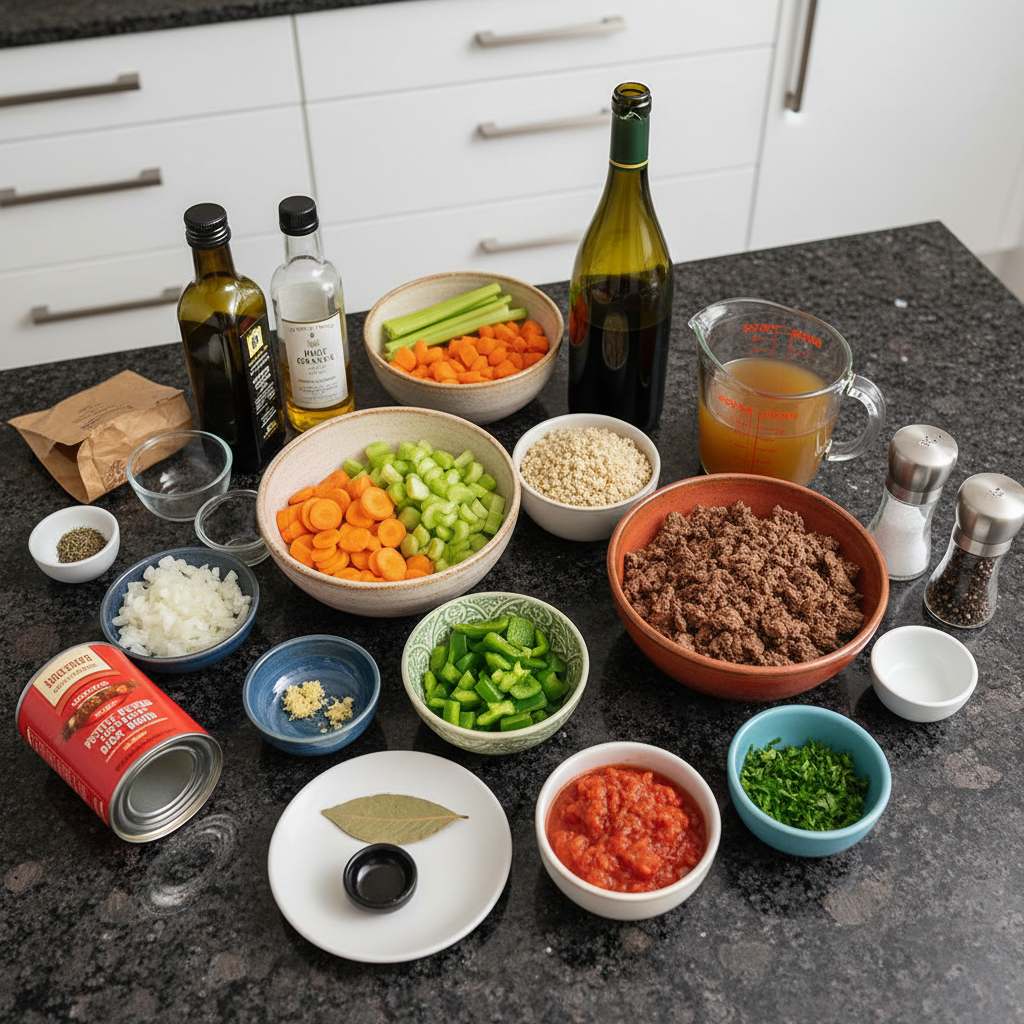
Gather these fresh and flavorful ingredients to bring this incredible soup to life in your kitchen.
- 1 tablespoon olive oil
- 1 onion (chopped)
- 1 clove garlic (minced)
- 2 carrots (sliced)
- 1 rib celery (sliced)
- 2 cups cooked beef
- 6 cups reduced sodium beef broth
- 14.5 ounces canned petite diced tomatoes (with juices, 1 can)
- ½ green bell pepper (diced)
- ⅔ cup pearl barley
- 1 tablespoon Worcestershire sauce
- ¼ teaspoon dried thyme leaves
- 1 packet beef gravy mix
- 1 bay leaf
- 2 tablespoons red wine (optional)
- 2 tablespoons chopped fresh parsley (or 2 teaspoons dried)
- salt and black pepper (to taste)
Ingredient Notes & Substitutions
Understanding your ingredients is key to great cooking. Here are some insights and alternatives for this beef barley soup recipe:
Beef: While my recipe calls for pre-cooked beef for convenience, you have many options. Stew beef (like beef chuck) or a chuck roast, slowly braised until tender, offer rich flavor. Leftover pot roast or steak works beautifully. If starting with raw stew meat, be sure to brown it thoroughly before adding other ingredients to develop deep, savory notes. Cost considerations often make chuck or round roasts excellent, budget-friendly choices for tender, flavorful results in soups.
Barley: We’re using pearl barley in this recipe, which is the most common type for soups. It’s been hulled and polished, making it less chewy and faster-cooking than hulled barley. If you opt for hulled barley, be aware it will significantly increase cooking time due to its intact bran layer, offering a chewier texture and more fiber.
Broth: I specify reduced sodium beef broth for a reason. This allows us to control the seasoning precisely. For the absolute best flavor, nothing beats homemade beef stock. If you need a truly low sodium option, look for no-salt-added broths and adjust seasoning with herbs and spices instead of just salt.
Vegetables: The classic trio of onions, carrots, and celery (often called a mirepoix) forms the base, but feel free to add more! Hearty root vegetables like diced potatoes, parsnips, or even turnips are wonderful additions. Leafy greens such as spinach or kale can be stirred in during the last 10 minutes of simmering, and small broccoli florets add extra nutrition and texture.
Red Wine: The red wine is optional but highly recommended for its ability to add a layer of complexity and depth. If you prefer to omit alcohol, a splash of extra beef broth or a teaspoon of balsamic vinegar can provide a similar subtle acidity and richness.
Thickening: The beef gravy mix helps thicken the soup slightly and contributes a savory flavor. If you want an even thicker soup, you can create a simple cornstarch or flour slurry (equal parts cornstarch/flour and cold water) and stir it in during the last few minutes of simmering.
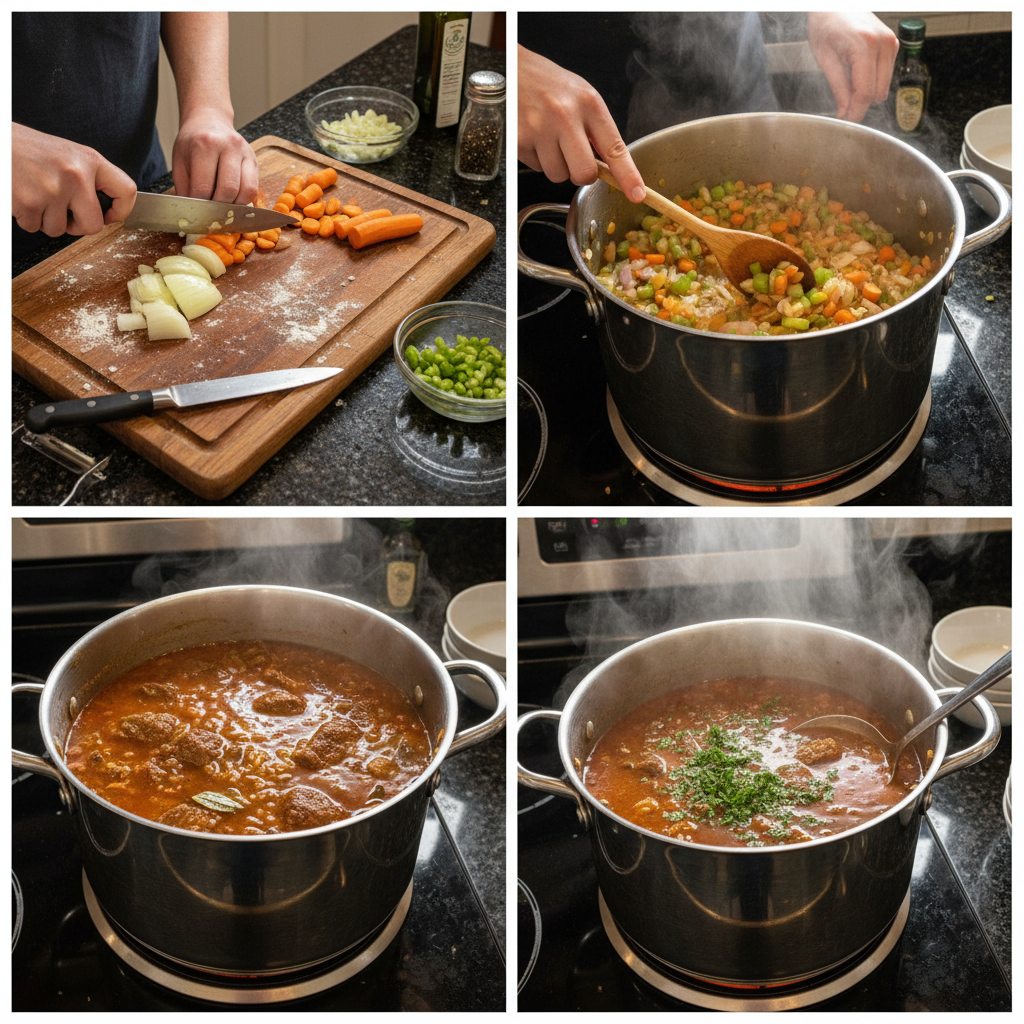
How to Make Hearty Beef Barley Soup
Follow these steps closely to create a truly unforgettable beef barley soup that will warm you from the inside out.
Phase 1: Building the Flavor Base
Heat the olive oil in a large pot or Dutch oven over medium heat. Add the chopped onion and minced garlic. As soon as they hit the hot oil, sprinkle in the ¼ teaspoon dried thyme leaves. Sauté the mixture for 5-7 minutes, stirring occasionally, until the onions are softened and translucent and the garlic is fragrant. You’ll notice the incredible aroma of the bloomed thyme filling your kitchen – this is our flavor secret at work!
Phase 2: Deglazing and Combining Ingredients
If you’re using the red wine, now is the time to add it. Pour in the 2 tablespoons red wine and use a wooden spoon to scrape up any delicious browned bits from the bottom of the pot. Let it simmer for 1-2 minutes until the alcohol scent dissipates. This deglazing step boosts the overall depth of flavor significantly.
Next, add all the remaining ingredients to the pot: the sliced carrots, sliced celery, cooked beef, reduced sodium beef broth, canned petite diced tomatoes (with their juices), diced green bell pepper, pearl barley, Worcestershire sauce, beef gravy mix, and the bay leaf. Stir everything well to combine.
Phase 3: Simmering to Perfection
Bring the soup mixture to a full boil over medium-high heat. Once boiling, reduce the heat to low, cover the pot, and let it simmer gently for about 40-50 minutes. The key is to simmer until the barley is cooked through – it should be plump and tender with a slight chew, not hard or crunchy. If you’re starting with raw beef, ensure it’s fork-tender by the end of the simmering time.
Phase 4: Finishing Touches and Serving
Once the soup has simmered and the barley is cooked, remove and discard the bay leaf. Stir in the chopped fresh parsley (or dried, if using). Taste the soup and season generously with salt and black pepper to your preference. Remember, broth sodium levels vary, so always taste before adding more salt.
If you desire an even thicker soup, you can make a cornstarch or flour slurry (mix 1-2 tablespoons of cornstarch or flour with an equal amount of cold water until smooth) and slowly whisk it into the simmering soup until it reaches your desired consistency. Serve hot and enjoy this incredibly hearty and flavorful beef barley soup!
Mastering Your Beef Barley Soup: Cuts, Methods & Barley Types
Let’s dive deeper into some common questions and techniques to help you truly master this beef barley soup recipe.
Choosing the Best Beef for Your Soup
For a truly exceptional beef barley soup, the cut of beef matters. While my recipe uses pre-cooked beef for convenience, you can start from scratch. Popular choices include:
- Beef Chuck (Stew Meat): This is a classic for good reason. Chuck cuts are flavorful but can be tough, requiring long, slow simmering to become fork-tender. This process breaks down connective tissue, resulting in rich, melt-in-your-mouth beef. It’s often very cost-effective.
- Round Roast: Leaner than chuck, round roast can also be used, but it’s crucial to cut it into smaller pieces and simmer it thoroughly to prevent it from becoming dry or tough.
- Short Ribs: For an incredibly rich and luxurious soup, bone-in beef short ribs are fantastic. They impart deep flavor to the broth but are a more expensive option.
If you’re starting with raw stew beef, always brown it thoroughly in your pot before adding other ingredients. This step creates a beautiful crust and develops deep, complex flavors through the Maillard reaction. Don’t skip it!
Can I use ground beef instead of stew beef? Absolutely! Ground beef is a great, quick option. Brown about 1 to 1.5 pounds of ground beef until no pink remains, then drain off any excess fat before adding it to the soup base. It will contribute a different texture but still yield a delicious, hearty soup.
Adapting for Slow Cooker & Instant Pot
This beef barley soup recipe is highly adaptable to various cooking methods:
Slow Cooker Instructions:
Making beef barley soup in a slow cooker is perfect for busy days! While you can simply dump all ingredients, I highly recommend performing the “blooming thyme” and “deglazing” steps on the stovetop first for maximum flavor before transferring everything to the slow cooker insert. If your slow cooker has a sauté function, you can do it all in one pot.
- Sauté onions, garlic, and thyme in olive oil on the stovetop. Deglaze with red wine (if using).
- Transfer to the slow cooker (or perform sauté steps directly in it).
- Add the remaining ingredients (except fresh parsley). Stir well.
- Cook on low for 6-8 hours or on high for 3-4 hours, or until the beef is tender and the barley is cooked.
- Stir in fresh parsley and adjust salt and pepper before serving.
Instant Pot Instructions:
The Instant Pot makes quick work of this hearty soup!
- Use the “Sauté” function to cook onions, garlic, and thyme in olive oil. Deglaze with red wine.
- Add all remaining ingredients (except fresh parsley and pre-cooked beef if using). If using raw stew beef, you would brown it first here as well.
- Seal the lid and cook on High Pressure. If using raw beef, set for 20-25 minutes. If using pre-cooked beef, set for 10-15 minutes to cook the barley.
- Allow for a 10-minute natural release, then quick release any remaining pressure.
- Stir in pre-cooked beef (if added separately) and fresh parsley. Taste and adjust seasoning.
Understanding Barley: Pearl vs. Hulled
The type of barley you choose will affect both cooking time and texture. This recipe calls for pearl barley, but it’s good to know your options:
- Pearl Barley: This is the most common variety found in grocery stores and what we use in this beef barley soup recipe. It has had its outer husk and bran layers removed, resulting in a quicker cooking time (typically 30-50 minutes) and a softer, less chewy texture. It still retains good fiber content.
- Hulled Barley: This is a whole grain, meaning only the outermost inedible hull has been removed, leaving the bran and germ intact. It’s more nutritious and has a chewier texture. However, it requires a significantly longer cooking time, often 60-90 minutes or more, and benefits from soaking overnight before cooking to reduce cooking time.
- Quick-Cooking Barley: This barley is pre-steamed and partially cooked, reducing its cooking time to about 10-15 minutes. While convenient, it can sometimes have a softer, less substantial texture in soups.
For this recipe’s specified cooking time, stick with pearl barley unless you are prepared to adjust your simmering duration substantially for hulled barley.
Pro Tips & Troubleshooting
Even seasoned chefs encounter moments to refine their dishes. Here are my best tips and common pitfalls to avoid for your beef barley soup recipe.
Pro Tips
- Flavor Boost (Unique Twist Reinforcement): Don’t underestimate the power of blooming the thyme in hot olive oil with the onions and garlic, then deglazing with red wine. These steps are crucial for developing maximum flavor depth in your soup.
- Homemade Stock is Gold: Whenever possible, use homemade beef stock for the best possible flavor. It adds a richness and complexity that store-bought broths often can’t match.
- Tender Beef is Key: Ensure your beef is fork-tender. If using raw stew meat, proper simmering time (low and slow) is essential for a melt-in-your-mouth texture, similar to a classic beef stew.
- Thickening Options: If you prefer a thicker soup consistency, don’t hesitate to add a cornstarch or flour slurry at the end of cooking.
- Seasoning Smartly: Always taste and adjust salt and pepper at the very end. Broth sodium levels vary, and flavors concentrate as the soup simmers.
- Vegetable Variety: Feel free to add other hearty vegetables like diced potatoes, parsnips, or leafy greens such as spinach or kale during the last 20 minutes of simmering for extra nutrition and flavor.
Common Mistakes to Avoid
- Undercooked Barley: Insufficient simmering time will result in chewy, hard barley. Always cook until the grains are plump and tender.
- Tough Beef: If you’re using raw, tougher cuts of beef, not simmering long enough will leave you with tough meat. Emphasize low and slow cooking until the beef shreds easily.
- Bland Broth: Neglecting the unique twist (blooming thyme, deglazing with red wine) can lead to a flat-tasting soup. Also, always use broth, not just water, for a flavorful base.
- Over-Seasoning: Be cautious with salt initially, especially with reduced-sodium broth, as flavors concentrate during simmering. It’s easier to add more salt later than to fix an oversalted soup.
Serving & Storage
This beef barley soup recipe is fantastic on its own, but here are some ways to enhance your meal and keep leftovers fresh.
Serving Ideas
This hearty comfort food is a meal in itself, but it pairs wonderfully with a few simple sides. I love serving it with warm, flaky buttermilk biscuits or some crusty artisan bread for dipping into the rich broth. A crisp, light side salad with a vinaigrette dressing provides a refreshing contrast to the richness of the soup. Garnish your bowls with a sprinkle of fresh, chopped parsley for a vibrant pop of color and freshness. It’s perfect for a cozy winter soup night or an easy family dinner any day of the week.
Storage and Make-Ahead
One of the best things about beef barley soup is that it tastes even better the next day as the flavors deepen and meld. It’s also an excellent make-ahead meal.
- Refrigeration: Allow the leftover soup to cool completely before transferring it to an airtight container. It will keep beautifully in the refrigerator for 3-4 days.
- Freezing: Beef barley soup freezes exceptionally well. Once cooled, portion the soup into freezer-safe containers or heavy-duty freezer bags, leaving a little headspace for expansion. It can be frozen for up to 3 months. Note that the barley may absorb more liquid upon thawing, so have some extra beef broth or water on hand when reheating.
- Reheating: To reheat from the refrigerator, simply warm gently on the stovetop over medium-low heat or in the microwave until heated through. If reheating from frozen, thaw overnight in the refrigerator first, then reheat on the stovetop. Add a splash of extra beef broth or water if the soup has become too thick, to maintain its perfect texture and flavor.
Conclusion
There you have it – my ultimate beef barley soup recipe, infused with a unique twist that promises unparalleled depth and aroma. This isn’t just a meal; it’s a comforting embrace in a bowl, perfect for bringing warmth and joy to your table. The simple steps of blooming the thyme and deglazing with red wine truly transform this classic, making it rich, hearty, and deeply satisfying.
I’m confident that with this detailed guide, even beginners can achieve fantastic results. Don’t hesitate to try some of the suggested variations or serving ideas to personalize your meal even further. I encourage you to print this beef barley soup recipe, share it with friends and family, and explore other delightful winter soup recipes on my site. Happy cooking!
FAQ
Q: What is the best beef to use for beef barley soup, and why?
For the best flavor and tenderness, I recommend beef chuck (stew meat) or chuck roast. These cuts have connective tissue that breaks down during slow simmering, resulting in rich, fall-apart beef. Pre-cooked beef is also a convenient option for quick preparation. For more details, see “Choosing the Best Beef for Your Soup” above.
Q: Can I substitute any of the ingredients in this recipe?
Yes, many ingredients are adaptable! You can experiment with different vegetables like potatoes, parsnips, or leafy greens. Ground beef can replace stew meat (brown and drain fat first). For the red wine, extra beef broth or a splash of balsamic vinegar works well as a non-alcoholic substitute. Refer to “Ingredient Notes & Substitutions” for more ideas.
Q: How do I store and reheat beef barley soup?
Store cooled leftover soup in an airtight container in the refrigerator for 3-4 days. To freeze, cool completely, portion into freezer-safe containers, and freeze for up to 3 months. Reheat gently on the stovetop or in the microwave, adding extra beef broth or water if it’s too thick. For full details, check out the “Storage and Make-Ahead” section.
Q: How do I make beef barley soup in a slow cooker or Instant Pot?
Both methods work great! For the slow cooker, sauté the onions, garlic, and thyme first on the stovetop (or in a sauté-enabled slow cooker), then combine all ingredients and cook on low for 6-8 hours or high for 3-4 hours. For the Instant Pot, use the sauté function, add ingredients, and pressure cook for 10-25 minutes depending on whether your beef is raw or pre-cooked. Specific instructions can be found in “Adapting for Slow Cooker & Instant Pot.”
Q: What are some good side dishes to serve with beef barley soup?
This hearty soup pairs wonderfully with warm buttermilk biscuits, crusty bread, or simple dinner rolls. A crisp side salad helps balance the richness. Garnish with fresh parsley for a touch of color and freshness. More serving ideas are in the “Serving Ideas” section.
Q: How can I adjust this recipe to be lower in sodium?
This recipe already calls for reduced sodium beef broth to give you control. To go even lower, use no-salt-added beef broth and be very mindful of adding extra salt during cooking. Rely on herbs and spices, especially our bloomed thyme, to build flavor before adding any salt to taste at the very end.
Q: What are the different types of barley, and which is best for soup?
The main types are pearl barley (used in this recipe), hulled barley, and quick-cooking barley. Pearl barley is most common for soup due to its faster cooking time and softer texture. Hulled barley is a whole grain, chewier, and takes longer to cook, while quick-cooking barley is very fast but can be less substantial. “Understanding Barley: Pearl vs. Hulled” provides a deeper dive.
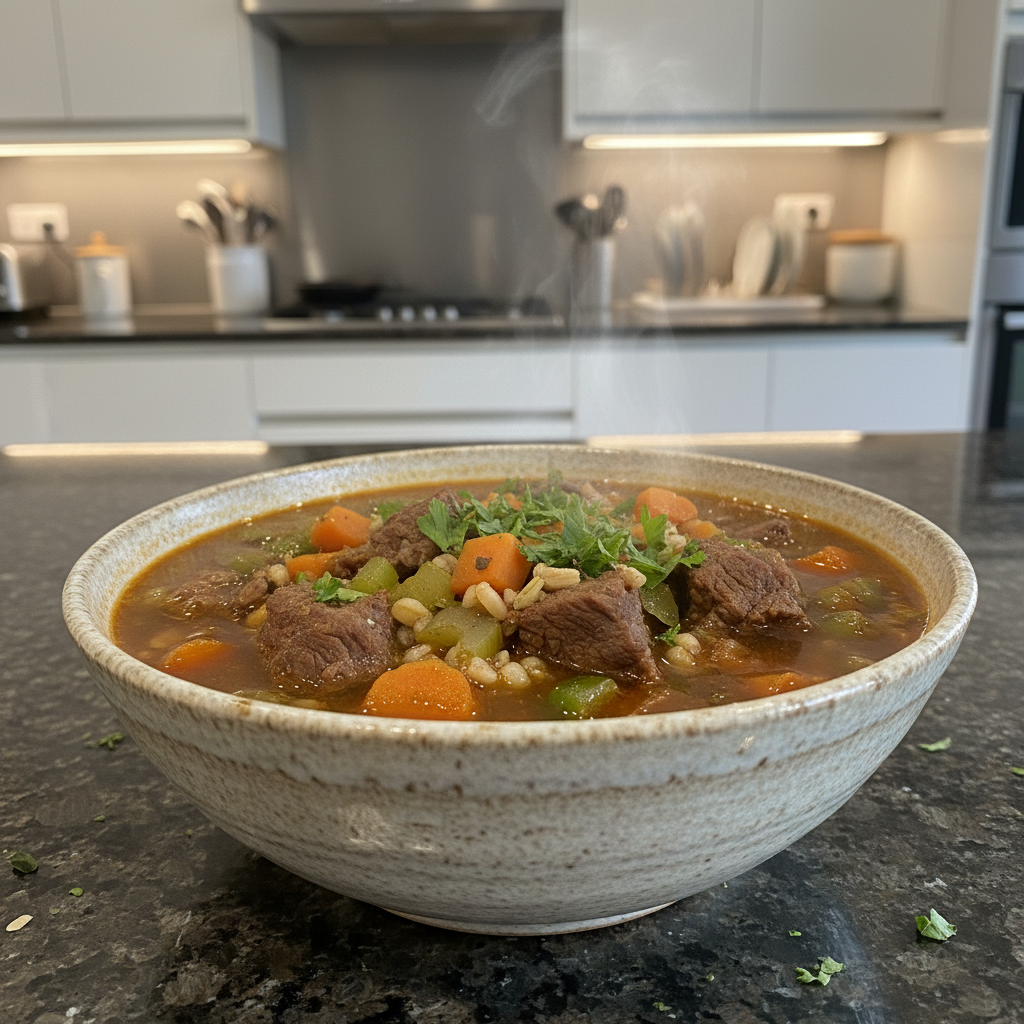
Hearty Beef Barley Soup Recipe: The Ultimate Comfort Food
Ingredients
Equipment
Method
- Heat the olive oil in a large pot or Dutch oven over medium heat. Add the chopped onion and minced garlic. As soon as they hit the hot oil, sprinkle in the ¼ teaspoon dried thyme leaves. Sauté the mixture for 5-7 minutes, stirring occasionally, until the onions are softened and translucent and the garlic is fragrant. You’ll notice the incredible aroma of the bloomed thyme filling your kitchen – this is our flavor secret at work!
- If you're using the red wine, now is the time to add it. Pour in the 2 tablespoons red wine and use a wooden spoon to scrape up any delicious browned bits from the bottom of the pot. Let it simmer for 1-2 minutes until the alcohol scent dissipates. This deglazing step boosts the overall depth of flavor significantly.
- Next, add all the remaining ingredients to the pot: the sliced carrots, sliced celery, cooked beef, reduced sodium beef broth, canned petite diced tomatoes (with their juices), diced green bell pepper, pearl barley, Worcestershire sauce, beef gravy mix, and the bay leaf. Stir everything well to combine.
- Bring the soup mixture to a full boil over medium-high heat. Once boiling, reduce the heat to low, cover the pot, and let it simmer gently for about 40-50 minutes. The key is to simmer until the barley is cooked through – it should be plump and tender with a slight chew, not hard or crunchy. If you're starting with raw beef, ensure it's fork-tender by the end of the simmering time.
- Once the soup has simmered and the barley is cooked, remove and discard the bay leaf. Stir in the chopped fresh parsley (or dried, if using). Taste the soup and season generously with salt and black pepper to your preference. Remember, broth sodium levels vary, so always taste before adding more salt.
- If you desire an even thicker soup, you can make a cornstarch or flour slurry (mix 1-2 tablespoons of cornstarch or flour with an equal amount of cold water until smooth) and slowly whisk it into the simmering soup until it reaches your desired consistency. Serve hot and enjoy this incredibly hearty and flavorful beef barley soup!
Notes

Taya Bennett is the founder of YumEasyMeals, a platform dedicated to easy, delicious, and quick-to-prepare recipes for busy families. Passionate about everyday cooking, she simplifies meals with practical, accessible, and always delicious ideas.
Discover her creations at: yumeasymeals.com