Garlic paprika octopus and cuttlefish is a bold Spanish-inspired seafood skillet with tender pieces of octopus, lightly golden cuttlefish, dry white wine, fresh garlic, parsley, and smoky Pimentón de la Vera. The wine reduces into the olive oil, while the paprika gives the sauce its warm brick-red color and deep aroma.
Because the octopus is already cooked, this recipe focuses on two things: giving the cuttlefish enough time to become opaque and lightly golden, and warming the octopus without toughening it. Garlic paprika octopus and cuttlefish makes an impressive main dish or tapas-style platter that comes together in about 35–40 minutes from start to finish.
Why You’ll Love This Recipe
- Two seafood textures in one skillet: Tender octopus and meaty cuttlefish make every serving interesting.
- A deeply savory sauce: Olive oil, garlic, white wine, parsley, and smoked paprika create a glossy sauce made for spooning over the seafood.
- Simple stovetop method: Garlic paprika octopus and cuttlefish cooks entirely in one large skillet.
- Flexible for dinner or tapas: Serve it as a main course for four or place the platter in the center of a larger Spanish-style spread.
Ingredients Needed
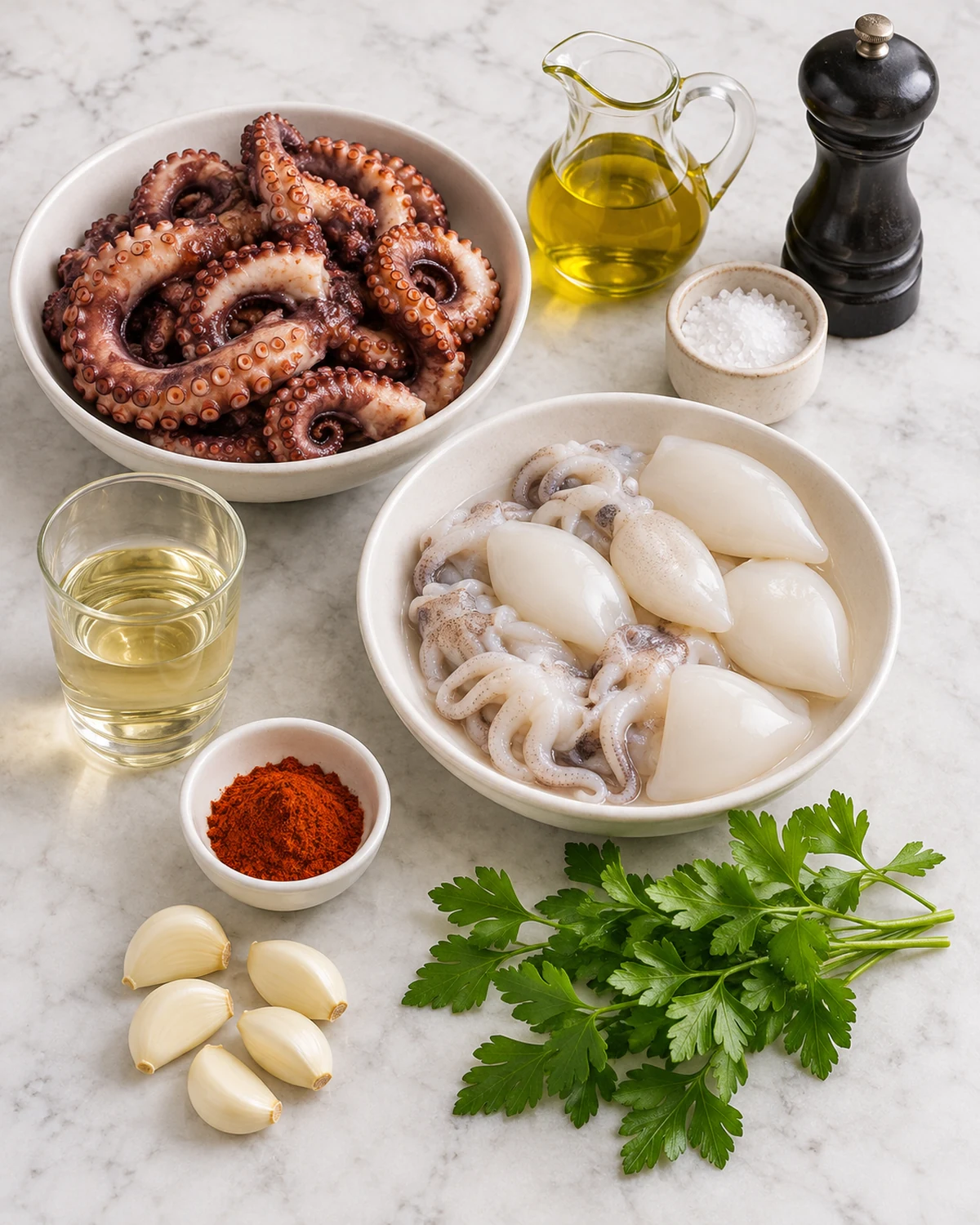
- 500g cooked octopus tentacles
- 500g cleaned cuttlefish
- 5 tbsp extra virgin olive oil
- 5 garlic cloves, finely minced
- 100ml dry white wine
- 1 tbsp sweet smoked paprika (Pimentón de la Vera)
- 3 tbsp fresh parsley, finely chopped
- Salt and freshly ground black pepper, to taste
Ingredient Notes
Cooked octopus tentacles: Start with octopus that is already fully cooked and tender. The skillet step is only meant to warm it and coat it with sauce, not cook it again from raw. For a different quick preparation using precooked octopus, see these garlic butter octopus bites.
Cleaned cuttlefish: Cuttlefish is firm and mild, with a texture that stands up well to a hot skillet. Cut it into evenly sized cubes so the pieces finish cooking at roughly the same time.
Pimentón de la Vera: Sweet smoked paprika gives the dish its characteristic color and smoky depth without making it spicy. Keep the heat low when it goes into the skillet because ground paprika can scorch quickly and turn bitter.
Dry white wine: The wine loosens the flavorful bits in the skillet and reduces into the olive oil. Use a dry wine rather than a sweet one so the sauce stays savory.
Equipment
- Large skillet
- Sharp knife and cutting board
- Wooden spoon or wide spatula
- Measuring spoons and liquid measuring cup
- White serving platter
How to Make Garlic Paprika Octopus and Cuttlefish

1. Prepare the octopus
Slice the precooked octopus tentacles into bite-sized pieces. Leave some of the suction cups visible so the finished platter keeps the octopus’s distinctive shape and texture.
2. Cut the cuttlefish evenly
Pat the cleaned cuttlefish dry if needed, then cut it into evenly sized cubes. Similar-sized pieces cook more consistently and are less likely to leave you with a mix of tender and underdone pieces.
3. Heat the olive oil
Pour the extra virgin olive oil into a large skillet and set it over medium-high heat. Let the oil heat before adding the seafood so the cuttlefish begins to sauté rather than slowly release liquid.
4. Cook the cuttlefish
Add the cuttlefish cubes and sauté for approximately 8–12 minutes, stirring occasionally. Cook until the pieces are opaque, tender, and lightly golden around the edges.
5. Warm the octopus
Gently fold the precooked octopus into the skillet. Stir just until the pieces are warmed through; prolonged cooking can make already-tender octopus firmer.
6. Deglaze with white wine
Pour in the dry white wine and let it simmer for 2–3 minutes. Stir across the bottom of the skillet as the wine reduces slightly and gathers the browned flavor into the sauce.
7. Add the garlic and parsley
Stir in the minced garlic and chopped parsley. Cook gently for 1–2 minutes, just until the garlic smells fragrant. Watch it closely so the small pieces do not burn.
8. Finish with smoked paprika
Lower the heat, sprinkle in the sweet smoked paprika, and stir thoroughly until the seafood is evenly coated in the reddish garlic-paprika oil.
9. Adjust the sauce
Let the seafood simmer gently for another minute. If the sauce has reduced too far, add a small splash of water to loosen it. Season with salt and freshly ground black pepper to taste.
10. Serve immediately
Transfer the octopus and cuttlefish to a white serving platter. Spoon the warm garlic-paprika oil over the top and serve while the seafood is hot and glossy.
How to Keep Octopus and Cuttlefish Tender
This skillet uses two types of seafood that need different treatment. The cuttlefish begins raw, so it cooks first for the full 8–12 minutes given in the recipe. Keep the pieces evenly sized, leave enough room in the skillet for moisture to evaporate, and look for an opaque appearance with light golden patches.
The octopus is already cooked and should enter only after the cuttlefish is tender. It needs enough time to warm through, but not another long cooking cycle. That sequence is the key to keeping both seafood textures pleasant in the same pan.
If your seafood was frozen, thaw it safely before cooking. The USDA explains three safe thawing methods, including refrigerator thawing, cold water, and the microwave; seafood thawed by the faster methods should be cooked immediately. Patting the cuttlefish dry afterward also helps it sauté instead of steam.
How to Use Smoked Paprika Without Burning It
Smoked paprika is finely ground and can scorch in very hot oil. Add it only after the wine has reduced and the skillet heat has been lowered. Stir it through the oil promptly so it blooms evenly around the seafood instead of sitting in one hot spot.
The garlic follows a similar rule. It is added late and cooked gently for only 1–2 minutes. This preserves its fragrance and prevents the bitter taste that comes from dark, burned garlic. If you enjoy this garlic-forward profile with another type of seafood, the garlic butter shrimp seafood skillet and crispy garlic butter shrimp scampi bake are closely related options.
Tips for the Best Garlic Paprika Octopus and Cuttlefish
- Dry the cuttlefish before cooking. Excess surface water cools the skillet and prevents light browning.
- Use a wide skillet. Crowding traps steam, so use the largest pan you have and keep the seafood in an even layer when possible.
- Cut uniform pieces. Even cubes make the 8–12 minute timing more dependable.
- Reduce the wine before adding paprika. This concentrates the sauce without exposing the spice to prolonged high heat.
- Salt at the end. Seafood can naturally taste briny, so season after the sauce has reduced and you can judge the final flavor.
- Serve straight from the skillet. Both octopus and cuttlefish have their best texture while freshly cooked and hot.
Buying and Handling Seafood Safely
Choose seafood that smells fresh and mild rather than sour or ammonia-like, and keep it cold on the way home. The FDA’s guide to selecting and serving seafood safely explains what to look for in both fresh and frozen seafood. Keep perishable food at 40°F (4°C) or below, as recommended in the USDA’s cold-storage guidance.
Use a separate clean board and utensils for raw cuttlefish, then wash hands and surfaces before handling ready-to-eat ingredients. The FDA discusses preventing seafood cross-contamination in its seafood food-safety guide. The broader four steps to food safety are clean, separate, cook, and chill.
For doneness, the cuttlefish should be opaque rather than translucent. The federal safe minimum temperature chart also provides visual doneness guidance for several kinds of seafood. This recipe begins with already-cooked octopus, which only needs to be reheated in the skillet.
What to Serve with Garlic Paprika Octopus and Cuttlefish
Serve garlic paprika octopus and cuttlefish with crusty bread for catching the smoky garlic oil, or add roasted potatoes, plain rice, or a crisp green salad. The platter also works well beside simple olives and other small plates for a tapas-style meal.
For a larger seafood spread, pair it with shrimp avocado boats for something cool and fresh or easy creamy seafood salad for a chilled option. The cheesy garlic shrimp and vegetable foil packets offer a vegetable-filled main dish, while festive seafood pasta is useful when you want a more substantial seafood centerpiece. For a different skillet sauce, try creamy garlic Parmesan shrimp.
Storage and Reheating
Transfer leftover garlic paprika octopus and cuttlefish to a shallow airtight container and refrigerate it promptly. The USDA recommends storing cooked seafood in the refrigerator for 3–4 days, and its general seafood preparation guidance advises keeping raw seafood refrigerated and not leaving seafood at room temperature for more than two hours.
Reheat the seafood gently in a skillet over medium-low heat only until hot. Add a small splash of water if the paprika oil has thickened in the refrigerator. Avoid prolonged high heat, which can make the octopus and cuttlefish rubbery. The FoodSafety.gov chart lists 165°F (74°C) for reheated leftovers.
Frequently Asked Questions
Can I use raw octopus instead of cooked octopus?
Not without an additional cooking step. This recipe specifically uses 500g of cooked octopus tentacles. Raw octopus must be tenderized and cooked fully before following the quick skillet method described here.
Can I use frozen cuttlefish?
Yes. Thaw it safely, drain it well, and pat it dry before cutting and cooking. Extra water can cause the seafood to steam and dilute the sauce.
Is sweet smoked paprika spicy?
No. Sweet smoked paprika provides smoke, color, and mild pepper flavor rather than pronounced heat. Use the specified sweet Pimentón de la Vera for this recipe.
Why did my cuttlefish release so much water?
The skillet may have been crowded, the cuttlefish may still have been wet after thawing, or the oil may not have been hot enough. Use a wide hot skillet and dry the pieces before cooking.
Can I make this dish without wine?
The supplied recipe uses 100ml dry white wine, and it is an important part of the sauce. Omitting it would change the recipe’s flavor and liquid balance.
How do I prevent the paprika from tasting bitter?
Lower the heat before adding it and stir immediately. Do not let the paprika sit in very hot oil or cook for a long time.
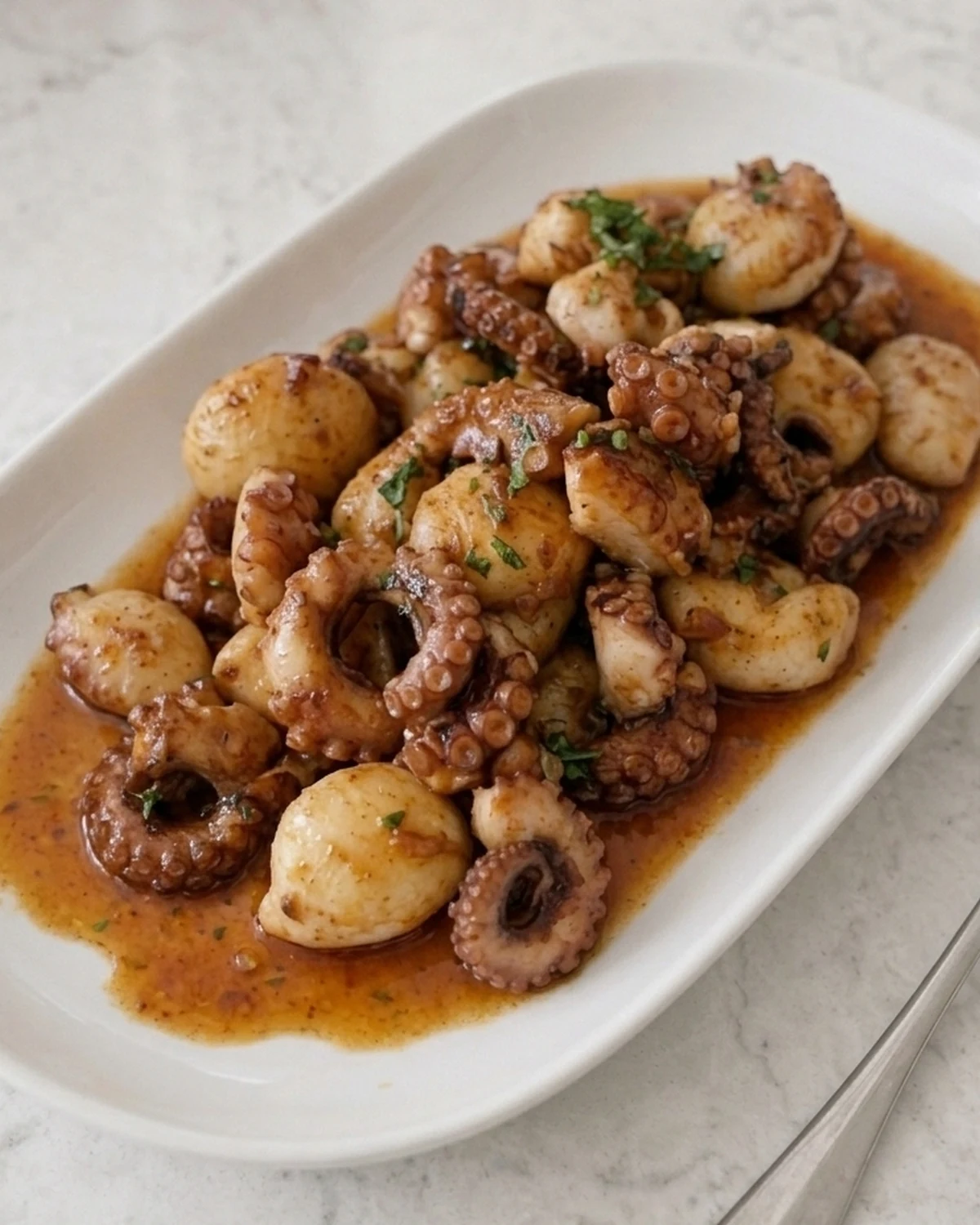
Garlic Paprika Octopus & Cuttlefish (Pulpo y Sepia al Ajillo)
Ingredients
Method
- Prepare the octopus: Slice the precooked octopus tentacles into bite-sized pieces, keeping some suction cups visible for texture and presentation.
- Prepare the cuttlefish: Clean and cut the cuttlefish into evenly sized cubes.
- Heat the olive oil: Add the olive oil to a large skillet over medium-high heat.
- Cook the cuttlefish: Add the cuttlefish cubes and sauté, stirring occasionally, until opaque, tender, and lightly golden. Depending on thickness, this may take approximately 8–12 minutes.
- Add the octopus: Gently fold the precooked octopus pieces into the skillet and stir until heated through.
- Deglaze with wine: Pour in the white wine and simmer for 2–3 minutes, allowing the liquid to reduce slightly.
- Add garlic and parsley: Stir in the minced garlic and chopped parsley. Cook gently for 1–2 minutes until fragrant, without burning the garlic.
- Season with paprika: Lower the heat and sprinkle in the sweet smoked paprika. Stir thoroughly until the seafood is evenly coated in the fragrant reddish sauce.
- Finish the sauce: Allow the seafood to simmer gently for another minute, adding a small splash of water if the sauce reduces too much. Season with salt and black pepper to taste.
- Serve: Transfer the tender octopus and cuttlefish to a white serving platter. Spoon the warm garlic-paprika oil over the seafood and serve immediately.
Notes

Taya Bennett is the founder of YumEasyMeals, a platform dedicated to easy, delicious, and quick-to-prepare recipes for busy families. Passionate about everyday cooking, she simplifies meals with practical, accessible, and always delicious ideas.
Discover her creations at: yumeasymeals.com