Valentine’s Day is a special occasion, and what better way to celebrate than with a truly impressive yet effortlessly elegant meal? I always aim to create dishes that look gourmet but are surprisingly simple to execute. This herb-crusted salmon for Valentine’s Day dinner is my answer to that desire. For another equally delightful and romantic option, consider this romantic garlic butter shrimp pasta.
It promises to deliver not only a delicious, foolproof recipe for tender, flaky salmon but also invaluable tips to master your salmon cooking techniques. You will learn to create a restaurant-quality meal right at home, ready to impress your loved one and make your evening truly memorable.
Why You’ll Love This Herb-Crusted Salmon Recipe
My kitchen thrives on little culinary secrets, and the unique twist in this herb-crusted salmon recipe is a game-changer. I add a generous squeeze of fresh lemon juice and a sprinkle of lemon zest directly into the herb and Parmesan mixture.
The reasoning behind this is simple yet profound. The vibrant lemon brightens the overall flavor profile, cutting through the richness of the salmon and the Parmesan cheese beautifully. This citrusy punch perfectly complements the fresh herbs, creating a harmonious balance. The acidity from the lemon also gently tenderizes the surface of the salmon, promoting more even cooking and contributing to a superior, crispier crust.
Here are a few reasons why this recipe will become a cherished part of your romantic dinner repertoire:
Impressive and Romantic: This dish looks sophisticated, making it perfect for a Valentine’s Day dinner. Yet, it is surprisingly simple to prepare, leaving you more time to enjoy with your date.
Quick and Easy: Designed for a special evening, this recipe minimizes your time in the kitchen. You can create a gourmet meal without the stress, allowing for a relaxed and enjoyable dining experience.
Flavorful and Perfectly Cooked: With my guidance, you will achieve tender, flaky salmon every single time. The savory, herby, cheesy, and now zesty, crispy crust will delight your taste buds.
Ingredients Needed
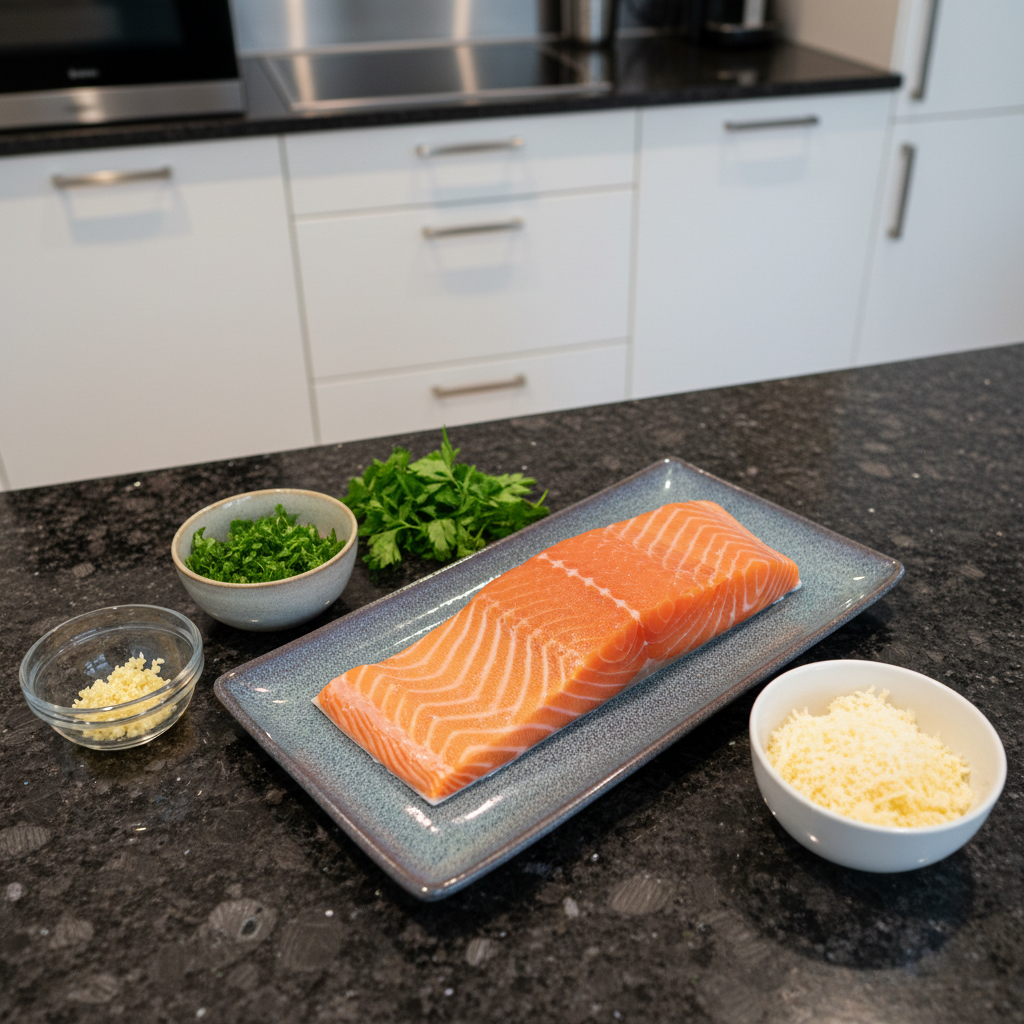
Here is what you will need for this delightful recipe:
1 salmon filet (about 2 pounds, left whole)
3 cloves garlic (finely minced)
1/4 cup chopped parsley
1/2 cup chopped Parmesan cheese
Dijon mustard
Fresh lemon
Ingredient Notes & Substitutions
Choosing the right ingredients makes all the difference in this herb-crusted salmon. When selecting your salmon, you will find options like wild-caught or farmed. Wild types like sockeye salmon or coho salmon tend to have a firmer texture and a richer, more pronounced flavor. Atlantic salmon, often farmed, typically has a milder taste and a higher fat content, resulting in a very tender outcome. Look for fresh fillets with bright, moist flesh and no strong fishy odor. This recipe assumes you are cooking with the skin on, skin-side down, as it helps keep the fish moist and prevents sticking to the pan.
For the parmesan cheese, I strongly recommend using freshly grated parmesan cheese. Pre-shredded varieties often contain anti-caking agents that can hinder proper melting and result in a grainy texture. Freshly grated parmesan melts beautifully, forming a delicious, golden-brown herb crust. If you prefer a stronger, saltier flavor, Pecorino Romano cheese makes an excellent substitute.
Fresh parsley is crucial for the vibrant flavor and beautiful green color of the herb crust. If fresh is unavailable, you can use dried parsley, but remember that dried herbs are more concentrated. Use about one-third of the fresh quantity, adjusting to taste.
Dijon mustard acts as a fantastic binder for our herb crust and adds a subtle tangy depth of flavor. While Dijon is my preference, you can experiment with other mustards like whole grain mustard for a different textural element.
The fresh lemon juice and zest are key to our unique twist, providing that essential brightness and helping to tenderize the salmon for an even better crust.
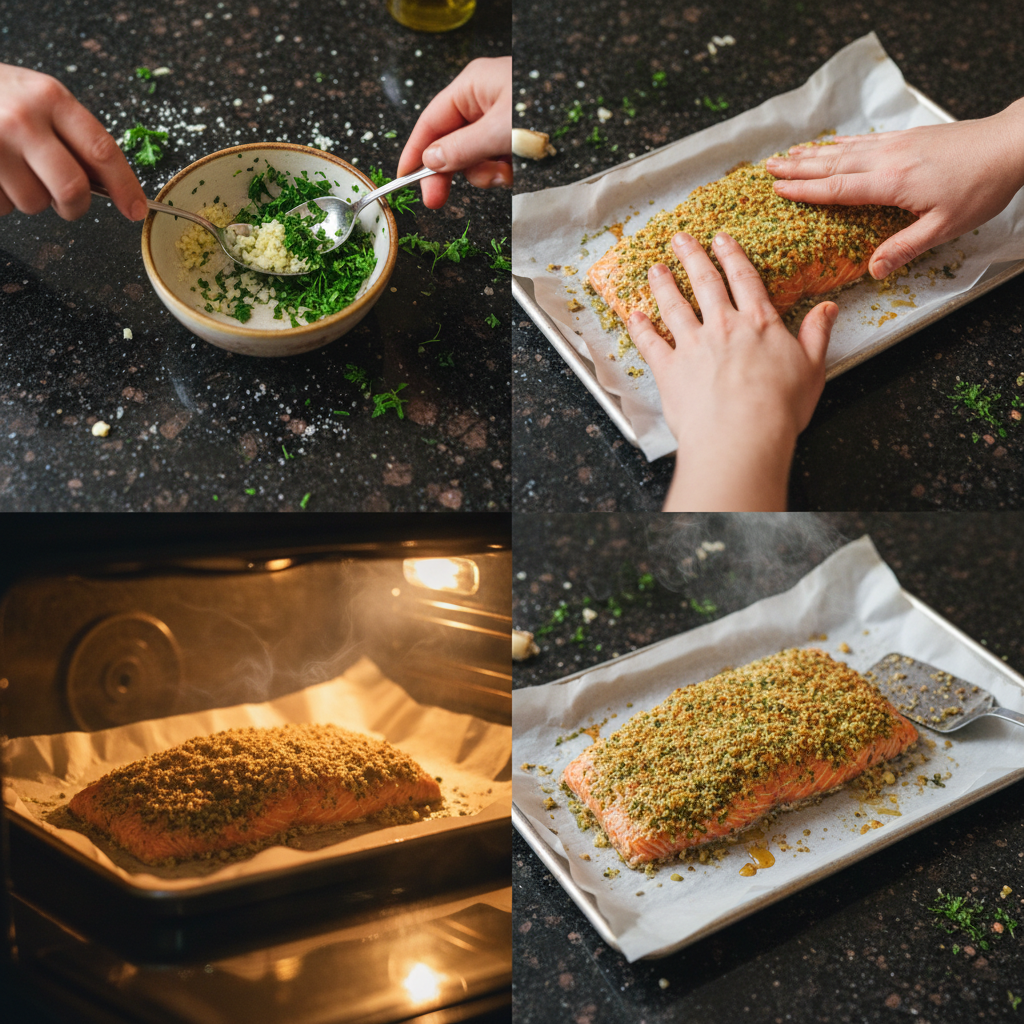
How to Make Your Perfect Herb-Crusted Salmon
Follow these simple steps to create a show-stopping herb-crusted salmon for your special dinner.
Prepare the Oven and Salmon
First, preheat your oven to 425º F (220°C). Line a rimmed baking sheet with parchment paper or aluminum foil. This step helps with easy cleanup and prevents sticking.
Take your salmon filet and pat it thoroughly dry with paper towels. This is a crucial expert tip for achieving a crispy crust. Place the salmon, skin side down, onto the lined baking sheet. Covering the salmon with another piece of parchment paper helps to gently steam the fish initially, ensuring it cooks through without drying out. Bake for 10 minutes.
Apply the Flavorful Crust
Remove the baking sheet from the oven. Carefully remove the top piece of parchment paper. You will notice the salmon has started to cook and firm up. Now, spread a thin, even layer of Dijon mustard over the top of the salmon. The mustard acts as a binder for our amazing crust.
In a small bowl, combine the finely minced garlic, chopped parsley, and chopped Parmesan cheese. Here is where my unique twist comes in: add a squeeze of fresh lemon juice and a touch of lemon zest to this mixture. This will brighten the flavors and aid in crust formation. Evenly distribute this fragrant herb and parmesan mixture over the mustard layer on the salmon.
Final Bake and Rest
Return the baking sheet to the oven, uncovered. Bake for about 5 more minutes, or until the cheese has melted and is lightly browned and bubbling. You will see the salmon begin to flake easily with a fork. To ensure perfect doneness, an internal thermometer inserted into the thickest part of the fish should register 135º F (57°C). The scent of the golden-brown, bubbling cheese crust and tender fish will fill your kitchen.
Once baked, allow the salmon to rest for about 5 minutes before serving. This resting period is an important expert tip. It allows the juices to redistribute throughout the fish, resulting in a more tender and flavorful final product.
Mastering Salmon Doneness & Crispy Crust Secrets
Achieving perfectly cooked salmon with a crispy, flavorful crust is simpler than you might think with a few key techniques.
Achieving Perfectly Cooked Salmon Every Time
The secret to perfectly cooked salmon every time lies in understanding doneness and carry-over cooking. While visual cues like flakiness and color change are helpful, the most accurate method is using an internal thermometer. I always aim for 135°F (57°C) for a beautifully moist and tender fillet. As an expert tip, pull the salmon from the oven just before it reaches this temperature, perhaps at 130°F (54°C).
This accounts for carry-over cooking. Salmon continues to cook for a few minutes after being removed from the heat, so resting the fish is essential for the juices to redistribute, leading to a truly tender result. If you cook a whole salmon filet, like in this recipe, it will take longer than individual portions. For thinner fillets, reduce the initial covered baking time by a few minutes. For thicker fillets (over 1.5 inches), you might need to add a few minutes to both the initial covered bake and the final uncovered bake. Always rely on your internal thermometer for precision.
The Secret to an Extra Crispy Herb Crust & Added Nutrition
To make the herb crust extra crispy, my top tip is to pat the salmon very dry before applying the Dijon mustard and crust ingredients. Excess moisture on the surface can steam the crust instead of crisping it. Even with the added lemon juice, if the salmon is dry beforehand, you will still achieve that delightful crispiness. The final uncovered baking step is key, allowing the Parmesan cheese and herbs to brown and develop that irresistible crunchy texture.
Beyond its delicious flavor, salmon is a nutritional powerhouse. It is renowned for its high content of omega-3 fatty acids, which are crucial for heart and brain health, and an excellent source of lean protein. But the benefits do not stop there. Salmon also provides essential nutrients like selenium, which supports thyroid function, potassium for blood pressure regulation, and a wealth of B vitamins (B12, B6, niacin, riboflavin) vital for energy production. It is also one of the few natural food sources of vitamin D. The garlic and parsley in the crust also contribute antioxidants and vitamins, making this dish both delicious and incredibly wholesome.
Pro Tips & Troubleshooting
From my kitchen to yours, here are some expert tips to ensure your herb-crusted salmon is a triumph, along with common pitfalls to steer clear of.
Pro Tips for Success
Do not Skip the Thermometer: This is my number one rule. Using an internal thermometer to reach 135°F (57°C) ensures perfect doneness and prevents overcooking the salmon, which is the quickest way to dry it out.
Pat it Dry: Always pat the salmon thoroughly dry with paper towels before applying the Dijon mustard and herb crust. This promotes a beautifully crispy herb crust.
Finely Mince Garlic: To prevent the garlic from burning and turning bitter in the oven, make sure it is very finely minced. This also helps distribute the flavor evenly throughout the crust.
Freshly Grated Parmesan: For superior melting, flavor, and texture, always opt for freshly grated Parmesan cheese over pre-shredded varieties.
Lemon Zest & Juice: Remember our unique twist. A touch of fresh lemon zest and juice in the herb mixture brightens the dish and contributes to better crust formation.
Resting Period: Allow the salmon to rest for about 5 minutes after baking. This crucial step helps the juices redistribute, ensuring a tender and moist final product.
Common Mistakes to Avoid
Overcooking Salmon: This is the most common mistake. Overcooked salmon becomes dry, tough, and less flavorful. An internal thermometer is your best friend here.
Soggy Crust: A soggy crust typically results from not patting the salmon dry enough before applying the crust, or not baking it uncovered at the end to allow for proper crisping.
Burnt Garlic: If your garlic is not finely minced or is clumped together, it can burn quickly in the oven, leading to a bitter taste. Ensure it is well mixed into the crust ingredients.
Using Pre-shredded Parmesan: As mentioned, pre-shredded Parmesan often contains anti-caking agents that prevent it from melting smoothly, resulting in a grainy or unappealing crust.
Rushing the Rest: Skipping the short resting period means the delicious juices will escape when you cut into the salmon, leading to a drier, less tender piece of fish.
Serving & Storage
Make your Valentine’s Day dinner extra special with these serving and storage tips.
Serving Ideas for a Romantic Valentine’s Dinner
This herb-crusted salmon is a star on its own, but pairing it with the right side dishes elevates the entire meal. For a classic and elegant pairing, consider roasted asparagus with garlic butter or a delicate quinoa or rice pilaf. A crisp green salad with a bright lemon vinaigrette provides a refreshing contrast to the richness of the salmon. For a truly romantic touch, I always suggest a chilled white wine like a Sauvignon Blanc; its crisp notes perfectly complement the lemon and herb crust. To make the presentation worthy of a Valentine’s Day dinner, garnish your perfectly cooked salmon with fresh lemon wedges and a sprinkle of chopped fresh herbs, such as additional parsley or dill. Arrange it thoughtfully on the plate to make it look truly restaurant-worthy. For a sweet ending to your romantic meal, consider an elegant mascarpone raspberry tart or the best classic tiramisu recipe.
Storage, Reheating & Make-Ahead Tips
If you happen to have any leftovers of this delicious herb-crusted salmon, proper storage is key to maintaining its quality. Store any leftover salmon in an airtight container in the refrigerator for 2-3 days. This answers the question of how long does baked salmon last.
When it comes to reheating, you want to maintain that tender texture and prevent salmon from drying out. I recommend gently reheating salmon in a preheated oven at a low temperature (around 275°F / 135°C) for about 10-15 minutes, or until just warmed through. An air fryer can also work well on a low setting. Avoid the microwave if possible, as it can quickly dry out the fish.
For those looking to save time on Valentine’s Day, you can definitely prepare the herb crust mixture ahead of time. Simply combine the minced garlic, chopped parsley, Parmesan cheese, lemon juice, and lemon zest in a bowl. Store it in an airtight container in the refrigerator for up to 24 hours. When you are ready to cook, just spread it over the salmon as directed.
Conclusion
I hope this journey through creating the perfect herb-crusted salmon has inspired you. This recipe is a testament to how simple techniques and a unique lemon twist can transform a classic dish into an extraordinary one. It is truly an ideal choice for a Valentine’s Day dinner, being both easy to prepare and incredibly impressive.
The bright lemon cutting through the richness, combined with the savory herbs and crispy Parmesan, truly elevates the dish. With the detailed steps and expert tips I have shared, I am confident that even novice cooks can achieve perfectly flaky, tender salmon with that irresistible crispy, flavorful crust.
Do not hesitate to try this recipe, experiment with my serving ideas, and share your culinary successes with loved ones. Happy cooking!
FAQ
What is the best temperature to cook salmon in the oven, and how do I ensure it’s perfectly done?
The best temperature to cook salmon in the oven is 425°F (220°C). To ensure it is perfectly done, use an internal thermometer. The salmon should reach 135°F (57°C) in its thickest part, keeping in mind it will continue to cook slightly after removal from the oven.
What are the best side dishes and wine pairings to complement herb-crusted salmon for a romantic dinner?
Excellent side dishes include roasted asparagus with garlic butter, quinoa or rice pilaf, or a fresh green salad with a lemon vinaigrette. For wine, a crisp, chilled Sauvignon Blanc beautifully complements the lemon and herb crust.
How can I adapt the recipe for different types and thicknesses of salmon fillets?
For thinner fillets, reduce the initial covered baking time by a few minutes. For thicker fillets (over 1.5 inches), you might need to add a few minutes to both the initial covered bake and the final uncovered bake. Always use an internal thermometer for accuracy, targeting 135°F (57°C).
What are common mistakes to avoid when making herb-crusted salmon, and how can I troubleshoot them?
Common mistakes include overcooking (use a thermometer!), a soggy crust (pat salmon dry), burnt garlic (mince finely), and using pre-shredded Parmesan (opt for fresh). Avoiding these ensures a perfectly tender salmon with a crispy, flavorful crust.
How can I prepare the herb crust ahead of time to save time on Valentine’s Day?
You can combine the minced garlic, chopped parsley, Parmesan cheese, lemon juice, and lemon zest in an airtight container and store it in the refrigerator for up to 24 hours. Apply it to the salmon just before baking.
How do I store and reheat leftover herb-crusted salmon while maintaining its flavor and texture?
Store leftovers in an airtight container in the refrigerator for 2-3 days. Reheat gently in an oven at 275°F (135°C) for 10-15 minutes, or in an air fryer on a low setting, to prevent drying out. Avoid microwaving.
Can you use dried parsley instead of fresh in the herb crust?
While fresh parsley provides the best vibrant flavor and color, you can use dried parsley as a substitute. Use about one-third of the fresh quantity, as dried herbs are more concentrated, and adjust to your taste.
What can I substitute for Parmesan cheese in the crust?
Freshly grated Pecorino Romano cheese is an excellent substitute for Parmesan, offering a saltier and tangier flavor. Ensure it is freshly grated for the best melting and texture.
How do I prevent the garlic from burning during baking?
To prevent the garlic from burning, ensure it is very finely minced and thoroughly mixed into the herb and Parmesan cheese crust. This helps it distribute evenly and cook gently rather than scorching.
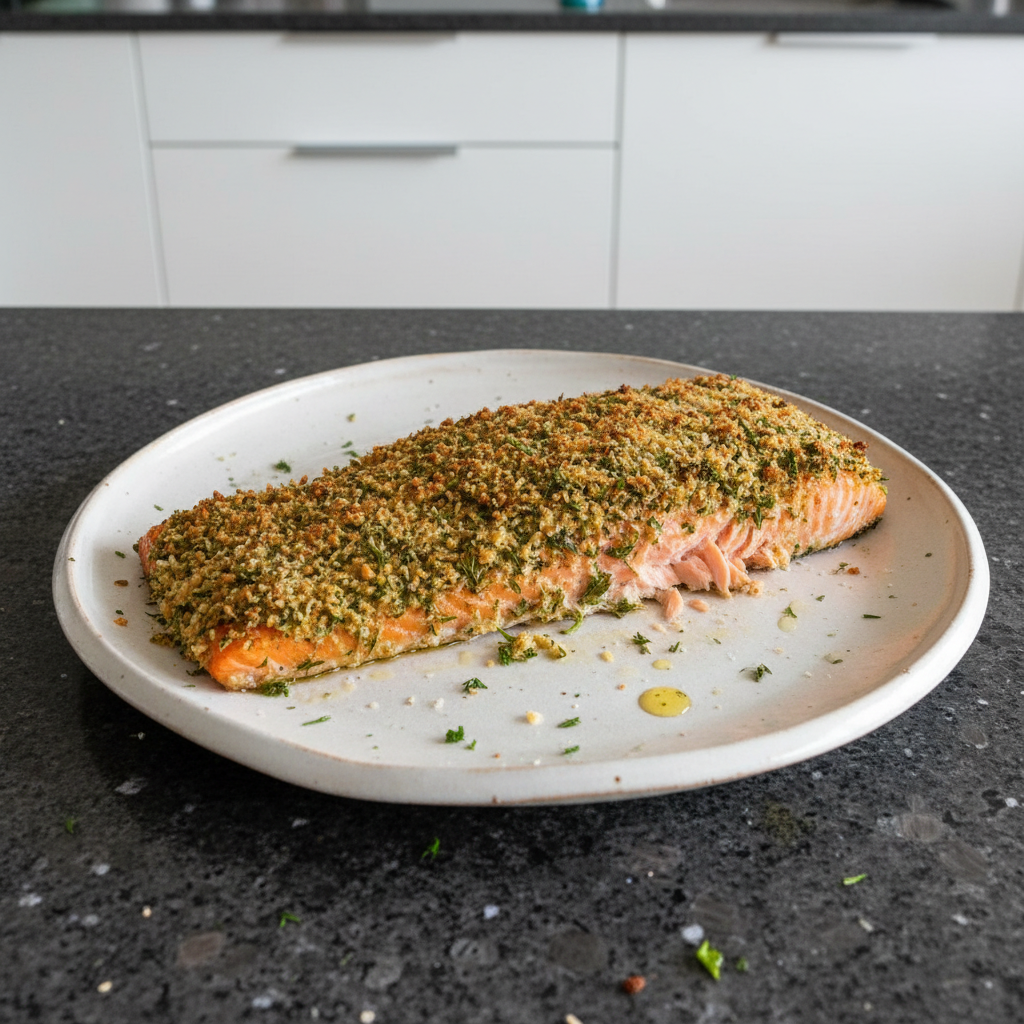
Herb-Crusted Salmon for Valentine’s Day Dinner
Ingredients
Equipment
Method
- Preheat your oven to 425º F (220°C). Line a rimmed baking sheet with parchment paper or aluminum foil for easy cleanup.
- Pat the salmon filet thoroughly dry with paper towels. Place the salmon, skin side down, onto the lined baking sheet. Cover with another piece of parchment paper to steam gently. Bake for 10 minutes.
- Remove the baking sheet from the oven and carefully remove the top parchment paper. Spread a thin, even layer of Dijon mustard over the top of the salmon.
- In a small bowl, combine the finely minced garlic, chopped parsley, chopped Parmesan cheese, a squeeze of fresh lemon juice, and a touch of lemon zest. Evenly distribute this fragrant herb and Parmesan mixture over the mustard layer on the salmon.
- Return the baking sheet to the oven, uncovered. Bake for about 5 more minutes, or until the cheese is melted, lightly browned, and bubbling, and the salmon flakes easily. An internal thermometer should register 135º F (57°C).
- Once baked, allow the salmon to rest for about 5 minutes before serving. This allows juices to redistribute for a more tender and flavorful product.
Notes

Taya Bennett is the founder of YumEasyMeals, a platform dedicated to easy, delicious, and quick-to-prepare recipes for busy families. Passionate about everyday cooking, she simplifies meals with practical, accessible, and always delicious ideas.
Discover her creations at: yumeasymeals.com