A truly exceptional salad dressing can transform a simple meal into an unforgettable culinary experience. Nothing quite brightens a dish like a perfectly crafted lemon vinaigrette. For years, I have refined my technique to achieve a vibrant, balanced dressing that elevates everything it touches. This recipe will not only teach you how to make an incredibly flavorful Lemon Vinaigrette with a special twist, but I will also guide you through mastering homemade dressings, including essential tips on ingredients, proper storage, and versatile serving ideas. Get ready to impress your taste buds.
Why You’ll Love This Zesty Lemon Vinaigrette Recipe
My unique twist is what truly sets this lemon vinaigrette apart. Instead of just whisking in lemon zest with everything else, I infuse the olive oil with it beforehand. This gentle infusion transforms the vinaigrette into something truly special.
This scientific approach means that gently heating the olive oil with lemon zest allows the oil to absorb the aromatic compounds from the zest. This amplifies the lemon flavor, making it more aromatic and intense without the harsh acidity you sometimes get from straight lemon juice. The result is a smoother, more rounded, and beautifully balanced lemon flavor that will surprise and delight you.
This recipe offers a superior flavor profile. You will achieve a gourmet-level taste at home that stands out from typical vinaigrettes. It also boasts incredible versatility. This dressing is perfect for green salads, roasted vegetables, marinades, and so much more, making it a staple in my kitchen. Despite its gourmet taste and unique twist, the process remains straightforward and easy to master, even for novice home cooks.
Ingredients Needed
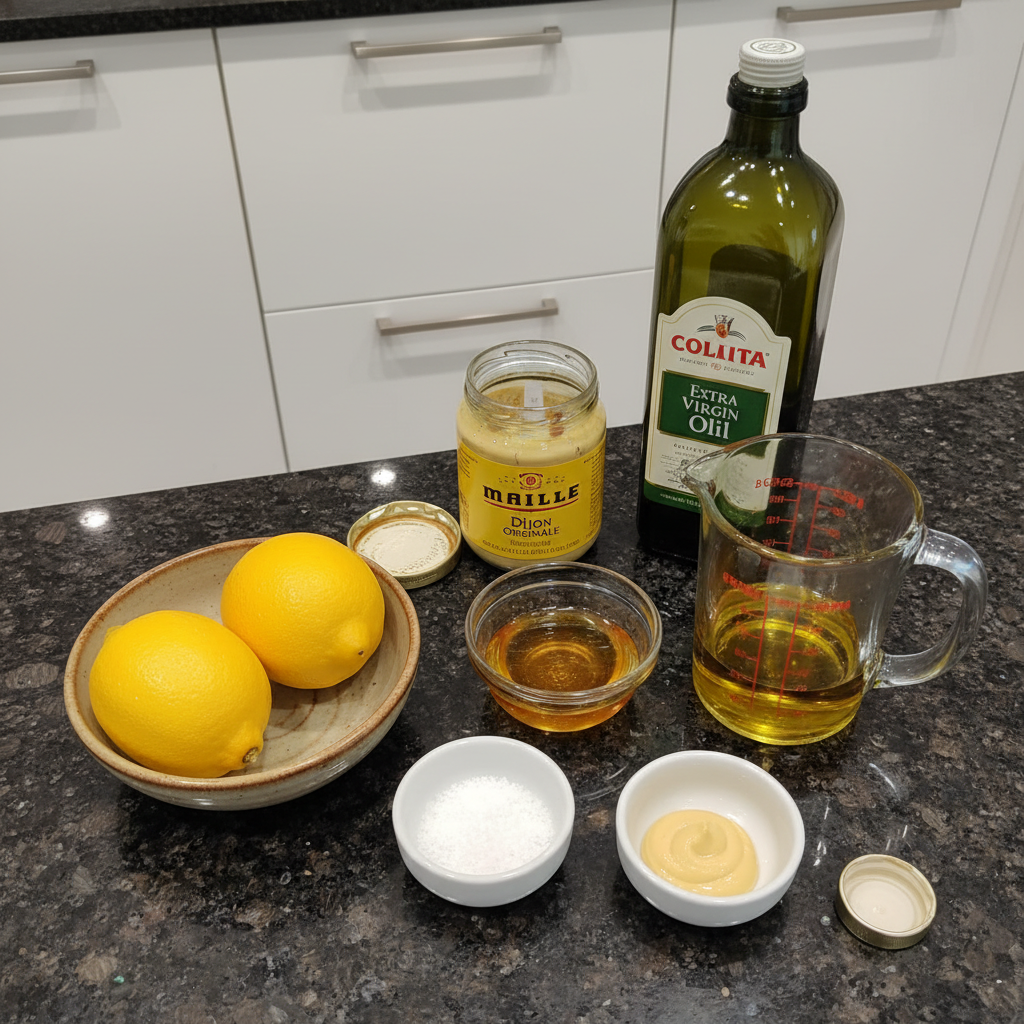
Here are the simple ingredients you will need for this vibrant Lemon Vinaigrette:
3 tablespoons fresh lemon juice ((from 2 medium lemons))
2 teaspoons honey ((see note))
2 teaspoons Dijon mustard
1/2 teaspoon kosher salt
1/4 cup olive oil
Lemon zest ((from 1 lemon))
Ingredient Notes & Substitutions
Each ingredient plays a crucial role in creating this balanced lemon vinaigrette. Understanding their purpose will help you make the best dressing possible.
Regarding lemon juice, I always emphasize using fresh lemon juice for the best flavor. Bottled lemon juice often contains preservatives and lacks the bright, nuanced acidity of freshly squeezed lemons, which is key to a superior vinaigrette. Fresh lemon juice provides the perfect tartness.
Honey is wonderful for balancing the tartness of the lemon and adding a subtle hint of sweetness. If you prefer to make this lemon vinaigrette without honey, you certainly can. For a sugar-free or vegan option, maple syrup or agave nectar are excellent substitutions, providing a similar sweetness profile. This recipe is naturally dairy-free and gluten-free, and it can be low carb if you use a keto-friendly sweetener.
Dijon mustard is a crucial ingredient here, going beyond just flavor. It acts as an emulsifier, helping the oil and acid blend together into a stable, creamy dressing. Without it, your vinaigrette would likely separate very quickly.
For salt, I prefer kosher salt in my cooking due to its larger crystals and milder flavor, which allows for more control when seasoning. Fine sea salt is another excellent alternative; just remember to adjust the quantity as it can be saltier by volume.
Olive oil is the base of our vinaigrette, and its quality greatly impacts the final taste. Extra virgin olive oil offers robust, fruity, and sometimes peppery notes that can add complexity. Lighter olive oils have a milder, more neutral flavor, allowing the lemon to shine brighter. Choose an olive oil that complements the bright lemon flavor you are aiming for, especially since we are infusing it. High-quality healthy fats are an important part of a good dressing.
Finally, lemon zest is paramount for our unique twist. It provides intense aromatic lemon flavor without increasing the acidity, which is why we infuse it into the oil for a pure, smooth lemon essence.
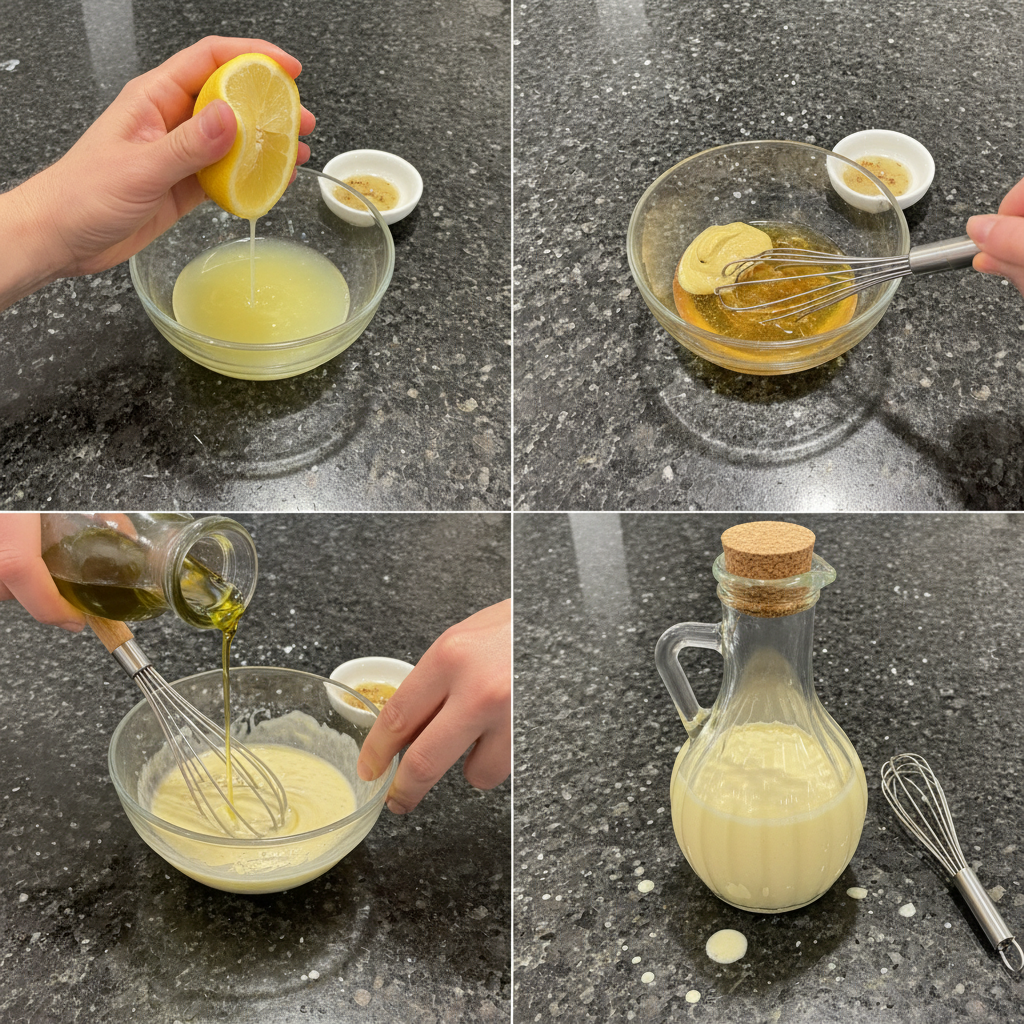
How to Make This Zesty Lemon Vinaigrette
Making this lemon vinaigrette is straightforward, but the infusion step is key to its exceptional flavor.
Step 1: Infuse the Olive Oil (The Unique Twist)
Begin by gently heating the 1/4 cup olive oil in a small saucepan over very low heat with the lemon zest from one lemon. You want it warm, not simmering or frying. Let it infuse for approximately 30 minutes. You will notice a gentle aroma filling your kitchen as the oil absorbs the bright lemon essence. After infusing, remove it from the heat and let the oil cool completely. Once cool, strain out the lemon zest using a fine-mesh sieve. This leaves you with a smooth, pure lemon-infused olive oil, ready for the next step.
Step 2: Combine Wet & Dry Ingredients
In a small bowl, whisk together the fresh lemon juice, honey, Dijon mustard, and kosher salt. Watch as these ingredients begin to combine, forming a tangy base for your dressing.
Step 3: Emulsify the Dressing
Now, slowly add the infused and strained olive oil to the bowl while whisking continuously and vigorously. Pour it in a very thin, steady stream. You will see the dressing transform from separated liquids into a cohesive, slightly thickened emulsion, creating a creamy texture. Alternatively, you can combine all of the vinaigrette ingredients in a jar with a tightly fitting lid and shake until smooth.
Step 4: Store or Serve
Transfer the dressing to an airtight container to store for later, or use it right away. Before serving, always taste and adjust the seasoning if needed.
Mastering Your Lemon Vinaigrette: Olive Oil & Emulsification Secrets
Achieving a truly remarkable lemon vinaigrette involves understanding a few key elements beyond the basic recipe. Two of the most impactful are your choice of olive oil and mastering the art of emulsification.
Choosing the Right Olive Oil
The type of olive oil you select significantly affects the taste and overall profile of your vinaigrette. Different types of olive oil offer distinct flavors. Extra virgin olive oil, often abbreviated EVOO, is made from the first cold pressing of olives and retains a robust, fruity, and sometimes peppery flavor. This intensity can add depth and character to your vinaigrette, contributing healthy fats. Lighter olive oils, on the other hand, are more refined and have a milder, more neutral taste. They allow the bright lemon flavor to take center stage without adding strong olive notes. For this particular recipe with its lemon zest infusion, I often lean towards a good quality extra virgin olive oil that complements the lemon, but a lighter one works beautifully if you prefer a less pronounced olive taste.
The Art of Emulsification
Proper emulsification is what gives your vinaigrette that desirable smooth, cohesive texture rather than a separated, oily mess. Emulsification is the process where oil and acid are suspended together, creating a stable, creamy dressing.
There are several effective methods to emulsify your lemon vinaigrette. The classic method involves whisking vigorously in a bowl while slowly drizzling in the olive oil. The steady stream allows the oil to break into tiny droplets that disperse evenly throughout the acid base. Another popular method is shaking all the ingredients in a jar with a tightly fitting lid until smooth. For a very stable and creamy emulsion, an immersion blender can quickly combine the ingredients. If your vinaigrette ever breaks or separates, do not despair. You can often troubleshoot it by adding a few drops of water or a bit more Dijon mustard and re-whisking vigorously to bring it back together.
Customizing Flavor & Perfect Pairings
One of the joys of homemade dressings is the ability to customize them to your exact liking. This lemon vinaigrette is no exception.
Adjusting Sweetness & Tartness
The balance of sweetness and tartness is crucial for a perfectly harmonious lemon vinaigrette. For a sweeter dressing, gradually add a tiny bit more honey or your chosen alternative sweetener, tasting as you go. If you prefer it tarter, a few more drops of fresh lemon juice will do the trick. Always taste your vinaigrette at various stages of preparation to achieve that ideal balance that suits your personal preference.
Beyond the Bowl: Perfect Pairings & Variations
This zesty lemon vinaigrette is incredibly versatile and can be used far beyond just green salads.
For salads, it is ideal for delicate green salads such as mixed greens, spinach, or arugula. It also shines in heartier grain bowls or refreshing pasta salads.
Consider drizzling it over steamed, grilled, or roasted vegetables like asparagus, broccoli, potatoes, or carrots for a bright, flavorful finish. It truly makes vegetables sing.
This lemon vinaigrette also makes a fantastic, vibrant marinade for proteins. Try it with chicken, fish, or shrimp before grilling or baking for a burst of flavor.
Beyond that, it is a lovely dip for steamed artichokes or can be drizzled over creamy avocado toast or fresh burrata for an extra layer of zest.
To add even more flavor and create variations, consider incorporating finely minced garlic or shallots for an aromatic kick. Fresh herbs like parsley, mint, or cilantro can also elevate the dressing with their vibrant notes.
Pro Tips & Troubleshooting
Making a truly stellar lemon vinaigrette is simple with a few expert insights.
Pro Tips for the Best Lemon Vinaigrette
Do not skip the infusion step. Infusing the olive oil with lemon zest is truly the key to this recipe’s superior flavor profile, giving it an aromatic depth you cannot get otherwise.
Fresh is best. Always use freshly squeezed lemon juice for optimal brightness and acidity. Bottled juice simply does not compare.
Aim for room temperature ingredients. Ensuring your ingredients, especially the olive oil, are at room temperature helps greatly with easier and more stable emulsification.
Taste and adjust. Continuously taste the vinaigrette as you make it and before serving. Adjust for salt, sweetness, and tartness until it is perfect for your palate.
Use a slow stream for emulsification. When adding the oil, pour it in a very slow, steady stream while whisking continuously. This helps achieve a stable, creamy emulsion.
Common Mistakes to Avoid
Using bottled lemon juice is a common pitfall. It leads to a duller, less vibrant flavor compared to fresh lemons.
Not emulsifying properly is another frequent mistake. This results in a separated, oily dressing. Remember to whisk or shake vigorously.
Adding oil too quickly can easily cause the vinaigrette to break or not emulsify at all. Patience is key when drizzling in the oil.
Forgetting to strain the zest from the infused oil can leave a less refined texture and potentially bitter notes in your dressing.
Over-salting is easy to do. Always start with a small amount of kosher salt and adjust gradually, as individual preferences vary.
Serving & Storage
Once you have crafted your perfect lemon vinaigrette, you will want to enjoy it and store it correctly.
Serving Ideas
This bright, tangy, fresh, balanced, and lightly sweet lemon vinaigrette is incredibly versatile.
For the classic salad, it is ideal for delicate green salads like mixed greens, romaine, or spinach, letting the fresh flavors shine.
For hearty sides, drizzle it generously over roasted vegetables such as broccoli, cauliflower, asparagus, or potatoes for a bright, refreshing finish.
For a protein boost, use it as a light marinade for grilled chicken, fish, or shrimp, adding a wonderful zest.
For a gourmet touch, toss it with pasta salad or your favorite grain bowls for an added layer of flavor.
It also works wonderfully as a fresh dip for steamed artichokes or with some crusty bread.
Storage and Make-Ahead Tips
To store your homemade lemon vinaigrette, transfer it to an airtight container and keep it in the refrigerator for up to 5-7 days.
It is common for the vinaigrette to separate in the fridge due to the oil solidifying slightly. Simply give it a good shake or whisk vigorously before each use to re-emulsify it back to its smooth consistency.
I advise against freezing lemon vinaigrette. Freezing can cause the emulsion to break and significantly alter the texture of the dressing upon thawing.
Conclusion
There is an undeniable satisfaction in crafting your own lemon vinaigrette, especially one as exceptional as this. With my unique zest infusion technique, you are not just making a dressing; you are creating a gourmet-level condiment that will elevate every dish it graces. This recipe proves that sophistication in flavor does not require complexity in method. It is simple to achieve, even for beginners. I encourage you to experiment with the suggested variations and explore the diverse serving ideas to truly make this lemon vinaigrette your own. Print this recipe, share it with friends, and enjoy a new staple in your kitchen.
Frequently Asked Questions (FAQ)
How long does lemon vinaigrette dressing last?
Homemade lemon vinaigrette dressing, when stored in an airtight container in the refrigerator, will last for about 5 to 7 days. It may separate during storage, but simply shake or whisk it vigorously before each use to re-emulsify.
What is the ideal oil-to-acid ratio for lemon vinaigrette?
A common guideline for vinaigrette is a 3:1 oil-to-acid ratio. However, for a more tart and vibrant dressing, a 2:1 ratio is often preferred. Our recipe uses 1/4 cup olive oil to 3 tablespoons of lemon juice, which is roughly a 1.3:1 ratio. The unique infused olive oil allows us to use a slightly lower oil ratio while still achieving a robust and balanced lemon flavor.
How can I add more flavor to a lemon vinaigrette dressing recipe?
The primary method for adding incredible flavor is our unique twist: infusing the olive oil with lemon zest. Beyond that, you can incorporate minced garlic or finely chopped shallots for an aromatic base. Fresh herbs such as parsley, dill, mint, or chives can also be stirred in for a fresh, herbaceous note. A pinch of black pepper or a tiny amount of red pepper flakes can add a subtle kick.
What is lemon vinaigrette good on?
Lemon vinaigrette is incredibly versatile. It is excellent on green salads, perfect drizzled over roasted vegetables like asparagus or broccoli, and a refreshing addition to pasta salad or grain bowls. It also serves as a vibrant marinade for chicken, fish, or shrimp, infusing proteins with bright, zesty flavor.
Can I make lemon vinaigrette without honey?
Yes, you can certainly make lemon vinaigrette without honey. The honey in this recipe helps to balance the tartness of the lemon. If you omit it, the dressing will be tarter. For a similar balancing effect, you can substitute the honey with maple syrup or agave nectar, or a small amount of your preferred sugar-free sweetener.
How do I emulsify lemon vinaigrette?
To emulsify lemon vinaigrette, the goal is to combine the oil and acid into a stable, cohesive, and slightly creamy texture. You can achieve this by slowly drizzling the oil into the other ingredients while continuously whisking vigorously. Alternatively, placing all ingredients in a jar with a tightly fitting lid and shaking vigorously until blended also works well. For a very quick and stable emulsion, an immersion blender can be used.
What kind of olive oil should I use for lemon vinaigrette?
The kind of olive oil you use for lemon vinaigrette depends on your personal preference. For a robust, peppery, and fruity flavor, a good quality extra virgin olive oil is an excellent choice. If you prefer a milder taste that allows the lemon to be the star, a lighter olive oil would be more suitable. Consider how the olive oil’s natural flavor profile will complement the bright, infused lemon zest.

Ultimate Lemon Vinaigrette with a Zesty Twist
Ingredients
Equipment
Method
- Begin by gently heating the 1/4 cup olive oil in a small saucepan over very low heat with the lemon zest from one lemon. You want it warm, not simmering or frying. Let it infuse for approximately 30 minutes. You will notice a gentle aroma filling your kitchen as the oil absorbs the bright lemon essence. After infusing, remove it from the heat and let the oil cool completely. Once cool, strain out the lemon zest using a fine-mesh sieve. This leaves you with a smooth, pure lemon-infused olive oil, ready for the next step.
- In a small bowl, whisk together the fresh lemon juice, honey, Dijon mustard, and kosher salt. Watch as these ingredients begin to combine, forming a tangy base for your dressing.
- Now, slowly add the infused and strained olive oil to the bowl while whisking continuously and vigorously. Pour it in a very thin, steady stream. You will see the dressing transform from separated liquids into a cohesive, slightly thickened emulsion, creating a creamy texture. Alternatively, you can combine all of the vinaigrette ingredients in a jar with a tightly fitting lid and shake until smooth.
- Transfer the dressing to an airtight container to store for later, or use it right away. Before serving, always taste and adjust the seasoning if needed.
Notes

Emily Thompson is a home cook and food enthusiast who believes that great meals bring families together. She loves exploring creative twists on classic American comfort food, always testing new ideas in her kitchen. Emily is passionate about sharing simple, practical recipes and time-saving tips to help busy people enjoy cooking at home. Her approachable style makes every dish accessible, delicious, and perfect for those seeking inspiration for everyday meals and special occasions. Find Emily’s latest creations and kitchen wisdom on yumeasymeals.com.